


US Adds 12 Hydraulic Valve Types to Export Controls for China
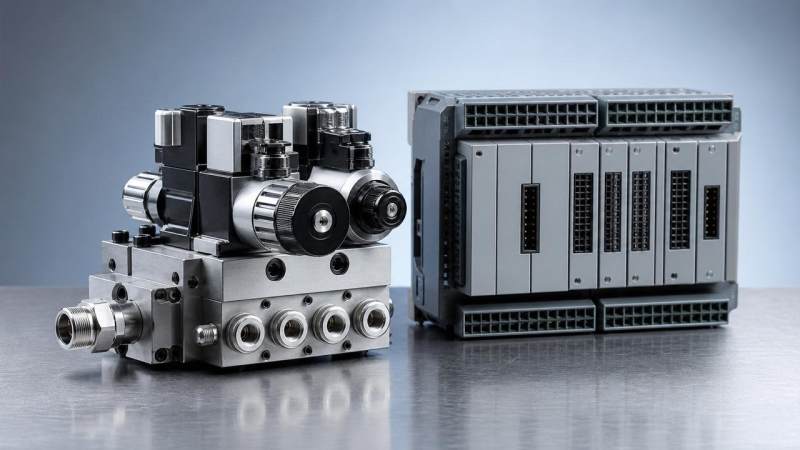
On May 4, 2026, the U.S. Department of Commerce’s Bureau of Industry and Security (BIS) amended the Export Administration Regulations (EAR) to subject 12 categories of high-precision hydraulic control valves, servo-grade proportional valves, and embedded industrial PLC controllers to license requirements for exports to China. This update directly affects suppliers in construction machinery, agricultural machinery, and special-purpose vehicle supply chains — making it a critical development for trade compliance professionals, OEMs, and export-focused manufacturers.
Event Overview
On May 4, 2026, the U.S. Bureau of Industry and Security (BIS) published a revision to the Export Administration Regulations (EAR), adding 12 specific types of hydraulic valves and embedded industrial PLC controllers to the ‘entity list-associated controls’ category. As of that date, exports of these items to China require a BIS-issued license. The announcement explicitly identifies applications in construction machinery, agricultural machinery, and special-purpose vehicles as key impacted sectors. Overseas importers purchasing complete machines or systems containing these components must verify whether their Chinese suppliers hold valid BIS authorizations or have qualified alternative components; otherwise, customs clearance delays and project delivery risks may arise.
Industries Affected by Segment
Direct Exporters & Trade Enterprises
These entities face immediate licensing obligations when shipping the newly controlled valve types or integrated systems containing them to China. Impact manifests primarily in extended lead times due to license application processing, increased documentation burden, and potential denial risk if end-use or end-user information is incomplete or inconsistent with BIS expectations.
Component Procurement & Sourcing Teams
Companies sourcing hydraulic valves or embedded PLCs from U.S.-origin or U.S.-controlled suppliers must now reassess procurement routes. Even indirect imports — such as valves sourced through third-country distributors — may trigger EAR jurisdiction if the items fall under the newly listed categories and contain more than de minimis U.S.-origin content. This affects bill-of-materials validation and supplier qualification workflows.
OEMs & System Integrators
OEMs embedding these valves or controllers into machinery (e.g., excavators, harvesters, mobile cranes) must review technical specifications and component pedigrees across product lines. If final assemblies incorporate newly controlled items without prior authorization, export classification and shipment compliance become legally contingent — potentially halting shipments to global customers who rely on China-assembled units.
Distribution & Channel Partners
Regional distributors and channel partners handling finished equipment containing these components must confirm BIS compliance status before resale or delivery in China. Absent verified authorization or substitution evidence, downstream customers may refuse acceptance or delay payment pending regulatory confirmation — introducing commercial friction beyond customs operations.
What Relevant Enterprises Should Monitor and Do Now
Verify exact item classifications against the official EAR supplement
Organizations should cross-reference internal part numbers and technical specifications with the 12 newly listed categories published in the May 4, 2026 BIS notice. Classification must be based on function, performance parameters (e.g., response time, pressure rating, control resolution), and design intent — not just naming conventions or marketing labels.
Assess exposure across assembled products, not just standalone components
The regulation applies to both discrete valves/controllers and systems integrating them. Companies should audit product families for inclusion of covered items — especially where U.S.-origin design, software, or firmware contributes to functionality. This includes reviewing bills of materials, engineering change notices, and firmware version logs.
Engage proactively with U.S. suppliers and customs brokers
Confirm whether current supply agreements include EAR compliance clauses and whether suppliers are updating export licenses or providing updated Export Control Classification Numbers (ECCNs). Simultaneously, brief customs brokers on the new controls to align documentation standards — particularly for HTS codes, end-use statements, and license exception eligibility assessments.
Document substitution readiness — even if not yet implemented
While no immediate ban on existing inventory is indicated, maintaining records of qualified alternative components (e.g., non-U.S.-designed valves meeting equivalent performance specs) supports continuity planning. Such documentation also strengthens license application narratives should BIS request justification for continued supply.
Editorial Observation / Industry Perspective
Observably, this amendment signals a tightening of control over precision motion control infrastructure — not merely as discrete hardware, but as enabling elements in strategic mobility platforms. Analysis shows the selection focuses on valves and controllers with sub-millisecond response times and closed-loop feedback integration, suggesting BIS is prioritizing dual-use relevance in autonomous or semi-autonomous heavy equipment. From an industry perspective, this is less a one-off restriction and more a calibrated escalation aligned with broader U.S. technology security priorities. Current more appropriate interpretation is that it reflects an enforcement refinement — targeting specific functionalities rather than entire product classes — meaning granular technical assessment matters more than broad category avoidance.
This development does not constitute a blanket prohibition, nor does it revoke previously issued licenses. Rather, it introduces a new gate for specific configurations entering China. Continued monitoring is warranted, particularly for follow-up guidance on license application timelines, eligible end uses, and possible exclusions for maintenance or repair scenarios.
Conclusion
This regulatory update underscores how export controls increasingly operate at the subsystem level — affecting not only chipmakers or aerospace firms, but also manufacturers of industrial hydraulics and embedded automation. Its significance lies not in scale of coverage, but in precision: it targets functional capabilities embedded in widely deployed mechanical systems. For affected enterprises, the most rational approach is to treat this as a technical compliance checkpoint — requiring accurate classification, documented traceability, and proactive coordination across procurement, engineering, and logistics functions — rather than as a strategic market shift.
Source Attribution
Primary source: U.S. Department of Commerce, Bureau of Industry and Security (BIS), Export Administration Regulations (EAR) amendment notice published May 4, 2026. Ongoing developments — including license processing guidance, ECCN interpretations, or potential exclusions — remain subject to official BIS updates and are not yet confirmed.
Send Your Inquiry
We welcome your cooperation and we will develop with you.
