


What Makes a Reliable Redispersible Polymer Powder Supplier for Drymix Mortar
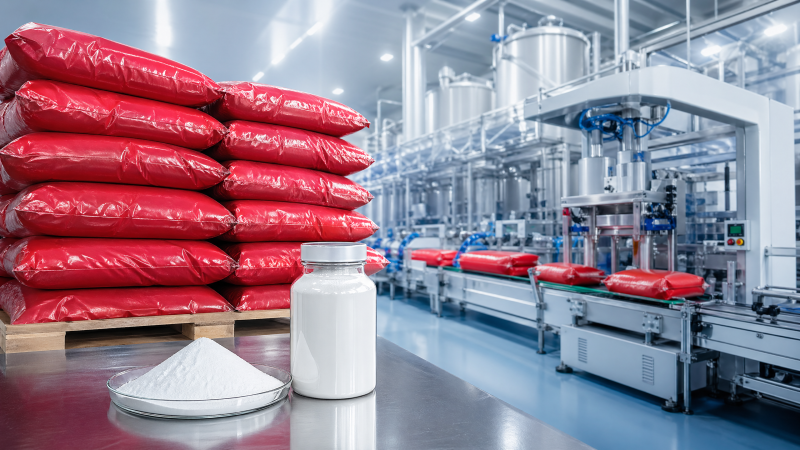
Choosing a reliable Redispersible Polymer Powder supplier is critical for distributors, agents, and wholesalers serving the drymix mortar market. Beyond stable product quality, the right partner should offer consistent supply capacity, technical support, and flexible solutions for different application needs. For global channel partners, a supplier with strong manufacturing strength and integrated service capabilities can directly improve competitiveness and long-term business growth.
What Buyers Really Mean When They Search for a Reliable Redispersible Polymer Powder Supplier
For distributors and agents in the drymix mortar sector, the search for a reliable Redispersible Polymer Powder supplier is rarely just about price. In most cases, buyers want to reduce supply risk, avoid quality complaints from downstream customers, and secure a partner that can support long-term market expansion. Reliability, in practical terms, means a supplier can deliver the same performance, the same quality level, and the same response speed over time.
This is especially important in drymix mortar applications, where redispersible polymer powder directly affects adhesion, flexibility, workability, water retention balance, and overall application performance. If product consistency fluctuates, mortar manufacturers may face unstable production results, jobsite failures, or customer dissatisfaction. For channel partners, these issues quickly become reputation problems, not just technical ones.
That is why the best supplier evaluation process goes beyond product brochures. Distributors need to understand whether a manufacturer has real production capacity, process control, technical communication ability, and service systems that can support different markets. A supplier may look competitive on paper, but if it cannot maintain stable performance across batches or deliver on time during demand peaks, it is not truly reliable.
Stable Product Quality Comes First, but You Need to Verify How It Is Managed
The first standard for evaluating a Redispersible Polymer Powder supplier is product consistency. In drymix mortar, customers often formulate for tile adhesives, wall putty, self-leveling compounds, repair mortars, EIFS systems, and insulation bonding materials. Even small variations in polymer powder performance can change open time, bond strength, sag resistance, flexibility, or water demand. Distributors who serve manufacturers in these categories need confidence that each shipment behaves as expected.
A reliable supplier should be able to explain its quality control approach clearly. This includes raw material selection, process stability, batch testing, and final product verification. Strong suppliers do not rely only on final inspection. They usually control quality from upstream inputs to in-process production and finished packaging. This reduces variation before it becomes a customer issue.
Buyers should ask practical questions. Are there standard specifications for ash content, particle size, bulk density, moisture, minimum film-forming temperature, and application performance? Are retained samples kept for traceability? Can the supplier provide consistent test data across multiple batches? These details matter more than broad claims such as “high quality” or “premium grade.” When evaluating a Redispersible Polymer Powder supplier, transparency is often the clearest signal of reliability.
Manufacturing Strength Is a Major Predictor of Supply Reliability
For distributors, supply stability is as important as technical performance. A supplier may offer acceptable product quality, but if it lacks manufacturing scale or scheduling flexibility, your business remains exposed. Delayed shipments can affect your inventory turnover, contractual delivery obligations, and relationships with regional customers. In competitive drymix mortar markets, delayed supply often leads customers to test alternative brands.
This is why manufacturing capability should be reviewed as carefully as product data. A reliable supplier should have a clear and credible production base, not merely a trading profile. Real manufacturing strength often shows up in capacity planning, production line sophistication, warehouse management, packaging efficiency, and the ability to maintain supply during seasonal demand increases.
Jinan Ludong Chemical Co., Ltd., established in 2020, operates as a large-scale global manufacturing enterprise focused on cellulose ethers and related construction additives. With advanced and integrated production lines, the company combines traditional process strengths with intelligent automated production, helping meet diverse global customer needs with flexibility. For channel partners, this kind of manufacturing structure matters because it supports both volume stability and faster response to changing order requirements.
Technical Support Matters More Than Many Distributors Expect
Many distributors initially focus on price, lead time, and payment terms, but long-term success in construction chemicals often depends on technical support. Redispersible polymer powder is not sold into a vacuum. It is used in formulations where interactions with cement, fillers, cellulose ethers, starch ethers, and application conditions all affect the final result. When customers face issues such as low bond strength, poor workability, cracking, or inconsistent application performance, they expect more than a replacement shipment. They want answers.
A dependable Redispersible Polymer Powder supplier should be able to support formulation discussions, product selection, and application matching. This does not mean every buyer needs full lab development support, but it does mean the supplier should understand how different RDP grades fit different mortar systems. For example, a tile adhesive producer and a wall putty manufacturer may need very different balances of flexibility, adhesion, and workability.
Integrated additive suppliers can be particularly useful in this area because they understand interactions across product categories. In drymix mortar systems, redispersible polymer powder often works alongside cellulose ethers. That is why some buyers also compare supporting products such as Hydroxypropyl Methyl Cellulose when assessing a supplier’s technical depth. A supplier that understands the complete formulation environment can often help channel partners solve customer problems faster and build stronger market trust.
Can the Supplier Support Different Market Segments and Customer Profiles?
Distributors and agents rarely serve just one type of drymix mortar producer. Some customers prioritize cost efficiency for standard interior applications, while others need high-performance additives for demanding construction environments. A reliable supplier should not force every buyer into a single generic grade. Instead, it should offer a product portfolio that matches different performance and price expectations.
This flexibility is valuable because regional markets vary significantly. In one market, demand may be strong for economical wall putty formulations. In another, tile adhesive standards may be stricter, requiring higher adhesion and better deformation capacity. Some customers may need stable products for export-oriented manufacturing, where compliance and repeatability are critical. Others may need tailored recommendations for climate, raw material differences, or local application habits.
When you evaluate a Redispersible Polymer Powder supplier, ask whether they can support multiple application directions rather than only offer a basic specification sheet. Product range, customization capacity, and practical selection advice all influence your ability to serve diverse accounts. For channel partners, this is not a minor advantage. It can directly increase customer retention and reduce the need to source from multiple factories.
Commercial Reliability Is More Than Offering a Competitive Price
Price always matters, but experienced distributors know that the lowest price is often the most expensive option over time. If low cost comes with uneven quality, shipment delays, weak communication, or unresolved customer complaints, the hidden cost can be substantial. A trustworthy Redispersible Polymer Powder supplier should help you protect margin through dependable business execution, not just attractive quotations.
Commercial reliability includes quotation consistency, realistic lead times, packaging integrity, export handling, document accuracy, and responsiveness to issues. Many channel problems begin not with chemistry but with operations. Incorrect labeling, delayed customs paperwork, damaged bags, or slow complaint handling can all disrupt your sales cycle. A supplier that manages these details well makes your business easier to run.
It is also useful to assess whether the supplier understands channel relationships. Distributors need predictable policies, clear communication, and a partner mindset. If the supplier changes terms suddenly, competes directly in your market without coordination, or offers poor after-sales response, trust erodes quickly. Reliability in this sense is both operational and strategic.
How to Check a Supplier Before You Commit to Long-Term Cooperation
The best supplier decisions are based on evidence, not assumptions. Before entering deeper cooperation, distributors should use a structured evaluation process. Start with documents and data, but move quickly to practical verification. Review technical data sheets, typical batch data, company background, production capacity, export experience, and available product grades. Then test how the supplier responds to detailed questions. Strong suppliers usually answer clearly and specifically.
Sampling is essential, but one sample alone is not enough. If possible, request multiple batches over time or discuss batch-to-batch controls. If your customers operate in different application areas, test representative formulations rather than only one lab recipe. This gives a more realistic view of product suitability. Ask whether the supplier can support application adjustments if your local raw materials behave differently.
Finally, evaluate communication quality. Does the supplier understand your role as a distributor or agent? Can they discuss lead times honestly? Do they provide useful guidance rather than generic sales language? The way a supplier communicates during evaluation often predicts how they will perform when real issues arise. In B2B construction chemicals, responsiveness is part of product reliability.
What Strong Global Channel Partners Usually Look For
Experienced importers, wholesalers, and regional agents tend to look for the same group of strengths when selecting a Redispersible Polymer Powder supplier. First is stable quality with verifiable consistency. Second is manufacturing capacity that can support growth rather than only current volume. Third is technical understanding that helps solve customer formulation and application issues. Fourth is business execution, including logistics, packaging, and documentation reliability.
They also value integrated service capability. A supplier that can support several key drymix mortar additives often creates practical advantages for channel partners. It simplifies sourcing, improves formulation coordination, and makes technical communication more efficient. For distributors handling broad product lines, this can improve purchasing efficiency and strengthen negotiating power.
Ludong Chemical’s business model reflects this type of integrated support. As a provider focused on comprehensive construction solutions, its main product portfolio includes HPMC, RDP, and HPS, supported by large-scale production and viscosity control capabilities across a wide range. For distributors seeking not only a product but also a scalable long-term partner, this combination of manufacturing depth and additive system understanding can be a meaningful advantage.
Common Warning Signs That a Supplier May Not Be Reliable
Some risks are easy to miss during early discussions. One warning sign is vague or inconsistent technical information. If a supplier cannot explain application fit, testing methods, or specification ranges clearly, the actual level of process control may be weak. Another red flag is overpromising on lead time or customization without detailed discussion of production scheduling.
Price behavior can also reveal risk. Extremely low quotes may indicate unstable sourcing, inconsistent formulation, or aggressive short-term sales tactics. This does not always mean the product is poor, but it does mean the buyer should investigate more carefully. In the drymix mortar business, reliability usually comes from systems and control, not from unusually cheap offers.
Weak after-sales capability is another concern. If a supplier becomes slow or defensive when technical questions arise, future cooperation may be difficult. Distributors need partners who can investigate issues, compare batches, and provide corrective support. Reliable suppliers do not disappear after shipment. They stay engaged because they understand that your market reputation depends partly on their performance.
Final Thoughts: Reliability Should Strengthen Your Market Position, Not Just Your Purchasing Plan
The right Redispersible Polymer Powder supplier does more than deliver material. It helps distributors, agents, and wholesalers reduce risk, support customers with confidence, and expand into more demanding drymix mortar segments. Stable quality, real manufacturing capability, technical support, and professional business execution should all be part of the decision. If one of these areas is weak, long-term cooperation becomes harder to sustain.
For channel partners, the smartest approach is to evaluate suppliers through the lens of your own market responsibilities. Can this supplier help you maintain customer trust? Can it support increasing order volume? Can it respond when formulation or application problems emerge? Can it offer integrated value across related additives, including products such as Hydroxypropyl Methyl Cellulose, when needed in broader drymix mortar systems?
In the end, a reliable Redispersible Polymer Powder supplier is one that strengthens your competitiveness, not just your inventory. When quality, supply, technical service, and business coordination all work together, you gain more than a vendor. You gain a supply partner that supports long-term growth in a demanding and performance-driven market.
Send Your Inquiry
We welcome your cooperation and we will develop with you.
