


Redispersible Polymer Powder Supplier Checklist for Long-Term Product Consistency
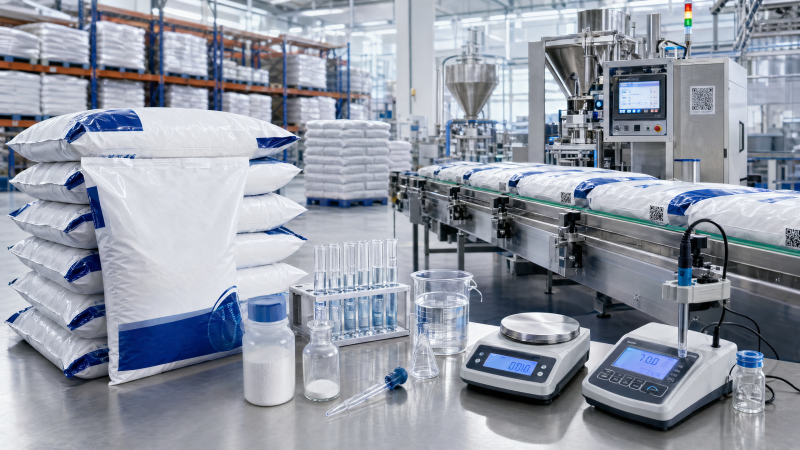
Choosing a reliable Redispersible Polymer Powder supplier is critical for quality control and safety teams seeking stable batch performance, traceable production, and long-term supply security. In the chemicals industry, consistency directly affects formulation results, compliance, and site reliability. This checklist helps you evaluate suppliers more effectively and identify the capabilities that support dependable product quality over time.
Why long-term consistency matters more than a low initial price
For quality control personnel, the biggest risk in sourcing redispersible polymer powder is not always visible during the first order. A supplier may provide an acceptable sample, but if batch-to-batch variation appears after 3 to 6 months, the impact can spread across dry-mix mortar performance, jobsite workability, bonding strength, storage stability, and complaint handling. That is why selecting a Redispersible Polymer Powder supplier should begin with consistency controls rather than with price comparisons alone.
Safety managers face a related challenge. In the chemical supply chain, inconsistent raw materials can change dust behavior, storage handling requirements, packaging integrity, and downstream mixing conditions. Even when the product category remains the same, shifts in moisture, particle distribution, ash content, or film-forming behavior can create operational deviations. A dependable supply partner should reduce uncertainty across production, warehousing, transport, and end-use conditions.
In practical procurement terms, long-term product consistency depends on 4 linked capabilities: stable raw material sourcing, controlled manufacturing, documented quality testing, and reliable service response. If one element is weak, the risk often appears later in the form of rework, customer claims, delayed approval, or reformulation cost. This is especially important in construction chemicals where narrow formulation windows often leave limited tolerance for raw material drift.
Jinan Ludong Chemical Co., Ltd. focuses on cellulose ethers and related construction chemical solutions, including HPMC, RDP, and HPS. With annual production capacity reaching 45,000 tons and viscosity control for HPMC ranging from 400 to 200,000 CPS, the company demonstrates the kind of process scale and control discipline that procurement teams often look for when assessing whether a supplier can support repeatability over the long term rather than only fulfill occasional spot orders.
What quality teams should check first
- Whether the supplier can define critical control points for incoming materials, in-process production, and final release testing.
- Whether specification ranges are realistic and usable for formulation control, not merely broad commercial descriptions.
- Whether retained samples and batch records can be traced for at least one normal complaint cycle, often several months depending on project use.
- Whether technical support can respond within a workable review window, such as 24 to 72 hours for urgent batch questions.
How to evaluate a Redispersible Polymer Powder supplier with a practical checklist
A strong Redispersible Polymer Powder supplier should be evaluated through a structured checklist, not a single quotation sheet. Quality control and safety teams typically need at least 5 core dimensions in supplier review: production stability, test capability, traceability, packaging and storage control, and supply continuity. This approach helps separate manufacturers with real process discipline from traders who cannot manage variability at source.
The table below can be used during supplier qualification, annual review, or pre-contract audits. It is especially useful when comparing 2 to 4 candidate suppliers for dry-mix mortar, tile adhesive, EIFS, self-leveling, or repair mortar formulations. Each point should be verified by documents, samples, technical interviews, or an on-site audit whenever possible.
This checklist becomes more valuable when teams score each item on a 3-level or 5-level scale. A supplier with slightly higher price but stronger control of release testing and traceability may reduce overall risk far more effectively than a low-cost source with incomplete records. In chemical procurement, the hidden cost of inconsistency usually appears later through plant downtime, site complaint review, or additional formulation trials.
When evaluating solution breadth, some buyers also prefer partners who understand adjacent formulation materials. For example, a supplier experienced in cellulose ether systems can often support compatibility discussions involving RDP, HPMC, and specialty additives. In that context, product categories such as Detergent-grade HPMC show broader process familiarity across powder performance and application-oriented chemistry, even when the immediate project centers on construction materials.
5 key documents to request during supplier approval
- Current product specification sheet with defined test items and acceptable ranges.
- Safety documentation and transport-related handling guidance relevant to your region.
- Certificate of analysis format showing lot-level release information.
- Packaging, labeling, and storage recommendations, including normal shelf-life conditions.
- Complaint handling or nonconformance response process with contact timing expectations.
Which technical indicators deserve the closest attention?
Not every specification line has equal importance. For a Redispersible Polymer Powder supplier, quality teams should focus on the indicators most likely to affect downstream performance and storage stability. Depending on application, 6 common review items are appearance, moisture, bulk density, ash, minimum film-forming behavior, and particle size distribution. The exact acceptable range depends on the formulation, but the review method should always connect lab values to application behavior.
For example, moisture control is not just a warehouse issue. Higher-than-expected moisture may affect flowability, caking tendency, and blending uniformity. Bulk density matters because it influences dosing consistency in mixing operations. Particle distribution affects dispersion behavior and can influence the speed and uniformity of reconstitution. These are not abstract laboratory items; they are operating variables with direct impact on repeatable production.
Quality personnel should also ask how often the supplier checks these properties. Some manufacturers test every batch, while others may test at a set frequency such as every shift or every production lot segment. The stronger option is not always the one with the most tests, but the one with a documented sampling plan, defined release criteria, and clear deviation handling. That is what keeps specification control meaningful over 12 months or more.
For safety teams, packaging integrity and storage recommendations should be reviewed together with technical parameters. Even a compliant batch can deteriorate if the packaging barrier is weak or if the storage instructions are impractical for normal warehouse conditions. A capable Redispersible Polymer Powder supplier should provide practical guidance for dry storage, pallet protection, and handling during humid seasons or long-distance shipment.
A useful technical review table for supplier discussions
Before approving a supplier, many buyers create a review sheet that connects each parameter with a real process risk. This helps non-laboratory stakeholders understand why technical consistency deserves attention during sourcing decisions.
This kind of parameter-based review is especially useful when your internal team must justify supplier selection to procurement, operations, or HSE management. Instead of discussing quality in general terms, it anchors the decision in measurable risk points. It also makes it easier to define incoming inspection frequency, such as full checks during the first 3 lots and trend-based verification afterward.
Why process capability matters behind the numbers
A good certificate of analysis is valuable, but quality teams should still ask how the data is produced. Ludong Chemical emphasizes the integration of traditional production experience with intelligent automated production. For buyers, that matters because automated control can improve repeatability, while traditional process understanding can help operators manage exceptions, formulation sensitivity, and practical production adjustments without losing control of key quality windows.
How to assess compliance, traceability, and supply security
For safety managers, supplier approval does not end with technical suitability. Chemical procurement also requires verification of document discipline, labeling consistency, and lot traceability. At minimum, teams should confirm that each shipment can be linked to a production lot, release data, packaging date or shipment record, and a responsible contact path for quality or safety escalation. Without these basics, issue investigation becomes slower and more expensive.
It is also wise to review how the supplier handles change management. Changes in raw materials, process settings, packaging format, or manufacturing location can all affect consistency. A dependable Redispersible Polymer Powder supplier should notify customers in advance when changes are significant enough to require validation. In many B2B chemical relationships, a 30-day to 90-day notification practice is a reasonable discussion point, depending on material criticality and contract terms.
Supply security is another essential issue. During peak construction demand, quality teams often discover that technical approval means little if lead times extend unexpectedly. Ask about normal production scheduling, export readiness, and whether the supplier can support rolling forecasts. A supplier with integrated production lines and sufficient capacity is often better positioned to manage both standard orders and urgent replenishment windows of 7 to 15 days when needed.
Because Ludong Chemical operates as a manufacturing enterprise with production, trading, and integrated services, it can support discussions that go beyond one product code. For many buyers, that matters when they want a supply partner able to align product quality, service response, and delivery planning rather than acting only as a price intermediary.
3 compliance questions worth asking during qualification
- How are lot numbers assigned, and can the supplier provide traceability from shipment back to production records?
- What is the process for notifying customers about significant changes in material, process, or packaging?
- What response timeline is available for technical complaints, urgent rechecks, or documentation requests?
Common mistakes buyers make when choosing a Redispersible Polymer Powder supplier
One common mistake is approving a supplier based only on a lab sample. A sample can confirm short-term compatibility, but it does not prove stable industrial output. Quality teams should review at least 2 to 3 consecutive lots when possible, especially for products used in critical bonding or surface performance applications. This is a more realistic test of long-term consistency than a single favorable result.
Another mistake is treating all RDP grades as interchangeable. Even where the product family is similar, differences in formulation basis, powder behavior, and application orientation may change the final result. Procurement teams should confirm intended use, target performance, and compatibility with the full formula system, including cellulose ethers and other additives. A broader technical supplier conversation can prevent expensive field corrections later.
Some buyers also underestimate logistics-related risk. If packaging strength, palletization, and humidity protection are not discussed, product quality may decline before it reaches the plant. For overseas or humid-route shipments, it is reasonable to review transport duration, storage conditions, and warehouse rotation practices. A 2-week delay at port or poor pallet wrap can create problems that are mistakenly blamed on the formula itself.
Finally, many teams separate technical review from service review. That creates blind spots. A supplier may produce acceptable material but fail to support complaint analysis, urgent resupply, or change notification. For long-term cooperation, quality consistency and service consistency should be evaluated together. This is particularly true when your organization requires repeated documentation, sample support, or multi-site approval.
FAQ for quality control and safety teams
How many lots should be tested before approving a supplier?
A practical starting point is 2 to 3 consecutive lots for laboratory review, followed by trial validation under your normal process conditions. If the application is highly sensitive, some buyers extend this to more lots or run seasonal revalidation. The goal is to see whether results stay within an acceptable operating range, not just whether one sample performs well.
What is the most overlooked risk in Redispersible Polymer Powder supplier selection?
Traceability is often overlooked. Without lot-level records, retained samples, and a clear complaint path, even a minor quality deviation can become difficult to diagnose. That delays corrective action and may interrupt production planning. Strong documentation discipline is often as important as the test result itself.
Should quality teams only compare price per ton?
No. The better metric is total operating impact. A slightly higher purchase price may be justified if the supplier reduces reformulation time, incoming inspection uncertainty, complaint risk, and emergency procurement. In construction chemicals, consistency often saves more than it costs.
Can a supplier with a broader product range add value?
Yes, especially when the supplier understands how RDP interacts with cellulose ether systems and related additives. Broader process knowledge can improve technical communication during grade selection, troubleshooting, and formula adjustment. For example, familiarity with products such as Detergent-grade HPMC may indicate stronger competence in powder handling, rheology-related discussions, and multi-product service coordination.
Why choose us for long-term chemical supply planning
If your team is reviewing a Redispersible Polymer Powder supplier for long-term quality stability, Jinan Ludong Chemical offers practical advantages aligned with B2B chemical procurement. The company combines manufacturing scale, integrated services, and product-system knowledge across HPMC, RDP, and HPS. That matters when your decision depends not just on supply price, but on repeatable quality, traceability, technical communication, and delivery coordination.
Its state-of-the-art production lines and blend of traditional process understanding with intelligent automation support the kind of controlled output that quality teams look for during supplier qualification. With annual capacity at 45,000 tons and broad viscosity control capabilities in its HPMC series, Ludong Chemical is positioned to discuss both product performance and supply planning in a more structured way.
If you are comparing suppliers, you can contact us for targeted support rather than general sales language. We can discuss parameter confirmation, suitable grade selection, normal lead-time expectations, sample arrangements, packaging and storage considerations, documentation needs, and coordination for customized formulation review. This is especially useful for QC and safety teams that need a practical evaluation path before commercial approval.
For your next sourcing review, share your application, required inspection items, annual demand range, and current pain points. We can help you build a more reliable supplier qualification process around product consistency, traceable production, and long-term supply security.
Send Your Inquiry
We welcome your cooperation and we will develop with you.
