


What improves bond strength in tile adhesive systems
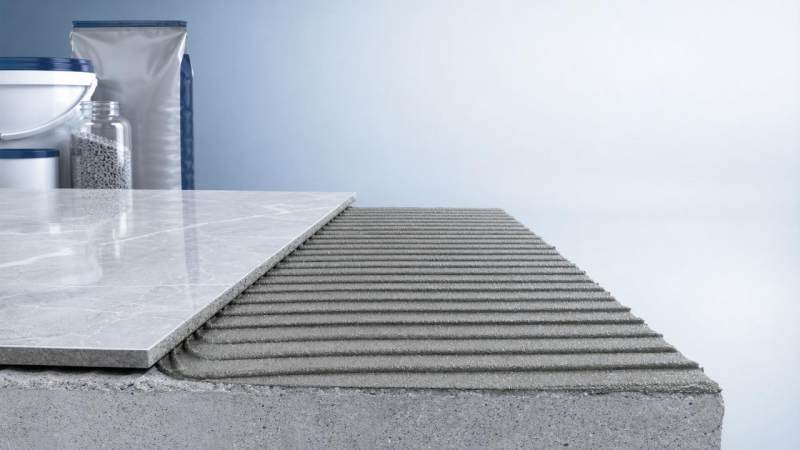
In tile adhesive systems, bond strength depends on a balanced formulation, proper substrate interaction, and performance-enhancing additives. For technical evaluation, Redispersible Polymer Powder for tile adhesive is central to stronger adhesion, better flexibility, and longer durability. Polymer modification, especially when coordinated with cellulose ethers, directly affects wetting, open time, deformability, and resistance to service stresses in modern construction chemistry.
Why a checklist is necessary for bond strength improvement
Bond strength rarely improves from one ingredient alone. It comes from the interaction of cement hydration, polymer film formation, substrate absorption, aggregate grading, and on-site application control.
A checklist helps compare formulations objectively. It also reduces trial-and-error when evaluating Redispersible Polymer Powder for tile adhesive across different tile types, substrates, climates, and performance grades.
Core checklist: what improves bond strength in tile adhesive systems
- Select a polymer with strong cement compatibility, reliable film formation, and balanced tensile adhesion, especially after water immersion, heat aging, and freeze-thaw exposure.
- Control cement quality and dosage carefully, because binder reactivity strongly influences early adhesion development, internal cohesion, and the final bonding network.
- Match cellulose ether type and viscosity to the system, ensuring water retention, anti-sag behavior, and enough open time without suppressing bond build-up.
- Optimize aggregate grading to improve packing density, reduce voids, and support uniform stress transfer between adhesive, substrate, and tile body.
- Adjust polymer-cement ratio according to tile size and substrate movement, since insufficient polymer often causes brittle failure and poor deformation capacity.
- Improve wetting of dense tile backs, because low absorption porcelain surfaces need stronger interfacial contact to develop high tensile adhesion.
- Check workability and trowelability during formulation screening, since poor spreadability can create discontinuous adhesive ribs and incomplete coverage.
- Verify open time under realistic site temperature and airflow, because skin formation reduces transfer efficiency and lowers actual bond strength.
- Test slip resistance and vertical hold where needed, especially for wall applications where mechanical stability affects the bonded interface during curing.
- Evaluate cured flexibility and crack-bridging ability, because bonded systems fail early when thermal cycling or substrate movement exceeds adhesive deformation capacity.
- Confirm water resistance after full curing, since repeated moisture exposure can weaken polymer-cement interaction if formulation balance is poor.
- Standardize mixing water and mixing time, because field inconsistency often masks the real performance of Redispersible Polymer Powder for tile adhesive.
How polymer modification contributes
Polymer powder improves bond strength through several mechanisms. It enhances wet adhesion, supports film formation between mineral particles, and increases interface toughness after curing.
It also helps the adhesive absorb stress instead of transferring it directly to the bond line. This matters when tiles are large, heavy, or exposed to temperature fluctuation.
In practical formulation work, Redispersible Polymer Powder is often evaluated together with HPMC and mineral fillers to balance adhesion, open time, anti-slip performance, and consistency.
Application-specific notes that affect bond strength
Porcelain tile on low-absorption surfaces
This is one of the most demanding cases. Both tile and substrate may have limited absorbency, so mechanical anchorage is reduced and wetting becomes critical.
Use a higher-performance polymer-modified system, maintain proper water retention, and confirm enough transfer to the tile back. Coverage quality often determines the final result.
Large-format tile installation
Large tiles generate higher stress from weight, thermal expansion, and substrate unevenness. A brittle adhesive may pass basic testing but still fail during service.
Increase deformability, improve wetting, and monitor anti-sag or slump behavior. Double spreading may also be needed to avoid voids beneath the tile.
Wet areas and intermittent water exposure
Bathrooms, kitchens, and service areas expose the bond line to moisture cycling. Water resistance is not only about cement content but also polymer stability after curing.
Formulations should be checked after water immersion and aging. Weak systems often show reduced adhesion or cohesive softening under these conditions.
Exterior or temperature-variable conditions
Outdoor use adds thermal shock, freeze-thaw risk, and movement from the substrate. Bond strength must remain stable beyond initial laboratory values.
A well-designed system combines flexible polymer modification, controlled water retention, and durable cement bonding. This is where formulation detail matters most.
Commonly overlooked factors and risk warnings
- Ignore substrate dust or laitance, and the adhesive may fail adhesively even when laboratory formulation data looks strong.
- Add too much water during mixing, and film formation, strength development, and anti-slip balance can all deteriorate.
- Use excessive cellulose ether viscosity, and the system may retain water well yet lose effective bond build-up on dense surfaces.
- Underestimate curing conditions, and early drying or overheating may interrupt hydration and reduce final interfacial performance.
- Focus only on initial tensile values, and long-term durability after immersion, heat aging, or movement may be missed.
Another common mistake is evaluating ingredients in isolation. In reality, bond strength is a system property, not a single-material property.
Jinan Ludong Chemical Co., Ltd. supplies construction-focused cellulose ethers and polymer solutions with integrated production capability. Its portfolio supports formulation flexibility across viscosity ranges, performance targets, and global application requirements.
Practical execution steps for stronger tile adhesive bonding
- Define the tile type, substrate condition, exposure class, and required standard performance before adjusting any raw material.
- Build a base dry-mix with stable cement, graded fillers, and cellulose ether suited to water retention and workability goals.
- Screen polymer dosage in small increments, then compare tensile adhesion after standard curing, immersion, and heat aging.
- Measure open time, slip, transfer rate, and deformation behavior together, because stronger bond values alone do not guarantee field reliability.
- Validate the final formula under realistic site mixing and application conditions before scaling production or market release.
A useful formulation mindset
Start from failure mode analysis. If failure is adhesive at the tile interface, improve wetting and polymer interaction. If failure is cohesive, rebalance binder structure.
If performance drops after water exposure, review polymer quality, cement compatibility, and curing profile first. These checks usually reveal the root cause faster.
Conclusion and next action
What improves bond strength in tile adhesive systems is not a single additive, but a coordinated design of cement, polymer, cellulose ether, fillers, and application practice.
For better results with Redispersible Polymer Powder for tile adhesive, use a checklist approach: verify interface wetting, optimize polymer-cement balance, confirm open time, and test durability under real service conditions.
The next step is straightforward: review the target application, compare current bond failure modes, and refine the formula using measurable performance checkpoints rather than isolated assumptions.
Send Your Inquiry
We welcome your cooperation and we will develop with you.
