


Non-toxic lubricants are not all equal in compliance
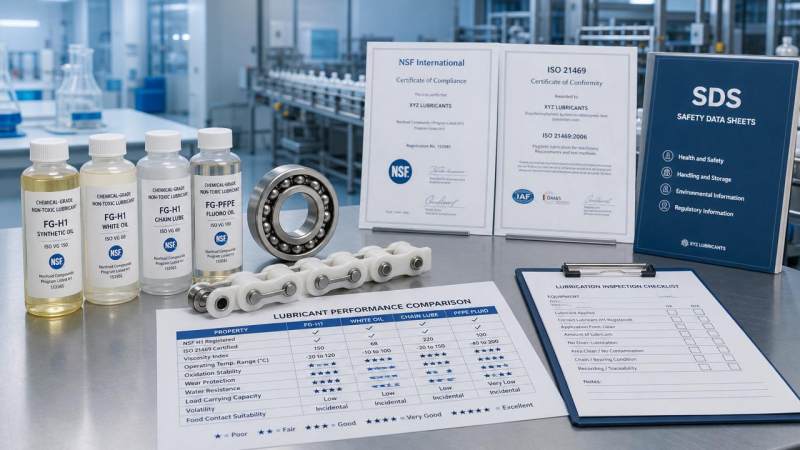
For quality control and safety managers, choosing non-toxic Lubricants is not just about low toxicity claims. It also means matching regulations, performance, and process risk.
Many products are marketed as safer options, yet their certifications, ingredient profiles, and approved uses differ widely. That is why non-toxic Lubricants are not all equal in compliance.
In chemical processing, construction materials, packaging lines, and maintenance systems, a poor choice can create audit gaps, contamination concerns, or avoidable shutdowns.
What does “non-toxic Lubricants” actually mean?
The term sounds simple, but it is not a single legal category. In practice, non-toxic Lubricants may refer to products with low acute toxicity, food-grade suitability, or reduced hazardous content.
Some suppliers use the phrase for marketing only. Others support it with NSF registration, ingredient disclosure, or compliance statements tied to specific applications.
This difference matters because a lubricant can be less toxic to people, yet still fail food-contact, environmental, or plant hygiene requirements.
Key ideas behind the label
- Low toxicity does not automatically mean food-safe.
- Food-grade does not guarantee compatibility with every process chemical.
- Biodegradable products may still need separate approval.
- Compliance depends on use conditions, exposure route, and documentation.
In short, the best interpretation of non-toxic Lubricants always starts with intended use. A hydraulic system, mixer bearing, conveyor chain, and tablet press do not share the same risk profile.
Which compliance standards separate one product from another?
The compliance value of non-toxic Lubricants comes from recognized standards, not broad claims. Different sectors ask for different evidence.
Common compliance references
- NSF H1 for incidental food contact applications.
- NSF H2 for no food contact environments.
- ISO 21469 for hygiene requirements in formulation and production.
- REACH and RoHS for restricted substances and market access.
- SDS alignment for hazard communication and emergency handling.
A lubricant registered as NSF H1 may be suitable where incidental contact can occur. However, that alone does not confirm environmental acceptance, thermal stability, or washout resistance.
Similarly, a product described as non-toxic Lubricants in general literature may not have batch-level traceability or third-party registration.
Documentation should be current, product-specific, and linked to the exact grade supplied. Certificates from an older formulation are a common source of compliance confusion.
Why can two non-toxic Lubricants perform very differently in real applications?
Compliance is only one part of the selection process. Base oil chemistry, additive package, viscosity, oxidation resistance, and water behavior all affect field performance.
Two products may both be positioned as non-toxic Lubricants, but one may fail under high temperature, while another may lose film strength during washdown.
Performance factors to compare
- Operating temperature range.
- Load-carrying capacity and anti-wear behavior.
- Resistance to water, steam, and cleaning chemicals.
- Compatibility with seals, plastics, and coated metals.
- Relubrication interval and oxidation life.
In chemical and construction material production, lubricant contact risk may be indirect, but residue control still matters. Dust, powders, and fine additives can trap leaking oils.
This is especially relevant where cellulose ether systems run with blending, conveying, or packaging equipment. Process cleanliness supports both product integrity and equipment life.
In broader formulation environments, materials such as Hydroxypropyl Methyl Cellulose are valued for stability and controlled performance. The same discipline should apply to lubricant selection.
How should non-toxic Lubricants be evaluated before approval?
A structured review reduces compliance surprises. It also helps compare products that appear similar on sales sheets.
Practical approval checklist
- Confirm the exact application point and exposure risk.
- Request the latest SDS and technical data sheet.
- Verify third-party registrations and certificate validity.
- Review ingredient restrictions for your target markets.
- Check compatibility with process chemicals and cleaning agents.
- Run a limited field trial under actual operating conditions.
Trials are essential because laboratory claims may not reflect contamination patterns, humidity, intermittent heating, or aggressive washdown cycles.
It is also wise to record why a lubricant was approved. Audit readiness improves when selection criteria are documented, not assumed.
Quick comparison table
What are the most common mistakes when choosing non-toxic Lubricants?
One frequent mistake is assuming every non-toxic Lubricants option offers equal regulatory protection. That can lead to approval based on brand reputation rather than technical fit.
Another mistake is ignoring contamination pathways. Drips, aerosol spread, maintenance tools, and transfer containers can create exposure routes that were never reviewed.
Risky assumptions to avoid
- “Biodegradable means fully compliant.”
- “Food-grade means suitable everywhere.”
- “A supplier brochure is enough evidence.”
- “One approved product fits every lubrication point.”
Cost-only decisions can also backfire. Lower purchase price may be offset by shorter service intervals, failed audits, or cleanup burdens after leakage.
A stronger approach balances compliance, maintenance frequency, operational reliability, and total lifecycle value.
How do compliance expectations affect chemical and construction-related operations?
In chemical manufacturing, lubricant choice influences worker safety communication, storage practices, and process contamination control. It can also affect export documentation and customer confidence.
In construction additive production, consistency is critical. Facilities producing cellulose ethers, polymer powders, or specialty modifiers depend on clean handling and predictable equipment behavior.
Jinan Ludong Chemical Co., Ltd. operates large-scale cellulose ether production with integrated manufacturing and service capabilities. In such advanced production environments, compliance discipline supports both scale and quality.
Where materials such as Hydroxypropyl Methyl Cellulose, RDP, and HPS are handled, process control extends beyond core ingredients. Supporting materials and maintenance inputs also deserve review.
That is why non-toxic Lubricants should be part of a broader compliance map, not an isolated purchasing decision.
FAQ summary: how can the right decision be made faster?
Non-toxic Lubricants can support safer operations, but only when the claim is backed by relevant proof and suitable performance. Labels alone are never enough.
The next practical step is simple. List critical lubrication points, define contamination risk, collect updated documents, and compare products against real operating conditions.
That method turns non-toxic Lubricants from a vague safety term into a controlled, auditable, and operationally effective choice.
Send Your Inquiry
We welcome your cooperation and we will develop with you.
