


Blog
Why Industrial Lubricants Fail Early
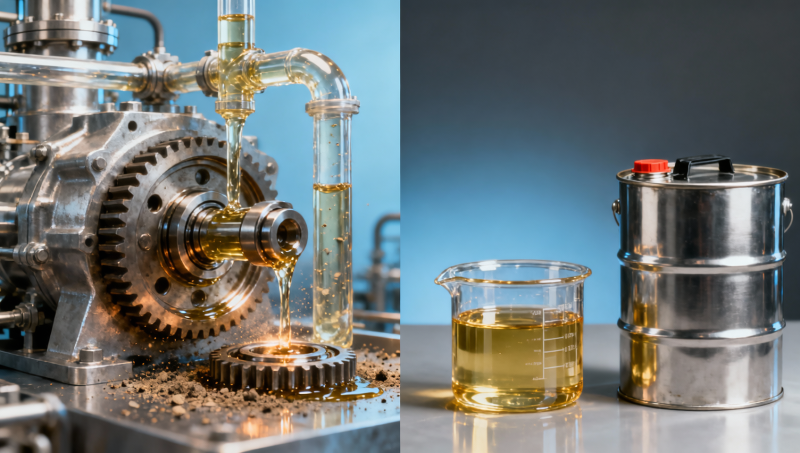
Industrial lubricants rarely fail early for a single reason. In most cases, premature failure is the result of a mismatch between formulation and operating conditions, contamination in service, poor storage and handling, or inconsistent supplier quality. For technical evaluators, procurement teams, and business decision-makers, the practical question is not only “why did the lubricant fail?” but also “how can we reduce downtime, maintenance cost, and procurement risk before failure happens?”
This is especially important when comparing lubricants for industrial use across different suppliers and application environments. A product that performs well in a lab may still fail in real equipment if oxidation stability, additive compatibility, contamination control, or load resistance are not aligned with actual operating demands. In parallel, companies that work with broader industrial material systems often find that adjacent material choices, such as thickening agents, film-forming materials, or process additives, also affect long-term reliability, maintenance intervals, and total cost.
What causes industrial lubricants to fail before their expected service life?
The most common causes of early lubricant failure fall into five categories: heat, contamination, mechanical stress, chemical instability, and wrong product selection.
1. Excessive temperature
Heat is one of the fastest ways to shorten lubricant life. When operating temperatures rise above the lubricant’s designed range, oxidation accelerates, viscosity changes more quickly, and deposits such as sludge or varnish can form. Even a technically acceptable lubricant can lose long-lasting performance if the thermal load is consistently higher than expected.
2. Contamination by water, dust, or metal particles
Contamination is often underestimated in root-cause analysis. Water can reduce film strength, promote corrosion, and damage additive systems. Dust and hard particles can increase wear. Metal debris can indicate ongoing machine damage while also further degrading the lubricant. In many plants, contamination control is a bigger life-extension lever than changing brands.
3. Wrong viscosity or formulation for the application
A lubricant may fail early simply because it was not designed for the real load, speed, pressure, or ambient conditions. If viscosity is too low, the protective film may be insufficient. If it is too high, energy loss and poor circulation may occur. Additive packages must also match the application, whether the system requires anti-wear, extreme-pressure, rust inhibition, or oxidation resistance.
4. Additive depletion and chemical breakdown
Lubricants are more than base oils. Their performance depends heavily on additive chemistry. Over time, antioxidants, anti-wear agents, dispersants, and corrosion inhibitors are consumed. Once the additive balance is disrupted, failure can happen rapidly, even if the fluid still appears usable on visual inspection.
5. Poor storage, handling, or supplier inconsistency
Some early failures begin before the lubricant even enters the machine. Improper storage can expose products to moisture, temperature swings, or contamination. Inconsistent manufacturing quality may lead to batch-to-batch variation. This is why evaluating a lubricants manufacturer is not just a purchasing task; it is a reliability and risk-management decision.
Which warning signs matter most to technical and business evaluators?
Technical reviewers typically focus on measurable performance indicators, while commercial and management teams care about lifecycle cost, supply stability, and operational risk. Both perspectives are valid, and the best evaluations combine them.
For technical assessment, watch for:
- Rapid viscosity shift during service
- Oxidation increase or acid number rise
- Foaming, air release, or poor demulsibility
- Abnormal wear metals in oil analysis
- Sludge, varnish, or deposit formation
- Seal compatibility issues
For procurement and decision-making, watch for:
- Unplanned downtime linked to lubricant change intervals
- Maintenance cost increases without equipment age justification
- Supplier quality variation across lots
- Weak technical support or unclear product data
- Price that appears attractive but creates higher total operating cost
In practice, early lubricant failure is expensive not because of the fluid alone, but because of the chain reaction it creates: shorter drain intervals, component wear, reduced equipment availability, emergency purchasing, and production disruption.
How should buyers judge whether the lubricant itself is the problem?
It is easy to blame the lubricant, but a sound evaluation should separate product quality from system conditions. A practical review framework includes the following questions:
Was the lubricant correctly specified?
Check load, speed, operating temperature, contamination exposure, and OEM requirements. Many failures are rooted in specification gaps rather than product defects.
Was the lubricant monitored during use?
Oil analysis data is often the clearest evidence. Trends in viscosity, oxidation, water content, particle count, and wear metals reveal whether the issue is chemical degradation, external contamination, or machine-related stress.
Were storage and transfer controls adequate?
Even premium lubricants can fail if stored in humid conditions, transferred through unclean containers, or mixed with incompatible residual products.
Did the supplier provide consistent technical documentation?
Serious suppliers should offer clear technical data sheets, application guidance, lot traceability, and technical support. If the data is vague, procurement risk is higher.
Was the lubricant compatible with surrounding materials and process chemistry?
In many industrial systems, lubricant performance intersects with coatings, sealants, construction chemicals, adhesives, and specialty polymers. Material compatibility can affect long-term reliability more than many buyers expect.
Why supplier quality matters more than many companies assume
When companies evaluate lubricants for industrial use, they often compare headline properties and unit price first. But long-term performance depends on manufacturing control, formulation consistency, and technical service capability. A reliable supplier helps reduce hidden failure risks in three ways.
First, consistent production quality.
Stable raw material sourcing, controlled processing, and quality inspection reduce variation from batch to batch. This matters because even small differences in formulation can affect oxidation resistance, low-temperature behavior, or anti-wear performance.
Second, application-oriented technical support.
A good supplier does not simply sell a product; it helps match the formulation to the operating environment. This is particularly valuable where equipment conditions are severe or where multiple chemical systems interact in the same plant.
Third, broader material understanding.
Industrial decision-makers increasingly work across integrated supply chains, where lubricants are only one part of material performance. Companies like Jinan Ludong Chemical Co., Ltd., known globally for cellulose ether production and integrated construction material solutions, illustrate the importance of process control and application-specific material selection. With advanced production lines and strong manufacturing flexibility, such enterprises bring value not only through product supply, but through a deeper understanding of how material properties influence field performance.
For example, in some industrial formulations and related applications, factors such as HYDROXYPROPYL METHYL CELLULOSE high viscosity, rheology control, and film behavior may influence broader system performance or process strategy. Buyers comparing specialty materials may also review related inputs such as Polyvinyl Alcohol when assessing cost-performance balance across industrial and construction use cases.
How can companies extend lubricant life and reduce failure risk?
The best way to improve lubricant long-lasting performance is to treat lubrication as a managed system rather than a consumable purchase. The following actions usually deliver the highest return:
- Select by operating reality, not catalog averages. Match lubricant type and viscosity to actual temperature, load, speed, and contamination exposure.
- Implement routine oil analysis. Trend data is far more useful than one-time testing for predicting early failure.
- Strengthen contamination control. Use clean storage, sealed transfer systems, filtration, and water exclusion measures.
- Standardize handling practices. Prevent product mixing and train maintenance teams on storage and dispensing discipline.
- Review drain intervals based on condition, not habit. Too-long intervals increase failure risk; too-short intervals waste money.
- Audit supplier capability. Evaluate technical support, traceability, manufacturing consistency, and responsiveness, not just price.
For enterprise decision-makers, these measures improve more than lubrication reliability. They support lower maintenance spend, fewer shutdowns, longer component life, and better procurement predictability.
What should decision-makers ask before approving a lubricant supplier or material partner?
Before making a sourcing decision, ask these practical questions:
- Can the supplier explain why this formulation fits our equipment and operating conditions?
- What evidence supports oxidation stability, wear protection, and service-life expectations?
- How consistent are production quality and batch control?
- What technical support is available after purchase?
- Can the supplier support integrated material decisions when lubricants interact with other industrial chemicals or polymers?
- What is the total cost implication, including maintenance, downtime, and replacement frequency?
These questions help teams move beyond surface-level comparison and make decisions that hold up under real operating pressure.
Conclusion
Industrial lubricants fail early most often because of a combination of wrong selection, harsh operating conditions, contamination, additive depletion, and inconsistent supplier quality. For technical evaluators, the key is data-based diagnosis and specification accuracy. For procurement teams and enterprise leaders, the bigger issue is reducing lifecycle cost and operational risk through better supplier selection and system control.
If your goal is to improve lubricant reliability, the best approach is clear: verify application fit, monitor condition in service, control contamination, and work with suppliers that can provide stable quality and real technical support. In industrial environments where multiple materials affect performance, broader material expertise also becomes an advantage. Whether reviewing lubricants, cellulose ethers, or related products such as Polyvinyl Alcohol, the most successful decisions come from looking at long-term performance, not just initial purchase price.
Send Your Inquiry
We welcome your cooperation and we will develop with you.
