


Why Tile Adhesive Slips or Dries Too Fast: Is the HPMC Grade the Real Problem?
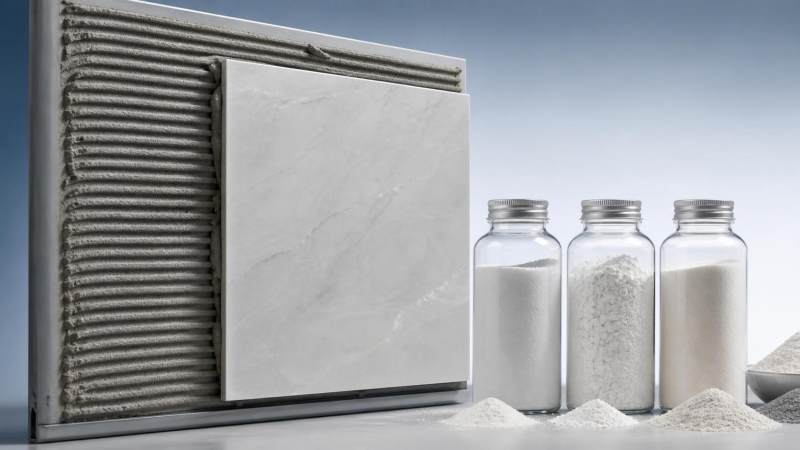
When tile adhesive starts failing on the wall, is HPMC really the first thing to blame?
Not always. Operators often point straight at HPMC For Tile Adhesive when they see sagging, poor comb stability, fast skinning, or a mix that feels “dead” too soon. That reaction is understandable, because HPMC does control water retention, consistency, open time, and part of the slip resistance. But on site, those symptoms rarely come from one ingredient alone.
A tile adhesive can slip because the formula is short on anti-sag balance, because the water addition is too high, because the sand grading is off, or because the adhesive layer is too thick for the wall and tile weight. It can dry too fast because the substrate is highly absorbent, the weather is hot and windy, the mixing water is warm, or the open bag has already taken in moisture. HPMC matters, but treating it as the only variable usually leads to the wrong fix.
If the adhesive slips, what should an operator check before changing the HPMC grade?
Start with the jobsite conditions and the mixing practice. A lot of “material problems” are actually application problems.
- Water dosage: Too much water lowers body and increases slip fast, even when the HPMC itself is suitable.
- Tile size and weight: Large-format or low-absorption tiles demand better vertical hold than standard wall tiles.
- Trowel technique: If ridges collapse immediately, the issue may be overwatering or weak formulation structure.
- Substrate condition: Dusty, hot, or highly absorbent walls pull water from the adhesive and reduce workable time.
- Pot life handling: Re-tempering an aging mix with extra water often causes slip and uneven bonding.
If those points are under control and the adhesive still slides under normal application thickness, then it makes sense to look more closely at HPMC viscosity, dissolution behavior, and the balance with other additives such as RDP or starch ether.
Can the wrong HPMC grade cause both slipping and drying too fast?
Yes, but the mechanism is different in each case.
When the grade is not matched to the adhesive system, you may get poor water retention, weak thickening efficiency, or an application feel that changes too quickly after mixing. A lower-performing grade can leave the mortar too loose on vertical surfaces, so tiles drift before initial set. On the other hand, a grade with unsuitable hydration behavior may make the mortar lose smoothness quickly or skin over earlier than expected, especially under warm, dry conditions.
Still, “wrong grade” does not simply mean “higher viscosity is better.” A very high-viscosity HPMC may improve sag resistance but can also create poor trowelability, slower wetting, or a sticky feel operators dislike. The right choice is the one that fits the full formulation and the way the adhesive is actually applied.
What does HPMC actually do in tile adhesive, in practical terms?
For the operator, HPMC shows up as behavior, not chemistry. It helps the dry mix hold water, improves workability, supports open time, and gives the mortar enough body to stay where it is combed. That is why HPMC For Tile Adhesive has such a direct effect on how the product feels in the bucket and on the wall.
In use, the main signs of a well-matched HPMC are easy mixing, stable ridges, good wetting of the tile back, reasonable open time, and less need for the installer to fight the mortar. If one of those is missing, the HPMC may be part of the issue, but you still need to separate whether the problem is retention, rheology, compatibility, or site conditions.
Why does adhesive skin over so quickly even when the formula looks normal on paper?
Because paper formulas do not install tiles. Real conditions do.
Fast skinning usually comes from a combination of moisture loss and surface exposure. A porous cement board, a concrete wall in direct sun, low ambient humidity, moving air, and small batch mixing delays can all shorten open time. The adhesive may still be chemically sound, but the surface loses workable moisture faster than the operator expects.
A quick field check helps: comb the mortar, wait a short interval that matches normal working rhythm, then touch the ridge lightly. If the surface already feels dry and does not transfer well, focus first on water loss conditions. That points you toward substrate pre-treatment, batch size control, or formulation adjustments for water retention and open time rather than blaming slip resistance alone.
Is higher viscosity HPMC always the answer when tiles sag?
No. Higher viscosity can help build structure, but it is not a universal correction.
Sag resistance depends on the whole rheology package. HPMC contributes to it, but sand particle distribution, cement content, polymer level, starch ether, and water ratio all shape how the mortar stands up after troweling. If the formula already has enough body but still slips under load, the issue may be poor internal balance rather than low HPMC viscosity.
Operators usually notice this difference by feel. One mix feels creamy but stable. Another feels thick in the bucket yet collapses on the wall. That second case often means the formulation has viscosity but not the right yield behavior.
What is the difference between water retention problems and open time problems?
They are related, but not identical.
If you mix these three together, troubleshooting becomes slow and expensive. The first useful step is to decide which failure appears first: loss of moisture, loss of surface tack, or loss of vertical hold.
Which formulation partners around HPMC often get overlooked?
Two in particular: redispersible polymer powder and starch ether.
RDP affects adhesion, flexibility, and part of the working feel. If the polymer level is out of balance, the mortar may spread badly or lose good contact behavior even with a suitable HPMC. Starch ether is often used in small amounts to improve anti-sag and application structure. In some systems, the operator is chasing an HPMC fix for a problem that actually needs better support from starch ether or a better balance between the two.
That is one reason experienced formulators rarely evaluate HPMC in isolation. They look at the whole dry mix system, especially when changing tile size, application thickness, or wall substrate.
How can an operator tell whether the problem comes from the product or from site handling?
Run a simple comparison instead of changing three things at once. Keep the same tile, same wall area, and same operator. Then control the variables that usually drift:
- Measure water accurately rather than mixing by feel.
- Use a fresh batch and note the actual standing time before application.
- Check whether the substrate is unusually dry or hot.
- Apply at normal thickness and watch ridge stability and tile drift separately.
- Repeat in a less exposed area if wind or direct heat is present.
If the problem disappears when water, timing, or substrate conditions are controlled, the material may be acceptable but sensitive to handling. If the problem remains consistent under controlled conditions, then the formulation or HPMC selection deserves closer review.
When should you consider changing the HPMC grade?
Consider a grade change when the problem repeats across controlled tests, not just during one difficult installation day. Useful signs include unstable water retention across batches, weak vertical hold despite correct water addition, poor consistency development after mixing, or open time that remains too short even after substrate and climate factors are addressed.
At that point, review the product data relevant to tile adhesive use: viscosity range, application suitability, and whether the grade is intended for construction dry mix systems. Suppliers with broad production capability often offer multiple HPMC options for different adhesive behaviors, from easier workability to stronger anti-sag performance. The right move is not “buy the highest grade,” but “match the grade to the formulation target and field conditions.”
What mistakes make a decent adhesive look like a bad one?
A few show up again and again:
- Adding extra water to improve spreadability.
- Mixing too large a batch for the crew’s real working speed.
- Applying onto a surface that pulls water aggressively.
- Using wall application methods for tiles that are too large or heavy.
- Trying to recover old mortar after pot life has started to fade.
Those mistakes create symptoms that look like an HPMC mismatch, but changing the cellulose ether alone will not fully solve them.
What is the most practical way to choose HPMC For Tile Adhesive without guessing?
Work backwards from the failure mode. If the main complaint is slip on vertical surfaces, prioritize anti-sag behavior and structure retention. If the complaint is fast skinning or short working window, focus on water retention and open-time support. If the complaint is poor handling overall, check the balance among HPMC, polymer powder, starch ether, filler grading, and water demand.
For operators and buyers, one rule is worth keeping: do not judge a grade by viscosity number alone. Judge it by controlled mixing, ridge stability, tile hold, and the time you actually have before the surface stops transferring properly. That is where the real answer shows up.
Send Your Inquiry
We welcome your cooperation and we will develop with you.
