


Why more brands are switching to non-toxic lubricants
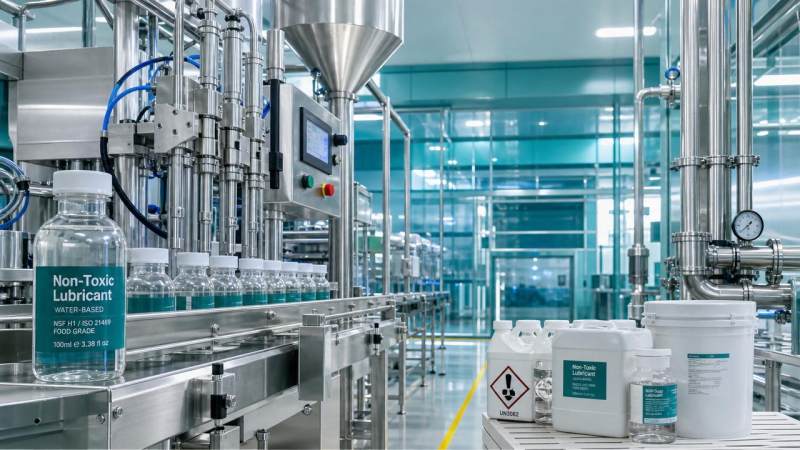
As regulations tighten and buyers demand safer, more sustainable materials, more manufacturers are rethinking their fluid and additive choices. Non-toxic lubricants are gaining traction not only for environmental and workplace safety benefits, but also for their role in improving brand trust, compliance, and long-term operational value. For business decision-makers, this shift is becoming less of a trend and more of a strategic advantage.
Why non-toxic lubricants matter more in today’s chemical supply chain
In the chemical industry, material selection now affects far more than process efficiency. It shapes compliance outcomes, worker exposure risks, waste handling costs, and customer confidence.
That is why non-toxic lubricants are moving from niche preference to mainstream specification. They address safety concerns while supporting cleaner operations and stronger ESG positioning.
The shift is especially relevant where lubricants may contact packaging lines, production tools, dust-prone areas, or maintenance zones with frequent human interaction.
In these settings, traditional formulations can create hidden liabilities. Toxicity classifications, spill risks, and disposal complexity can all increase the total cost of use.
By contrast, non-toxic lubricants often help reduce these downstream burdens. Their value becomes clearer when viewed through specific operating scenarios rather than price alone.
Which operating scenarios are driving the switch to non-toxic lubricants
The demand for non-toxic lubricants does not come from one single use case. It is rising across several practical scenarios with different risk profiles and performance expectations.
High-contact production environments
Facilities with frequent operator contact need safer maintenance chemicals. Even indirect skin exposure can trigger stricter review of lubricant ingredients and labeling.
In these environments, non-toxic lubricants support safer daily handling. They also simplify training, storage controls, and emergency response procedures.
Export-oriented manufacturing lines
Global buyers increasingly audit chemical inputs beyond the primary product. Lubricants used in production and packaging lines may become part of supplier evaluation.
Here, non-toxic lubricants can strengthen documentation readiness. They help align with customer requirements linked to REACH, RoHS, workplace safety, and sustainability disclosure.
Facilities focused on cleaner environmental performance
Where wastewater, emissions, and waste streams are closely monitored, lubricant chemistry matters. Poorly selected products can complicate treatment and increase environmental reporting pressure.
Non-toxic lubricants often fit better into low-impact operating models. They can reduce concern around accidental release, residue management, and hazardous waste classification.
Quality-sensitive chemical processing
In chemical production, contamination control is critical. Support materials, including lubricants, should not introduce avoidable risk to product consistency or downstream applications.
This is especially relevant in advanced additive and powder processing. Supporting materials such as Methyl Hydroxyethyl Cellulose (HEMC) are valued where formulation stability matters.
How different application scenarios change lubricant requirements
Not every facility needs the same lubricant profile. The right decision depends on exposure pathways, equipment conditions, compliance demands, and cleaning frequency.
This scenario-based view explains why more brands are switching to non-toxic lubricants. The question is no longer whether safer options exist, but where they create measurable value.
What benefits brands actually gain from non-toxic lubricants
The strongest case for non-toxic lubricants comes from combined operational and commercial outcomes. Their benefits usually appear across several layers at once.
- Lower workplace health concerns during routine maintenance
- Stronger alignment with evolving chemical safety regulations
- Reduced risk during transport, storage, and disposal
- Better audit readiness for international customers
- Improved sustainability messaging backed by material choices
- Greater confidence in facilities where contamination control matters
These outcomes influence brand perception as much as plant performance. Safer chemistry choices often become visible signals of responsible management.
In competitive supply chains, that signal matters. Buyers increasingly compare not only product quality, but also the chemical discipline behind production systems.
How to evaluate whether non-toxic lubricants fit your operating scenario
A successful switch should be based on process realities. It is important to compare toxicity profile, performance requirements, and total lifecycle impact together.
Check exposure and contact points first
Review where lubricants are applied, how often reapplication occurs, and whether workers, surfaces, or nearby materials may encounter residues.
Match chemistry to operating stress
Safer does not mean weaker. The selected product should still meet temperature, load, moisture, dust, and equipment compatibility requirements.
Review compliance documents in advance
Safety data sheets, ingredient transparency, and environmental statements should be reviewed before transition. Documentation quality often predicts implementation success.
Assess total cost, not unit price only
Non-toxic lubricants may reduce indirect costs tied to training, PPE, waste handling, spill response, and audit preparation. Those savings are often overlooked.
Where companies often misjudge the switch to non-toxic lubricants
One common mistake is treating all lubricants as low-priority consumables. In reality, they can affect compliance, maintenance reliability, and customer confidence.
Another mistake is assuming non-toxic lubricants are relevant only for food or pharmaceutical operations. The chemical industry also benefits through safer handling and cleaner positioning.
Some facilities switch based only on marketing claims. Without verifying performance data and compatibility, even a well-intended upgrade can disrupt operations.
A further oversight is ignoring adjacent materials. Chemical process quality depends on the full system, from additives and powders to support agents and lubricants.
That systems view explains why solution-oriented suppliers matter. Companies with integrated production and service capability can better support material consistency across applications.
Why this trend aligns with broader material upgrades in chemicals
The move toward non-toxic lubricants reflects a wider shift in chemical manufacturing. Safer, smarter material choices are being applied across production inputs and performance additives.
This is visible in construction chemicals and cellulose ether systems as well. Reliable materials, controlled viscosity, and process stability all support better downstream outcomes.
Jinan Ludong Chemical Co., Ltd. represents this integrated approach through advanced cellulose ether manufacturing, intelligent production, and flexible support for global application needs.
Its portfolio includes HPMC, RDP, HPS, and related solution support. In many formulation environments, consistency in materials and support chemistry directly improves efficiency.
That is why materials such as Methyl Hydroxyethyl Cellulose (HEMC) remain relevant in discussions about safer, high-performance chemical systems.
Practical next steps for adopting non-toxic lubricants with less risk
A smooth transition starts with a structured review. Focus on the areas where non-toxic lubricants can create immediate operational and compliance gains.
- Map current lubricant use by equipment, location, and exposure risk.
- Prioritize zones with manual handling, customer audits, or contamination sensitivity.
- Request technical and safety documents before trial selection.
- Run limited validation under real operating conditions.
- Measure performance, cleaning impact, and waste handling changes.
- Expand adoption where benefits are proven, not assumed.
Why more brands are switching to non-toxic lubricants becomes clear when decisions are tied to real scenarios. The shift supports safety, compliance, trust, and long-term efficiency.
For chemical operations aiming to strengthen both performance and responsibility, non-toxic lubricants are no longer just an alternative. They are becoming the smarter default choice.
Send Your Inquiry
We welcome your cooperation and we will develop with you.
