


ZOOMLION Delivers 800-Ton Crane to Mexico, Sets North America Record
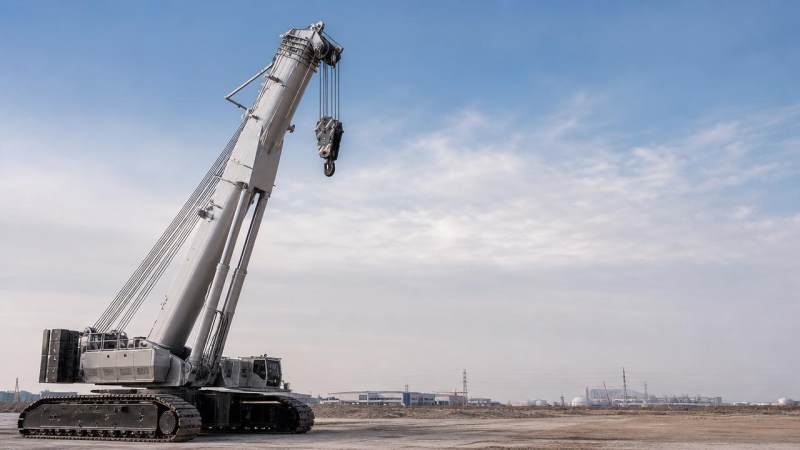
Chinese construction machinery manufacturer ZOOMLION recently delivered its ZCC13000 800-ton all-terrain crane to a customer in Mexico — marking the highest single-unit lifting capacity and contract value achieved by a Chinese-made mobile crane in the North American market. The delivery signals relevance for stakeholders in wind power development, petrochemical engineering, EPC contracting, and heavy-lift equipment import and distribution across Latin America and North America.
Event Overview
ZOOMLION delivered the ZCC13000 800-ton all-terrain crane to a Mexican client. The unit has obtained dual certification under ASME B30.5 (U.S. standard for mobile cranes) and Mexico’s NOM-002-SEDE-2021 (national safety regulation for lifting equipment). No specific date of delivery is publicly disclosed in available information.
Industries Affected
Direct Importers and Distributors in Latin America and North America
These entities face revised expectations regarding technical compliance and project eligibility. The dual certification confirms that Chinese ultra-heavy cranes can meet stringent North American safety and operational benchmarks — potentially expanding procurement options beyond traditional Western OEMs for large-scale infrastructure tenders.
EPC Contractors Operating in Petrochemical and Wind Energy Sectors
Contractors executing turnkey projects in Mexico or neighboring markets may now consider domestically certified Chinese cranes for critical lift packages. This could influence equipment selection criteria, tender documentation requirements, and third-party inspection protocols — particularly where local content or cost-efficiency targets apply.
Heavy-Lift Equipment Supply Chain Service Providers
Logistics planners, rigging specialists, and commissioning engineers supporting crane deployment must adapt to new equipment-specific documentation, training, and maintenance frameworks. The ZCC13000’s certification path implies future demand for personnel familiar with both ASME-aligned procedures and Chinese OEM service ecosystems.
What Relevant Enterprises or Practitioners Should Monitor and Act On
Track official updates on regulatory recognition pathways
Monitor whether NOM-002-SEDE-2021 acceptance of ASME B30.5-compliant Chinese equipment evolves into formal equivalency agreements — which would reduce future certification lead times and costs for similar models entering Mexico or Central America.
Assess procurement implications for high-capacity crane categories
Review current sourcing strategies for cranes above 600 tons, especially for upcoming wind turbine installation or refinery revamp projects in regions with active Chinese OEM support infrastructure — such as Mexico’s growing offshore wind corridor or Gulf Coast energy hubs.
Distinguish between certification achievement and operational adoption signals
Recognize that dual certification validates technical compliance but does not yet confirm widespread fleet integration or long-term field performance data in North American conditions. Prioritize case-specific due diligence over broad assumptions about scalability.
Prepare for updated equipment documentation and training coordination
Where evaluating or deploying similar units, initiate early engagement with OEM technical support teams to align on operator certification, spare parts logistics, and bilingual maintenance manuals — especially given language and regulatory interface requirements under NOM-002-SEDE-2021.
Editorial Perspective / Industry Observation
Observably, this delivery functions less as an isolated commercial milestone and more as a threshold indicator: it reflects maturation in Chinese OEMs’ ability to navigate complex, jurisdiction-specific regulatory environments — not just produce high-tonnage hardware. Analysis shows that successful certification under both ASME B30.5 and NOM-002-SEDE-2021 suggests alignment with functional safety expectations common across North American jurisdictions, though regional enforcement variance remains. From an industry perspective, this is best understood as an early-stage signal — one requiring follow-up verification through subsequent deployments, third-party reliability reports, and tender participation patterns — rather than evidence of immediate market displacement.
Conclusion: This event signifies a measurable advancement in the regulatory accessibility of Chinese ultra-heavy cranes in North America, but its practical impact remains contingent on consistent replication, localized service readiness, and end-user confidence built over time. It is currently more indicative of capability validation than market transformation.
Information Source: Public announcement by ZOOMLION; referenced standards ASME B30.5 and NOM-002-SEDE-2021. Ongoing observation is warranted regarding further deliveries, field performance data, and potential expansion of certification scope to other North American jurisdictions.
Send Your Inquiry
We welcome your cooperation and we will develop with you.
