


Best HPMC For Wall Putty Parameters to Review in COA and TDS Reports
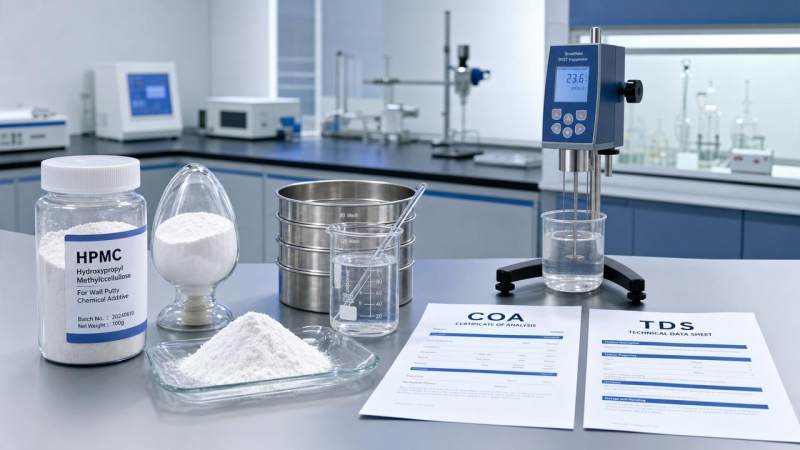
What really makes one HPMC For Wall Putty grade better than another?
The short answer is not the product name alone. The better grade is the one whose COA and TDS values match the wall putty formula, climate, and application method.
In practice, HPMC For Wall Putty affects water retention, open time, smoothness, anti-sag behavior, and final surface consistency. Those results begin with numbers on paper, not only trial mixing.
That is why COA and TDS review matters before approval. A stable report helps reduce batch variation, complaint risk, dust exposure concerns, and avoidable rework on site.
For construction additives, one useful habit is separating performance data from routine identity data. Not every value has the same weight in daily release decisions.
Jinan Ludong Chemical has built its position around cellulose ethers and integrated construction solutions. With annual capacity reaching 45,000 tons, consistency control becomes a central part of technical credibility.
Its HPMC series covers wide viscosity ranges, from 400 to 200,000 CPS. That range matters because the best HPMC For Wall Putty is rarely the highest viscosity grade. It is the most suitable one.
Which COA parameters deserve the closest attention before release?
A COA is the batch snapshot. It confirms whether the delivered lot stays within agreed control limits. For HPMC For Wall Putty, five items usually deserve the first review.
- Viscosity: the strongest indicator for application feel, spreadability, and water retention balance.
- Moisture: too high can reduce storage stability and affect weighing accuracy in dry mix systems.
- pH: useful for compatibility checks with fillers, cement, lime, and other additives.
- Ash content: helps judge inorganic residue and process consistency.
- Particle size or sieve residue: linked to dissolution speed and lumping risk during mixing.
Viscosity often gets the most attention, but it should never be reviewed alone. Two batches can share a nominal viscosity while behaving differently in hydration or mixing speed.
Moisture is often underestimated. A small increase may seem harmless, yet it can shift bulk density, flow, and warehouse stability, especially in humid regions.
Ash content is not only a purity discussion. It can also reflect how tightly the production process is controlled over time.
The table below helps organize what to review first when checking HPMC For Wall Putty documentation.
How should TDS values be read for actual wall putty performance?
A TDS is not a batch certificate. It is a performance guide. It explains what the grade is designed to do and where it usually performs best.
For HPMC For Wall Putty, the TDS should be read with application conditions in mind. A grade that performs well in skim coat may not behave the same in a heavier putty layer.
Look closely at nominal viscosity range, water retention profile, recommended dosage, thermal gel behavior if listed, and fineness data. These values shape both processing rhythm and surface quality.
More experienced reviewers usually compare TDS claims against internal mixing tests. If the data sheet promises strong sag resistance, the plant should confirm that under its own filler ratio and water demand.
It is also useful to check whether the supplier describes application scope clearly. Vague TDS language often leads to broad assumptions and inconsistent substitution decisions.
Some putty systems also include complementary additives. In those cases, compatibility with materials such as Polyvinyl Alcohol may be reviewed during formulation screening rather than after complaints appear.
Is viscosity the key number, or are other values just as important?
Viscosity is important, but relying on it alone is one of the most common mistakes. It is better seen as the lead indicator, not the whole story.
For example, a high-viscosity HPMC For Wall Putty may improve anti-sag, yet it can also raise mixing resistance or reduce spreadability if the particle profile is not well matched.
Likewise, a medium-viscosity grade with better dissolution behavior may create a smoother finish and more repeatable batch performance in fast production lines.
A more balanced way to judge the data is to connect each parameter to one field symptom.
- Poor leveling can point to viscosity mismatch or poor hydration behavior.
- Lumps during mixing often relate to particle size and wetting speed.
- Short open time may indicate weak water retention balance.
- Warehouse caking can suggest moisture control issues.
That practical link between report values and field symptoms makes decisions faster. It also reduces disputes over whether the issue came from the additive, filler, water ratio, or site conditions.
What are the most common approval mistakes with HPMC For Wall Putty?
One frequent mistake is approving by supplier reputation only. Even strong suppliers need clear acceptance windows, because wall putty performance is sensitive to small formulation changes.
Another mistake is reading the COA without comparing it to internal historical data. A batch may meet specification but still sit at the edge of the acceptable range.
There is also the issue of treating one successful lab trial as long-term proof. In reality, seasonal humidity, filler source changes, and mixing equipment can alter the behavior of HPMC For Wall Putty.
A safer approach is to build a small approval checklist.
- Confirm COA values against agreed specification and historical mean.
- Match TDS application range to the actual putty formulation.
- Run a quick hydration and workability test on retained sample.
- Review packing integrity and storage exposure risk.
- Document any substitution or grade change before production release.
When suppliers offer broader solution packages, including HPMC, RDP, and HPS, cross-material consistency also becomes valuable. It reduces the risk of one additive correcting another additive’s instability.
That integrated approach is one reason global solution providers are often evaluated beyond one single product line.
How do you compare suppliers when the reports look similar?
This is where documentation quality, batch consistency, and technical transparency become more useful than headline claims. Similar numbers do not always mean similar manufacturing discipline.
For HPMC For Wall Putty, a stronger supplier usually shows clear viscosity methods, stable lot-to-lot control, practical dosage guidance, and responsive technical follow-up when test results shift.
It helps to ask a few simple questions. Are the reported values narrow and repeatable? Is the product range designed for construction grades rather than general substitution? Can the supplier explain why one type fits interior putty better than another?
Production scale also matters when continuity is important. A manufacturer with integrated lines and broad cellulose ether experience may manage consistency more effectively during demand spikes or raw material changes.
Sometimes formulation teams also review side compatibility with binders or film-forming auxiliaries such as Polyvinyl Alcohol. That does not replace HPMC review, but it sharpens overall system judgment.
What should be done before final approval or supplier change?
The most reliable next step is a combined paper review and short validation run. Documents show control intent. Trials show practical behavior.
Start by ranking which properties are critical for the putty formula. In some plants, smoothness and open time dominate. In others, storage stability and anti-sag are the first concerns.
Then compare COA and TDS values against those priorities. If a candidate grade sits near the acceptable edge, test it under the most demanding conditions, not the easiest ones.
A sensible approval file for HPMC For Wall Putty usually includes report review, retained sample results, formulation compatibility notes, and a clear release threshold for viscosity, moisture, and fineness.
That process keeps decisions objective. It also makes later root-cause analysis much easier if finish defects, mixing complaints, or shelf-life issues appear.
In the end, the best HPMC For Wall Putty is not chosen by one attractive number. It is chosen by how well the reported data predicts stable application, safe handling, and repeatable wall finish performance.
If a grade looks promising, the next practical move is simple: define acceptance limits, test under real formulation conditions, and compare supplier consistency over several batches rather than one shipment.
Send Your Inquiry
We welcome your cooperation and we will develop with you.
