


How Redispersible Polymer Powder Improves Freeze-Thaw Resistance in Exterior Mortars
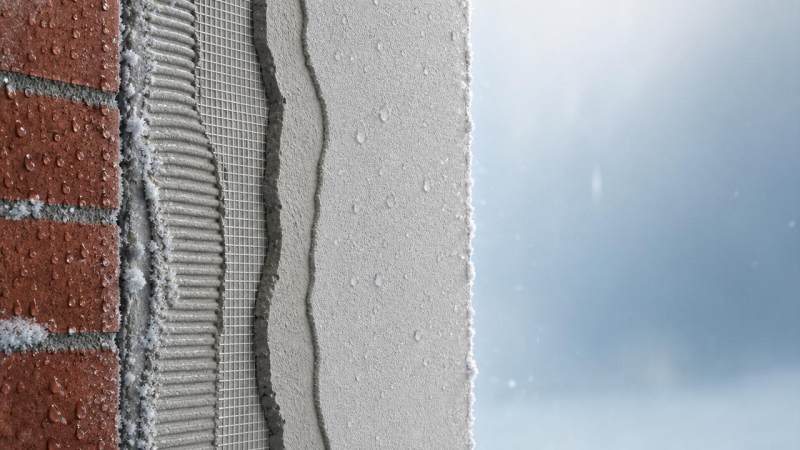
How Redispersible Polymer Powder Improves Freeze-Thaw Resistance in Exterior Mortars
In exterior mortar applications, freeze-thaw damage can quickly reduce durability, bond strength, and surface stability.
Once water enters the mortar matrix, repeated freezing and thawing creates internal stress.
That stress often leads to cracking, debonding, edge failure, and higher maintenance costs.
Redispersible Polymer Powder helps solve this problem in a practical, measurable way.
It improves flexibility, adhesion, and water resistance, helping exterior mortars survive harsh weather cycles with less damage over time.
Why Freeze-Thaw Damage Happens in Exterior Mortars
Exterior mortars face rain, snow, temperature swings, and long wet-dry cycles.
If the mortar absorbs too much water, freezing turns that water into expanding ice.
The expansion pressure weakens pores, interfaces, and the cementitious skeleton.
Over time, small defects become visible cracks, hollow areas, and surface scaling.
This is especially risky in façade renders, tile adhesives, repair mortars, and insulation systems.
In real projects, freeze-thaw failure usually starts with moisture management, not only low temperature.
How Redispersible Polymer Powder Changes Mortar Performance
Redispersible Polymer Powder forms a polymer film after hydration and drying.
That film works together with cement hydration products inside the mortar structure.
The result is a more resilient matrix with better deformation capacity.
Instead of behaving like a brittle body, the mortar can absorb stress more effectively.
This matters during freeze-thaw cycling, when repeated volume changes attack weak internal zones.
Key improvement mechanisms
- Reduces brittleness and improves flexibility under temperature stress.
- Enhances adhesion to concrete, masonry, insulation boards, and old substrates.
- Helps limit microcrack growth caused by moisture and thermal movement.
- Improves cohesion, reducing material separation during application and service.
- Supports lower water penetration when the formulation is properly balanced.
The Link Between Flexibility and Freeze-Thaw Resistance
A brittle mortar cracks earlier when trapped water freezes.
A tougher mortar can distribute stress across a wider internal area.
That is one reason Redispersible Polymer Powder is widely used in exterior drymix systems.
The polymer network bridges fine cracks before they become structural pathways for water.
From a project perspective, this means lower risk of early façade deterioration in cold regions.
What better flexibility delivers on site
- Less cracking around joints, corners, and substrate transitions.
- More stable bonding under seasonal movement.
- Reduced repair frequency in exposed elevations.
- Better long-term appearance and coating support.
Water Resistance Matters Just as Much
Freeze-thaw resistance is not only about surviving cold.
It also depends on how much water can enter the mortar before temperatures drop.
A well-designed system with Redispersible Polymer Powder helps reduce capillary water uptake.
When less water enters, less ice forms inside the pore structure.
That directly lowers expansion pressure during freezing events.
This is why material selection should focus on total system behavior, not one isolated property.
In some formulation discussions, teams also compare support additives across product lines, including Detergent-grade HPMC, to better understand water management strategies in different applications.
Where Redispersible Polymer Powder Adds the Most Value
Not every exterior mortar faces the same level of freeze-thaw stress.
The highest value appears where moisture exposure and temperature variation overlap.
Typical use cases
- Exterior wall putty and render systems in cold climates.
- Tile adhesive and grouting systems exposed to rain and winter cycles.
- Repair mortars used on balconies, podiums, and precast elements.
- EIFS and insulation bonding mortars with seasonal movement demands.
- Thin-bed mortars applied to absorbent or mixed substrates.
In these cases, Redispersible Polymer Powder supports both performance and service-life planning.
How to Evaluate the Right Formulation
Choosing the right mortar system requires more than checking one technical sheet.
The better approach is to match the additive package with climate, substrate, and application method.
Points worth reviewing before approval
- Water absorption performance under site-relevant conditions.
- Adhesion after freeze-thaw cycling, not only initial bond strength.
- Flexural behavior and crack resistance in thin sections.
- Compatibility with cellulose ethers, fillers, and cement type.
- Open time, sag resistance, and workability during application.
- Long-term durability targets versus project maintenance expectations.
A low-cost formula may look attractive at procurement stage.
But if it lacks sufficient Redispersible Polymer Powder, lifecycle cost can rise quickly after installation.
Why Supply Stability and Technical Support Also Matter
Performance on paper is only one side of a successful exterior mortar project.
Consistent quality, repeatable production, and formulation guidance matter just as much.
Jinan Ludong Chemical Co., Ltd. focuses on cellulose ethers, RDP, and integrated construction material solutions.
Its annual production capacity reaches 45,000 tons, supporting stable supply for global markets.
The company combines traditional process strengths with intelligent automated production.
That helps customers balance technical performance, batch consistency, and project delivery schedules.
When teams evaluate complete additive systems, they may also review related materials such as Detergent-grade HPMC in broader sourcing conversations.
Practical Steps to Improve Exterior Mortar Durability
If freeze-thaw performance is a priority, action should start early in the specification stage.
- Define exposure conditions clearly, including rainfall, freeze frequency, and substrate type.
- Request freeze-thaw and water absorption data for the complete mortar system.
- Check whether Redispersible Polymer Powder dosage matches the real durability target.
- Confirm compatibility between RDP, HPMC, cement, and local fillers.
- Run site trials before full rollout when climate exposure is severe.
These steps help reduce hidden risk before the first batch reaches the wall.
They also create a clearer basis for balancing performance, budget, and warranty expectations.
Conclusion
Redispersible Polymer Powder improves freeze-thaw resistance by making exterior mortars tougher, less brittle, and less vulnerable to water-driven damage.
Its value becomes even clearer in climates where moisture and temperature changes work together.
For exterior mortar decisions, the best results come from evaluating flexibility, adhesion, and water resistance as one system.
With the right formulation and reliable supply support, durability stops being a guess and becomes part of the plan.
That is the practical reason Redispersible Polymer Powder remains a key solution for longer-lasting exterior mortar performance.
Send Your Inquiry
We welcome your cooperation and we will develop with you.
