


CIMES 2026 Beijing: AI-Driven Machine Tools & Global Export Standards
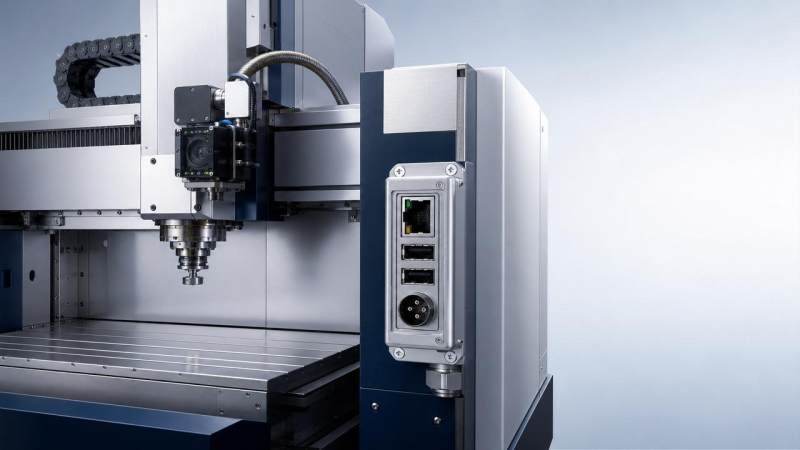
CIMES 2026 — the 17th China International Machine Tool & Tools Exhibition — opens in Beijing on May 25, 2026. With 120,000 m² of exhibition space and over 1,500 exhibitors from 28 countries, the event signals accelerating convergence between AI-integrated manufacturing equipment and international technical compliance requirements — particularly for machine tool exporters, smart production line integrators, and industrial automation solution providers.
Event Overview
The 17th China International Machine Tool & Tools Exhibition (CIMES 2026) will be held in Beijing from May 25 to 29, 2026. The exhibition covers 120,000 square meters and draws more than 1,500 enterprises from 28 countries. Confirmed participants include German manufacturer DMG MORI and Japanese firm Yamazaki Mazak, both showcasing intelligent machine tools integrating AI-powered visual inspection, digital twin-based commissioning, and OPC UA interoperability protocols. Concurrently, the White Paper on Technical Adaptation for Chinese Intelligent Machine Tool Exports will be released, outlining market-specific regulatory expectations across Europe, Southeast Asia, and the Middle East — focusing on data security, industrial communication protocols, and human-machine collaborative safety requirements.
Industries Affected by This Development
Smart Production Line Exporters
These companies integrate CNC machines, control systems, and software into turnkey factory solutions. They are directly affected because the White Paper explicitly maps regional technical barriers — such as mandatory OPC UA implementation in EU Industry 4.0 projects or localized cybersecurity certification in Gulf Cooperation Council (GCC) member states. Non-compliance may delay project approvals or trigger post-shipment reconfiguration costs.
Domestic CNC Machine Tool Manufacturers
Manufacturers supplying core equipment to export-oriented system integrators face tightening upstream specification demands. As global buyers increasingly require embedded AI vision modules or native OPC UA stacks — not just add-on kits — product development cycles must now align with export-market protocol roadmaps rather than domestic GB standards alone.
Industrial Automation Software Developers
Firms providing MES, SCADA, or edge analytics platforms must verify interoperability with newly emphasized protocols. The emphasis on OPC UA — not just as a connectivity option but as a baseline requirement in multiple markets — means SDK updates, conformance testing, and documentation localization (e.g., safety validation reports in English or Arabic) are no longer optional enhancements.
Export Compliance & Certification Service Providers
Third-party labs and consultants supporting CE, UKCA, or GCC Conformity Assessment processes will see rising demand for combined evaluations — e.g., validating both functional safety (IEC 61508) and data handling practices (GDPR-aligned logging) within a single machine tool control architecture. The White Paper’s regional breakdown increases the need for jurisdiction-specific test planning early in the design phase.
What Relevant Enterprises or Practitioners Should Focus On Now
Review the White Paper’s regional annexes before finalizing Q3 2026 product roadmaps
The document is not advisory only: it cites enforceable requirements — such as EU Machinery Regulation Annex I clauses on human–machine interaction — that apply to machines placed on the market after July 2026. Engineering teams should cross-reference their next-generation controller firmware release schedules against these timelines.
Prioritize OPC UA stack validation for target markets — not just connectivity demos
Several exhibitors at CIMES 2026 will demonstrate real-time data exchange using companion specifications (e.g., OPC UA for Machine Tools, PackML). Buyers evaluating suppliers will likely request evidence of certified conformance (e.g., OPC Foundation test lab reports), not just vendor claims of ‘OPC UA support’.
Assess whether AI-based quality inspection modules meet local data governance expectations
AI vision systems often process image data on-device or at the edge. But in markets like Germany or Saudi Arabia, regulations may restrict where inference results — especially those involving worker biometrics or proprietary part geometry — can be stored or transmitted. Pre-deployment legal review is becoming a prerequisite, not a post-sale service.
Align internal technical documentation with multilingual, regulation-aware templates
The White Paper notes recurring gaps in user manuals and safety instructions — including missing hazard analysis traceability or untranslated risk mitigation steps. Updating documentation frameworks now (e.g., adopting S1000D for structured technical publications) reduces rework when entering new markets.
Editorial Perspective / Industry Observation
Observably, CIMES 2026 functions less as a showcase of incremental innovation and more as a coordination point for de facto standardization. The joint presence of DMG MORI and Yamazaki Mazak — both demonstrating interoperable AI-augmented systems — suggests growing industry consensus around OPC UA and ISO/IEC 27001-aligned data handling in industrial edge devices. Analysis shows this is not yet a binding regulatory outcome, but rather an emerging commercial expectation: buyers increasingly treat protocol compliance and embedded safety-by-design as non-negotiable qualifiers during RFQ evaluation. From an industry perspective, the White Paper’s publication marks a shift from reactive compliance (certifying after development) toward proactive alignment (designing to regional technical baselines from day one). It is currently best understood as a signal — not a mandate — but one with rapidly shortening lead time for operational response.
Conclusion: CIMES 2026 highlights a structural inflection in global machine tool trade — where technical interoperability and jurisdiction-specific safety/data rules are becoming decisive competitive factors alongside precision and throughput. For exporters and integrators, this is not merely about adapting products; it is about recalibrating engineering workflows, certification strategies, and documentation practices to match diverging regional regimes. The event itself is a milestone, but the real impact lies in how quickly firms translate its technical disclosures into actionable design and compliance decisions.
Information Source: Official CIMES 2026 exhibition announcement; press materials from DMG MORI and Yamazaki Mazak (as publicly released prior to May 2026); preliminary outline of the White Paper on Technical Adaptation for Chinese Intelligent Machine Tool Exports, confirmed for release at CIMES 2026. Note: Full text of the White Paper remains under embargo pending official launch on May 25, 2026 — ongoing monitoring recommended for Annex-level details.
Send Your Inquiry
We welcome your cooperation and we will develop with you.
