


Can Cellulose Ethers Replace Synthetic Polymers in Eco-Certified Detergents? Technical Feasibility Assessment
Time:Oct 16, 2026
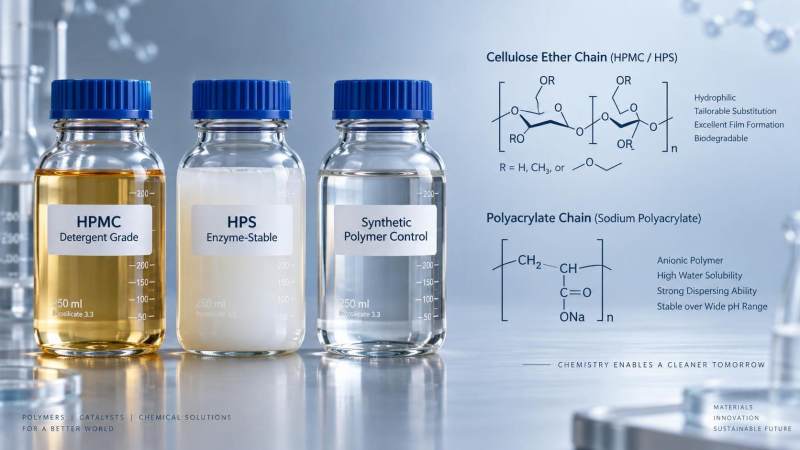
Yes—cellulose ethers can replace synthetic polymers in eco-certified detergents, but only under tightly defined technical conditions. This is not a blanket substitution. It hinges on three interdependent variables: functional equivalence in rheology and suspension *at use concentration*, regulatory alignment with certification schemes (e.g., Ecocert, COSMOS, Nordic Swan), and formulation resilience across pH, ionic strength, and surfactant interactions. Where cellulose ethers succeed, they do so not as drop-in replacements—but as purpose-engineered components requiring reformulation discipline.
The core constraint is not biodegradability or origin—it’s performance fidelity. Synthetic polymers like polyacrylates or PVP deliver predictable thickening, anti-redeposition, and viscosity stability because their molecular architecture is chemically uniform and precisely tuned. Cellulose ethers—HPMC, HPS, and tailored derivatives—are inherently heterogeneous. Their degree of substitution (DS), molar substitution (MS), and viscosity distribution vary batch-to-batch unless controlled at polymerization and purification stages. For detergent applications, this variability directly impacts suspension efficiency of insoluble actives (e.g., enzymes, abrasives) and resistance to viscosity collapse in high-salt or low-pH systems. A grade that performs reliably in a liquid hand soap may fail catastrophically in a concentrated laundry booster—despite identical nominal viscosity.
Regulatory eligibility does not equal functional readiness. Many cellulose ethers meet the raw material criteria for COSMOS Organic or Ecocert’s “natural origin” thresholds (≥95% carbon from renewable biomass, non-GMO feedstock, solvent-free isolation). But certification bodies assess *final product* compliance—not just ingredient provenance. Residual solvents (e.g., propylene oxide, chloromethane), heavy metals (from catalysts or equipment leaching), and microbial load must all fall within strict limits. Not all HPMC or HPS producers meet these thresholds consistently. Production scale matters: smaller batches increase risk of cross-contamination; aging infrastructure raises solvent residue concerns. Jinan Ludong Chemical’s 45,000-ton annual capacity is relevant here—not as a sales metric, but as an indicator of process stabilization. Large-scale, dedicated lines enable tighter control over DS/MS distribution, residual solvent removal, and end-product sterility—factors that directly determine whether a given lot clears EcoCert’s Annex III impurity screening.
Viscosity alone is a misleading selection criterion. A detergent formulator comparing a 10,000 CPS synthetic polymer to a 10,000 CPS HPMC will likely observe divergence in shear-thinning behavior, temperature sensitivity, and salt tolerance. HPMC exhibits pronounced thermogelling—viscosity drops sharply above its cloud point (typically 50–70°C), which destabilizes hot-process formulations. In contrast, hydroxypropyl starch ether (HPS) maintains viscosity up to 90°C but shows higher sensitivity to alpha-amylase activity—critical in enzyme-containing detergents. Neither behaves like a polyacrylate in high-ionic-strength environments: NaCl concentrations above 1.5% w/w cause rapid HPMC viscosity loss due to charge screening and polymer chain collapse. This isn’t a flaw—it’s a material property requiring compensation via co-thickeners (e.g., xanthan) or ionic strength buffering (e.g., sodium citrate). Ignoring this leads to batch failures during scale-up, not lab-scale validation.
Formulation adaptability—not just ingredient substitution—is the real bottleneck. Synthetic polymers are often added late in the process, post-surfactant neutralization, with minimal impact on foaming or emulsion stability. Cellulose ethers interact strongly with anionic surfactants (LAS, AES): HPMC can suppress foam if added before surfactant neutralization; HPS may induce phase separation in SLES-rich systems without precise pH control (optimal range: pH 7.2–8.5). These interactions aren’t defects—they’re deterministic responses rooted in hydrogen bonding affinity and hydrophobic/hydrophilic balance. Successful replacement requires resequencing addition points, adjusting neutralization timing, and validating stability under accelerated storage (45°C/3 months), not just room-temperature hold tests.
There is no universal “detergent-grade” cellulose ether. Performance splits along two axes: application type (liquid vs. powder, rinse-off vs. leave-on) and certification stringency (COSMOS Natural vs. COSMOS Organic vs. USDA BioPreferred). For liquid hand soaps targeting COSMOS Natural, low-viscosity (<4,000 CPS) HPMC with high hydroxypropyl substitution (MS > 0.8) offers sufficient thickening and enzyme compatibility. For powdered laundry detergents requiring Ecocert Organic compliance, HPS with controlled amylose content and <5 ppm residual acetaldehyde is more viable—its granular solubility profile aligns better with spray-drying kinetics and avoids the thermal degradation risks of HPMC in high-heat processing.
Supply chain maturity remains a silent risk factor. Synthetic polymers benefit from decades of standardized logistics: moisture-barrier packaging, nitrogen-flushed containers, and global warehousing with humidity control <40% RH. Most cellulose ether suppliers still ship in standard kraft bags or multi-wall paper sacks—adequate for construction mortar, insufficient for detergent-grade stability. Hygroscopicity varies significantly: HPMC absorbs moisture rapidly above 60% RH, leading to pre-gelation and dosing inconsistency in automated filling lines. This isn’t a theoretical concern—it triggers real-world line stoppages when unconditioned powder bridges in hoppers. Verified supply partners must demonstrate validated packaging protocols, not just COAs.
Detergent-grade HPMC from producers with integrated purification and climate-controlled packaging infrastructure mitigates several of these risks—but only if matched to the specific formulation’s thermal, ionic, and enzymatic profile. Its value lies not in replacing synthetics by default, but in enabling certified formulations where synthetic alternatives are explicitly excluded by standard clauses (e.g., COSMOS Annex IV prohibition of petrochemical-derived polymers). That exclusion creates a technical necessity—not a marketing opportunity.
The decision threshold isn’t “Can it work?” It’s “Does the cost of reformulation effort, testing cycles, and supply chain adaptation justify the certification benefit *for this specific product line*?” For premium personal care detergents targeting EU organic shelf space, the answer is increasingly yes. For commodity industrial cleaners, where cost-per-kilogram dominates and certifications are optional, the ROI remains marginal. Enterprise decision-makers should treat cellulose ethers not as drop-in substitutes, but as a specialized functional class—requiring dedicated formulation R&D bandwidth, supplier qualification beyond COAs (including process audits), and tolerance for narrower operational windows. The feasibility is real. The simplicity is not.
Send Your Inquiry
We welcome your cooperation and we will develop with you.
