


Cellulose Ether Supply Chain Risks in 2024: Regional Sourcing Shifts and Raw Material Volatility
Why “Just-in-Time” Isn’t Enough Anymore for Cellulose Ethers Procurement
If your procurement calendar still assumes stable lead times, predictable pricing, and consistent regional availability for Cellulose Ethers, 2024 has likely already disrupted that rhythm. It’s not just about logistics delays or port congestion—it’s deeper. The raw material base (mainly wood pulp and refined cellulose), the geographic concentration of refining capacity, and tightening environmental compliance across major producing regions are reshaping what “reliability” actually means for buyers.
Take methyl ether derivatives like HPMC: their performance hinges on precise etherification control, which in turn depends on batch-to-batch consistency of purified cellulose feedstock. When pulp supply tightens in Northern Europe—or when regional export licensing shifts unexpectedly in Asia—the ripple effect isn’t just a price uptick. It’s variability in viscosity distribution, subtle differences in water retention profiles, and longer qualification cycles for new lots. That’s why many forward-looking procurement teams now treat supplier capability as part of technical due diligence—not just commercial negotiation.
Three Structural Shifts You Can’t Ignore
First, the regional sourcing map is no longer static. Historically, over 60% of high-purity cellulose ether production relied on pulp from sustainably managed boreal forests—primarily Finland, Sweden, and Canada. But rising carbon reporting requirements, coupled with stricter EU deforestation regulations (EUDR), are forcing refineries to trace and verify fiber origin down to the forest management unit level. Some suppliers have responded by shifting pulp sourcing toward certified plantations in South America and Southeast Asia—but those sources carry different lignin content and hemicellulose profiles, requiring re-optimization of etherification parameters.
Second, raw material volatility isn’t just about price—it’s about specification drift. Spot prices for dissolving pulp rose over 22% YoY in early 2024, but more consequential was the widening spread between alpha-cellulose purity grades (92–96% vs. 97–99%). Lower-grade pulp may work for certain industrial applications, but for construction-grade HPMC demanding tight viscosity control (e.g., Type 75 at 100,000 cps ±15%), even minor variations in polymer chain length distribution can affect mortar open time or tile adhesive sag resistance. Buyers who only specify “HPMC” without defining acceptable alpha-cellulose range or ash content often find themselves qualifying multiple batches per quarter.
Third, regulatory convergence is accelerating—but unevenly. China’s GB/T 28627–2023 standard now mandates tighter limits on residual solvents and heavy metals for construction-grade HPMC. Meanwhile, the EU’s REACH Annex XVII updates require full disclosure of ethylene oxide-derived impurities—even in trace amounts. These aren’t just labeling changes. They force process recalibration, extended hold periods for analytical validation, and sometimes reformulation. Suppliers without integrated R&D and QC infrastructure struggle to maintain dual-compliance across markets.
What “Resilience” Actually Looks Like on the Ground
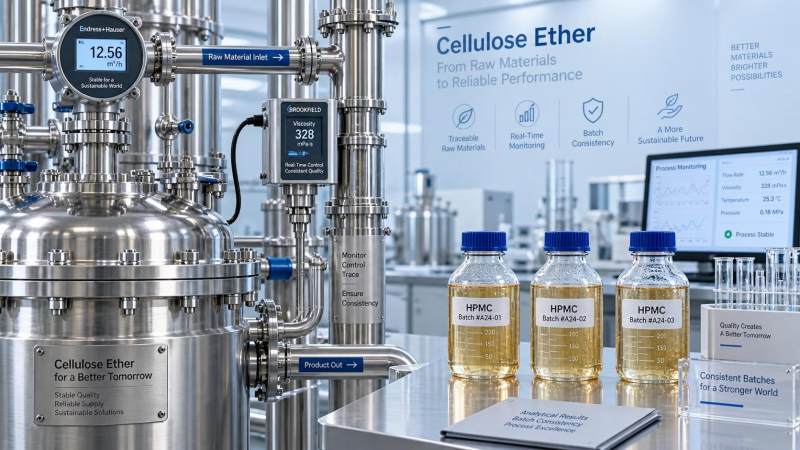
Resilience isn’t stockpiling. It’s visibility—into feedstock origin, reaction kinetics, and real-time batch analytics. Jinan Ludong Chemical, established in 2020, built its 45,000-ton/year production capacity around this principle. Its HPMC lines integrate inline viscosity monitoring during etherification, not just final QC testing. That means deviations are caught mid-process—not after packaging. Its Type 60 and Type 75 series cover viscosities from 400 to 200,000 cps, but more importantly, each grade is mapped to specific pulp lot characteristics and reactor dwell time profiles. This allows them to adjust parameters dynamically rather than switch feedstock—and avoid introducing variability downstream.
That integration extends to raw material strategy. Rather than relying on single-source pulp contracts, Ludong maintains direct relationships with three certified pulp mills across Scandinavia and South America—each supplying pulp with documented alpha-cellulose specs and solvent residue baselines. When one region faces seasonal yield variation or certification renewal delays, the system reroutes feedstock without changing the final product specification. That’s how they maintain consistent water retention values across 12-month batches—even when raw material cost fluctuates.
For buyers managing multi-site projects across EU, MENA, and APAC, this kind of vertical alignment matters more than headline capacity. It reduces the need for parallel qualification, shortens time-to-market for new formulations, and lowers total cost of ownership—especially when factoring in lab retesting, field trial delays, or reformulation labor.
A Note on Specialty Derivatives
While HPMC dominates volume, some applications demand tailored substitution patterns. Methyl Hydroxyethyl Cellulose (HEMC) offers distinct hydration kinetics for self-leveling compounds where rapid initial set must coexist with extended workability. Its synthesis requires tighter control over hydroxyethyl molar substitution (MS) distribution—something harder to achieve consistently when feedstock purity varies. Suppliers without in-house etherification analytics often default to broader MS ranges, forcing formulators to compensate with additional additives.
Practical Next Steps—Not Just Theory
Start by auditing your current spec sheet. Does it define alpha-cellulose minimum? Acceptable ash content? Residual propylene oxide limits? If not, you’re implicitly outsourcing technical risk to your supplier—without visibility into how they manage it.
Next, ask about feedstock traceability—not just certification status, but actual lot-level mapping between pulp source and finished batch. A supplier who can show you the pulp mill ID, harvest date, and purification run number tied to your last HPMC shipment has invested in infrastructure beyond compliance.
Finally, test for continuity—not just conformity. Request three consecutive production lots from the same grade, tested side-by-side for viscosity, water retention, and pH stability. If results fall outside your internal tolerance band more than once, the issue isn’t your QC—it’s upstream variability you haven’t yet quantified.
The 2024 reality isn’t about avoiding risk—it’s about knowing which variables you can control, which you can monitor, and which you need to design around. For Cellulose Ethers, that starts long before the purchase order.
Send Your Inquiry
We welcome your cooperation and we will develop with you.
