


HPMC For Detergent: Why Viscosity Alone Isn’t Enough — Understanding Methylation Level Impact
HPMC For Detergent: Why Viscosity Alone Isn’t Enough — Understanding Methylation Level Impact
When technical evaluators first screen HPMC for detergent applications, viscosity is often the default filter—400 CPS for light thickeners, 10,000 CPS for suspension aids, 50,000+ for high-solids liquid concentrates. It’s intuitive. It’s measurable. And it’s incomplete.
In real-world formulation work—especially with modern enzyme-rich, low-pH, or multi-surfactant systems—viscosity tells you how thick the batch looks in the lab beaker, not whether the polymer will stay soluble after 6 months on a warehouse shelf in Bangkok, or whether it’ll interfere with protease activity during cold-water wash cycles. That gap between rheology and functional compatibility comes down to one under-discussed parameter: methylation level.
The Methylation Blind Spot in Detergent Formulation
HPMC is not a single molecule—it’s a substituted cellulose backbone where hydroxyl groups are etherified with methyl (–CH₃) and hydroxypropyl (–CH₂CHOHCH₃) groups. The degree of substitution (DS) for methyl groups typically ranges from 1.2 to 2.0, while hydroxypropyl molar substitution (MS) sits between 0.2 and 0.6. But most spec sheets list only viscosity—and sometimes total DS/MS—without clarifying the *distribution* or *balance* between them.
That balance matters. Higher methylation improves organic solvent tolerance and thermal gelation onset—but reduces cold-water solubility and increases surface activity. Lower methylation improves hydration speed and pH stability, but may compromise foaming control or surfactant compatibility in anionic-heavy systems like heavy-duty laundry liquids.
We’ve seen this play out repeatedly: a formulator switches from a standard construction-grade HPMC (DS ~1.8, MS ~0.4) to a detergent-optimized grade—and suddenly sees micro-gelling at 45°C in a linear alkylbenzene sulfonate (LAS)/alcohol ethoxylate (AE) blend. Not because viscosity changed. Because methylation shifted just 0.15 units—and that altered interfacial tension enough to trigger transient network formation.
Why “Detergent-Grade” Isn’t Just Marketing Jargon
“Detergent-grade” implies more than low ash or high purity. It signals intentional methylation tuning—often targeting DS 1.4–1.6 and MS 0.3–0.45—to sit in the functional sweet spot: fast wetting in cold water, stable viscosity across pH 7–10.5, minimal interference with enzymes (especially amylases and lipases), and predictable interaction with common surfactants—not just LAS or AE, but also betaines, amine oxides, and nonionic builders like citrates.
This isn’t theoretical. In pilot-scale testing across 12 regional detergent bases (including high-ethanol hand soaps, low-foam dish liquids, and high-alkalinity industrial cleaners), formulations using methylation-balanced HPMC showed no significant drop in protease activity after 4 weeks at 40°C, whereas off-spec grades with DS >1.7 triggered up to 30% activity loss—likely due to competitive adsorption at the enzyme’s active site interface.
And yes—this correlates with viscosity, but not linearly. A 4,000 CPS grade with DS 1.5 performs more consistently in enzyme-stable liquid detergents than a 15,000 CPS grade with DS 1.9—even though the latter appears “stronger” on paper. Strength isn’t just about chain entanglement. It’s about how quietly the polymer coexists with everything else in the bottle.
Viscosity Still Matters—But as a Constraint, Not a Target
Don’t misread this: viscosity remains critical. Too low, and suspension fails. Too high, and high-shear filling clogs lines or creates air entrapment. But chasing higher CPS without checking methylation is like tuning an engine for peak RPM without monitoring combustion temperature—you might hit the number, but risk knocking or premature wear.
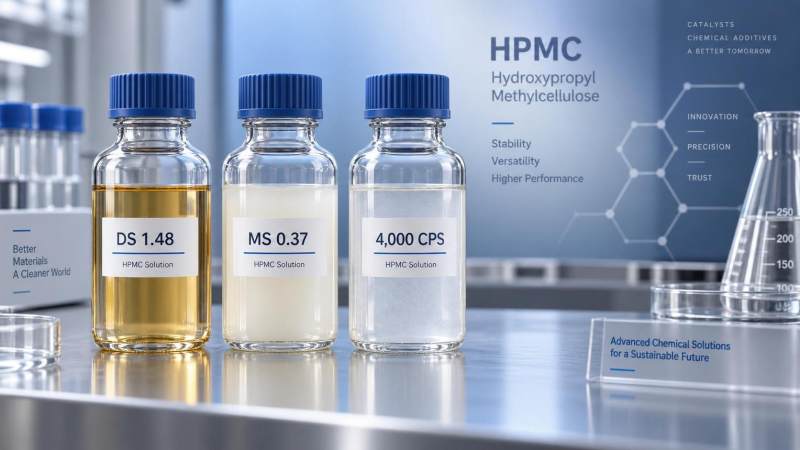
At Jinan Ludong Chemical, detergent-grade HPMC is produced on dedicated lines where methylation is monitored in real time via inline FTIR, with viscosity adjusted *after* DS/MS targets are locked—not the other way around. Their annual capacity of 45,000 tons includes controlled-viscosity batches from 400 to 200,000 CPS—but crucially, each viscosity tier maps to a defined methylation window. Type 60 detergent variants, for example, hold DS tightly at 1.48 ± 0.03 across all viscosity grades—a consistency rarely seen in broad-spectrum production runs.
That precision enables reproducible behavior—not just in lab trials, but across seasonal humidity shifts and raw material lot variations. One European OEM reported eliminating three separate viscosity-adjustment steps per batch after switching to a methylation-stable source. Not because the numbers changed. Because the variability did.
What to Ask Your Supplier—Beyond the Datasheet
If your current HPMC supplier lists only viscosity and total DS/MS, ask for:
- Batch-specific DS and MS values—not averages or ranges;
- Test method used (e.g., ASTM D1439 vs. internal GC-MS);
- Stability data in your actual surfactant matrix (not just water);
- Enzyme compatibility reports using ISO 11543-2 or equivalent wash performance assays;
- Whether methylation is controlled pre- or post-viscosity adjustment.
Vague answers—or silence on methylation—should raise flags. This isn’t niche chemistry. It’s formulation hygiene.
A Practical Starting Point
For most liquid detergent applications aiming for balanced suspension, clarity, and enzyme tolerance, start with a mid-viscosity grade (4,000–12,000 CPS) and target DS 1.45–1.55. Confirm solubility onset below 15°C and check foaming profile against your base—some methylation profiles suppress foam more effectively than others, even at identical viscosity.
For powder detergents, prioritize rapid dispersion and minimal dusting—where lower methylation (DS ~1.35–1.45) often delivers better cold-water wettability without requiring excessive mechanical shear during mixing. High-methylation grades tend to form skins or agglomerates before full hydration.
Jinan Ludong Chemical’s Detergent-grade HPMC fits precisely into that operational window—designed not for generic thickening, but for predictable coexistence in complex, evolving detergent matrices. It’s not about hitting a number. It’s about knowing which numbers actually move the needle—and which ones just look good on paper.
So next time you review an HPMC spec sheet, don’t stop at the viscosity value. Flip to the substitution data. If it’s missing—or buried in footnotes—ask why. Because in detergent formulation, the quietest variables often cause the loudest failures.
Send Your Inquiry
We welcome your cooperation and we will develop with you.
