


Choosing Redispersible Polymer Powder for Wall Putty
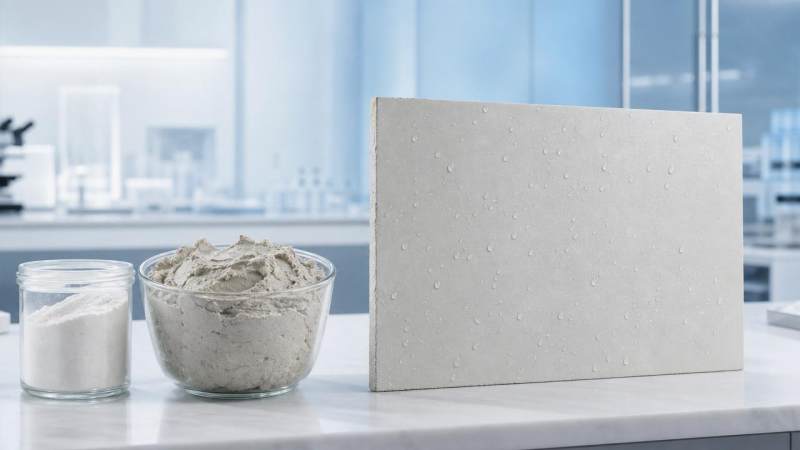
Selecting the right Redispersible Polymer Powder for wall putty is now a strategic formulation decision, not only a material choice.
It directly affects adhesion, workability, water resistance, crack resistance, surface durability, and the commercial stability of finished putty systems.
As construction standards rise, Redispersible Polymer Powder must perform consistently across cement-based and gypsum-based wall putty formulations.
For formulation evaluators, compatibility with cellulose ethers, stable production quality, and reliable dispersion behavior are becoming decisive selection factors.
Wall Putty Demand Is Moving Toward Higher Functional Performance
The wall putty market is shifting from basic leveling toward performance-driven surface systems.
Modern projects expect smoother finishing, lower maintenance, improved crack resistance, and better moisture tolerance.
This change increases the importance of Redispersible Polymer Powder in dry-mix mortar and interior wall finishing systems.
In many formulations, Redispersible Polymer Powder acts as a polymer binder after redispersion in water.
It forms a flexible polymer film that improves bonding strength and reduces powdering after drying.
The material also helps balance flexibility and hardness, especially when mineral fillers create a brittle matrix.
Key Trend Signals in Redispersible Polymer Powder Selection
Several formulation trends show why Redispersible Polymer Powder is receiving closer technical evaluation.
- Higher expectations for bond strength on concrete, plaster, cement render, and old wall surfaces.
- More attention to water resistance in humid climates and moisture-sensitive interior areas.
- Growing demand for smooth application, longer open time, and reduced trowel drag.
- Greater focus on crack resistance caused by shrinkage, vibration, and substrate movement.
- Stronger need for batch-to-batch consistency in industrial dry-mix production.
These signals make Redispersible Polymer Powder a core additive for competitive wall putty performance.
Why the Trend Is Accelerating Across Construction Chemicals
The movement toward better wall putty performance is driven by technical, commercial, and application-related factors.
A suitable Redispersible Polymer Powder should support these goals without disturbing workability or setting behavior.
Core Properties That Define Wall Putty Performance
Choosing Redispersible Polymer Powder begins with understanding how polymer chemistry affects wall putty behavior.
Adhesion and Film Formation
After mixing with water, Redispersible Polymer Powder redistributes polymer particles within the mineral matrix.
During drying, these particles coalesce into a film that reinforces the structure.
Good film formation improves adhesion between putty, substrate, and later coating layers.
Flexibility and Crack Resistance
Wall putty often contains cement, calcium carbonate, gypsum, or other mineral fillers.
These components provide body but may increase brittleness after drying.
Redispersible Polymer Powder helps absorb micro-movement and reduces fine cracking under stress.
Water Resistance and Surface Integrity
In humid environments, weak putty may soften, powder, or lose surface strength.
A water-resistant Redispersible Polymer Powder helps protect the matrix from moisture penetration.
This improves long-term appearance, repainting stability, and coating adhesion.
Compatibility With Cellulose Ethers Is Becoming More Important
Wall putty performance depends on the interaction between Redispersible Polymer Powder and cellulose ethers.
Hydroxypropyl methylcellulose, or HPMC, controls water retention, viscosity, open time, and anti-sag behavior.
Redispersible Polymer Powder complements HPMC by strengthening adhesion and improving cured mechanical properties.
If compatibility is poor, the putty may show lumping, unstable viscosity, slow wetting, or weak bonding.
A balanced formulation can also include additives such as Polyvinyl Alcohol when specific film or binding behavior is required.
However, every additive should be tested within the full dry-mix system before commercial use.
Application Conditions Are Reshaping Evaluation Standards
Redispersible Polymer Powder should not be evaluated only by laboratory numbers.
Jobsite performance often reveals differences in dispersion speed, trowel feel, drying behavior, and sanding quality.
Interior wall putty may prioritize smoothness, easy sanding, and uniform finish.
Exterior or moisture-exposed putty may require stronger water resistance, adhesion, and weathering stability.
- For cement-based putty, check alkaline stability and bond strength.
- For gypsum-based putty, check compatibility and setting influence.
- For premium skim coat, check smoothness and final surface compactness.
- For humid regions, check wet adhesion and water absorption resistance.
How Redispersible Polymer Powder Affects Business and Production Links
The influence of Redispersible Polymer Powder extends beyond the formula laboratory.
It affects raw material planning, dry-mix production stability, product positioning, and complaint risk.
Stable Redispersible Polymer Powder can reduce reformulation frequency and improve production repeatability.
Inconsistent products may cause viscosity fluctuation, weak adhesion, unpredictable setting, or poor application feedback.
This is why supplier process control, technical support, and batch testing matter increasingly.
Technical Indicators Worth Checking Before Selection
A practical selection process should combine specification review, sample testing, and formulation trials.
These indicators should be compared with real wall putty tests, not judged separately.
Formulation Priorities for Different Wall Putty Goals
Different wall putty positioning requires different Redispersible Polymer Powder priorities.
- Economical putty: focus on dosage efficiency, basic adhesion, and stable workability.
- Standard interior putty: balance smoothness, sanding quality, cohesion, and surface strength.
- Premium wall putty: improve bond strength, crack resistance, and finish consistency.
- Water-resistant putty: prioritize hydrophobicity, wet adhesion, and matrix durability.
The best Redispersible Polymer Powder is the one matching the target system and expected application environment.
Supplier Capability Is Becoming a Selection Criterion
As formulations become more specialized, supplier capability matters as much as product specifications.
Jinan Ludong Chemical Co., Ltd. was established in 2020 and serves global construction chemical markets.
The company focuses on cellulose ethers, Redispersible Polymer Powder, HPMC, and hydroxypropyl starch ether.
Its integrated production approach supports construction solutions requiring stable additive performance.
With advanced production lines, Ludong Chemical combines traditional process knowledge with intelligent automated manufacturing.
Annual production capacity reaches 45,000 tons, supporting controlled viscosity ranges from 400 to 200,000 CPS for HPMC products.
Such production control helps support consistent compatibility between Redispersible Polymer Powder and cellulose ether systems.
Risks of Choosing an Unsuitable Redispersible Polymer Powder
Using the wrong Redispersible Polymer Powder can create visible and hidden performance problems.
- Low adhesion may cause peeling, dusting, or coating failure.
- Poor redispersion may lead to uneven film formation and weak surfaces.
- Insufficient flexibility may increase fine cracks after drying.
- Excessive film softness may reduce sanding quality and hardness.
- Poor water resistance may cause softening in humid conditions.
These risks can increase rework, claims, and long-term product reputation pressure.
Recommended Evaluation Path for Future Formulations
A structured evaluation path improves selection accuracy and reduces formulation uncertainty.
This path helps connect technical data with final wall putty performance.
Key Focus Areas for Competitive Wall Putty Development
Future wall putty development will likely focus on balanced durability, usability, and cost efficiency.
- Choose Redispersible Polymer Powder according to substrate, climate, and finish requirements.
- Maintain compatibility between polymer powder, HPMC, mineral fillers, and other additives.
- Avoid evaluating dosage only by cost per kilogram.
- Use adhesion, wet resistance, and crack resistance as core validation indicators.
- Confirm supplier quality control and technical response capability.
If formulation requires additional binding adjustment, Polyvinyl Alcohol may be reviewed within the total additive system.
Practical Next Step for Redispersible Polymer Powder Decisions
The best decision starts with the target wall putty performance profile.
Then match Redispersible Polymer Powder chemistry, dosage range, and compatibility to that profile.
A reliable trial should include dry blending, water mixing, application, curing, sanding, adhesion, and water exposure tests.
For stable industrial production, supplier consistency and integrated additive knowledge are essential.
Ludong Chemical can support formulation evaluation through construction chemical experience and controlled additive production capabilities.
To move forward, compare samples under real wall putty conditions and confirm performance before scaling production.
Send Your Inquiry
We welcome your cooperation and we will develop with you.
