


Redispersible Polymer Powder vs Cellulose Ether in Mortar
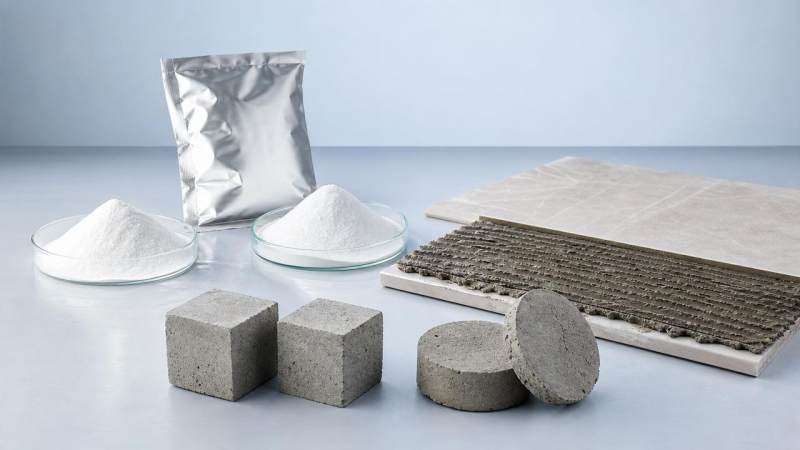
Choosing between Redispersible Polymer Powder and cellulose ether is critical when evaluating mortar performance, workability, adhesion, water retention, and long-term durability. Although both additives are widely used in dry-mix mortar systems, they function differently and influence final application results in distinct ways. For technical evaluators, understanding these differences helps optimize formulations, control costs, and meet project-specific performance requirements. This article compares their roles, benefits, and selection considerations in mortar applications.
In dry-mix mortar, a dosage change of only 0.1%–0.3% can alter open time, adhesion strength, sag resistance, or surface finish. Technical teams therefore need more than a supplier quotation; they need a formulation logic that connects chemistry, substrate conditions, jobsite behavior, and quality control.
How Redispersible Polymer Powder and Cellulose Ether Work in Mortar
Redispersible Polymer Powder is a spray-dried polymer powder that redisperses in water and forms a flexible polymer film after cement hydration and drying. This film improves bonding, cohesion, deformability, and resistance to abrasion or impact.
Cellulose ether, such as HPMC, mainly modifies the fresh mortar phase. It thickens the aqueous system, controls water retention, improves workability, reduces bleeding, and extends open time. Its influence is strongest before final hardening.
Different Chemical Roles in the Same Formulation
The two additives are not direct substitutes. Redispersible Polymer Powder contributes polymeric binding and flexibility, while cellulose ether manages rheology and moisture movement. In many tile adhesives, skim coats, and repair mortars, both are used together.
A common dry-mix mortar formulation may use cellulose ether at 0.2%–0.6% and Redispersible Polymer Powder at 1%–5%, depending on adhesion targets, cement content, filler grading, and environmental exposure.
Core Mechanisms Technical Evaluators Should Track
- Film formation: Redispersible Polymer Powder creates polymer bridges after water evaporation, improving tensile adhesion and flexibility.
- Water retention: cellulose ether slows water loss into porous substrates, supporting cement hydration for 24–72 hours.
- Rheology control: cellulose ether increases viscosity, while polymer powder can improve cohesion and reduce brittleness.
- Final durability: Redispersible Polymer Powder can enhance freeze-thaw resistance, impact resistance, and deformability in polymer-modified mortars.
Because each mechanism affects a different performance window, evaluation should include both fresh mortar testing and hardened performance testing. A 5-minute mixing observation alone cannot predict 28-day adhesion strength.
Performance Comparison for Mortar Applications
For technical evaluation, the most useful comparison is not “which additive is better,” but “which performance gap must be solved.” The table below summarizes practical differences in dry-mix mortar systems.
The key conclusion is clear: cellulose ether helps the mortar remain workable long enough to hydrate correctly, while Redispersible Polymer Powder helps the hardened system perform under stress, movement, and exposure.
Workability and Open Time
Cellulose ether is usually the first adjustment point when a mortar loses water too quickly, feels rough during troweling, or shows poor anti-slip performance. Viscosity grades from several thousand to over 100,000 CPS may be selected.
Redispersible Polymer Powder can also improve workability, but it is rarely used only for thickening. Its value becomes more visible when the mortar must retain adhesion after 20–30 minutes of open exposure.
Adhesion, Flexibility, and Crack Resistance
When mortar is applied on dense concrete, ceramic tile, insulation boards, or deformable substrates, Redispersible Polymer Powder becomes more important. It helps reduce brittle failure and improves stress distribution across the interface.
In contrast, cellulose ether supports adhesion indirectly. If water retention is too low, cement hydration is incomplete; if viscosity is too high, wetting may be reduced. Both conditions can lower bond reliability.
Application Scenarios and Formulation Priorities
Technical evaluators should classify mortar by application before choosing additive levels. A thin-bed tile adhesive, a 3 mm skim coat, and a 20 mm repair mortar may require different polymer-to-cellulose strategies.
Jinan Ludong Chemical Co., Ltd. focuses on cellulose ethers, Redispersible Polymer Powder, and HPS for construction solutions. With annual production capacity reaching 45,000 tons, the company supports stable supply for formulation testing and commercial batches.
Typical Mortar Types and Additive Emphasis
The following table helps connect product selection with site requirements. It is intended as a technical screening tool before laboratory trials, not as a fixed universal formula.
The table shows why a single additive cannot solve every requirement. A high-adhesion system normally needs Redispersible Polymer Powder, while a smooth, stable, easy-to-apply mortar depends heavily on cellulose ether selection.
Compatibility With Other Functional Additives
Mortar formulations may also include starch ether, air-entraining agents, defoamers, retarders, accelerators, fibers, or water-reducing agents. Each component can shift viscosity, setting time, air content, and final strength.
In polymer chemistry and construction formulations, Polyvinyl Alcohol may also be considered in selected systems where film properties, binder modification, or water-soluble polymer behavior are evaluated.
Practical Compatibility Checks
- Mix dry powders for 3–5 minutes and inspect dispersion uniformity before adding water.
- Measure wet density and air content to avoid excessive entrainment above the target range.
- Record pot life at 20°C–25°C and compare it with field application requirements.
- Test adhesion after standard curing and after heat, water, or freeze-thaw conditioning.
These checks reduce the risk of approving a formulation that performs well in a short bench trial but fails during storage, transport, or large-area construction.
Selection Criteria for Technical Evaluation and Procurement
A reliable selection process should combine laboratory data, production stability, supply consistency, and technical service. For B2B procurement, the lowest unit price rarely equals the lowest total formulation cost.
Redispersible Polymer Powder should be evaluated by polymer type, glass transition behavior, ash content, redispersibility, and compatibility with cement. Cellulose ether should be evaluated by viscosity, substitution type, gel temperature, and water retention.
Six Technical Indicators to Compare
- Redispersibility: powder should disperse evenly without large agglomerates after mixing with water.
- Film performance: polymer-modified mortar should show improved cohesion after curing and drying.
- Viscosity stability: HPMC grades may range from 400 to 200,000 CPS depending on application needs.
- Water retention: the mortar should maintain hydration on absorbent substrates for the required working period.
- Open time: tile adhesive and skim coat systems often need 20–30 minutes of practical workability.
- Storage stability: powders should remain free-flowing under recommended packaging and humidity conditions.
Ludong Chemical supplies HPMC type 75 and type 60 series for construction and chemical grades, with viscosity controllable from 400 to 200,000 CPS. This range allows evaluators to fine-tune water retention and rheology.
Cost Control Without Sacrificing Performance
Cost optimization should begin with performance mapping. If adhesion failure is the main risk, reducing Redispersible Polymer Powder may increase warranty exposure. If workability is poor, changing cellulose ether grade may be more efficient.
A practical approach is to build 3–5 trial formulas. Keep cement, sand, and filler constant, then vary polymer powder dosage and HPMC viscosity step by step. This isolates the real performance driver.
Recommended Trial Sequence
- Define target standards, including adhesion, open time, slip, setting time, and final appearance.
- Prepare a baseline formula with known cement, filler, and aggregate grading.
- Adjust Redispersible Polymer Powder in increments such as 0.5% to assess bond improvement.
- Adjust cellulose ether grade or dosage to correct water retention and application feel.
- Confirm the selected formula in a pilot batch before mass production approval.
This 5-step method provides a clearer basis for procurement decisions and reduces the chance of overusing additives to mask raw material variation.
Common Mistakes, Testing Risks, and Field Control
Many mortar issues occur because laboratory approval does not reflect jobsite reality. Temperature, water addition, substrate porosity, mixing time, and storage humidity can change performance within hours.
Redispersible Polymer Powder and cellulose ether should be evaluated under both standard and stressed conditions. A formulation that passes at 23°C may behave differently at 35°C or on highly absorbent aerated concrete.
Mistakes That Distort Evaluation Results
- Judging adhesion after 24 hours only, instead of including 7-day and 28-day results.
- Adding excess water to improve workability, which can reduce cohesive strength and increase shrinkage.
- Ignoring substrate absorption, especially when testing wall putty or tile adhesive on porous bases.
- Comparing additives at unequal active performance levels rather than equal application targets.
- Approving a formula without checking powder flow after 2–4 weeks of warehouse storage.
A technically sound evaluation should include fresh consistency, open time, wet density, tensile adhesion, compressive strength if relevant, and visual inspection after curing. Each test captures a different failure mode.
Field Control Points for Stable Application
On site, control should focus on water dosage, mixing time, rest time, and usable period. Even a well-designed mortar may fail if workers add 10% more water than specified.
For polymer-modified mortar, curing should not be rushed. Redispersible Polymer Powder needs enough time for hydration interaction and film formation, while cellulose ether supports controlled moisture availability during early curing.
Storage and Handling Recommendations
- Store dry-mix materials in sealed packaging and avoid direct moisture exposure.
- Use first-in, first-out inventory control, especially in humid seasons.
- Keep warehouse temperature moderate and inspect caking before production use.
- Record batch numbers of Redispersible Polymer Powder and cellulose ether for traceability.
These controls are simple but important. They protect formulation consistency from production to application and make quality feedback easier to analyze.
When to Choose One, the Other, or Both
If the problem is poor water retention, rapid drying, short open time, or unstable trowel feel, cellulose ether is usually the first lever. It directly controls the fresh mortar phase.
If the problem is weak adhesion, brittle failure, insufficient flexibility, or poor durability after exposure, Redispersible Polymer Powder should be prioritized. It changes the hardened mortar network more significantly.
Decision Logic for Technical Teams
- Use cellulose ether when mortar must hold water on absorbent substrates or maintain workability for 20 minutes or longer.
- Use Redispersible Polymer Powder when the target includes higher tensile adhesion, flexibility, or resistance to thermal movement.
- Use both when the mortar must be easy to apply and must meet demanding hardened performance requirements.
- Rebalance both additives if increasing one component causes slower setting, excess stickiness, or reduced compressive strength.
For many premium dry-mix systems, the best answer is not either-or. The technical task is to define the correct ratio between Redispersible Polymer Powder, cellulose ether, cement, fillers, and other additives.
Supplier Support and Formulation Collaboration
Ludong Chemical integrates production, trading, and technical service for cellulose ethers and construction additives. Its automated production capability helps maintain stable viscosity control and batch consistency for global customers.
For technical evaluators, this means support can extend beyond product delivery. Discussion may include target dosage, mortar type, viscosity selection, polymer powder matching, and pilot-scale verification before commercial launch.
Redispersible Polymer Powder and cellulose ether serve different but complementary purposes in mortar. One strengthens the hardened polymer-cement matrix; the other manages water retention, viscosity, and application stability.
A high-performing mortar formulation requires clear targets, controlled trials, and reliable additive quality. Technical teams should compare both additives through measurable indicators, including open time, adhesion, workability, curing behavior, and durability.
If you are evaluating Redispersible Polymer Powder, HPMC, or complete dry-mix mortar additive solutions, contact Jinan Ludong Chemical Co., Ltd. to discuss your formulation requirements, request product details, or obtain a customized technical proposal.
Send Your Inquiry
We welcome your cooperation and we will develop with you.
