


Cost-Benefit Analysis: Switching from Xanthan Gum to HPMC in Liquid Fabric Softeners
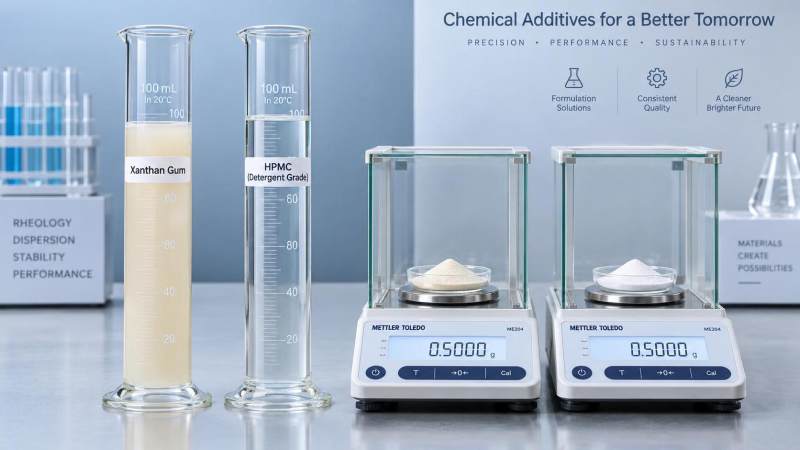
For finance leaders evaluating formulation upgrades in liquid fabric softeners, switching from xanthan gum to hydroxypropyl methylcellulose (HPMC) is not merely a technical substitution—it’s a quantifiable opportunity to reduce total cost of ownership while improving process resilience. Unlike xanthan gum, which relies on microbial fermentation and exhibits batch-to-batch variability in molecular weight distribution and rheological response, HPMC is synthesized through controlled etherification of purified cellulose. This fundamental difference translates directly into procurement predictability: raw material pricing for xanthan gum can fluctuate ±25% year-over-year due to agricultural inputs, fermentation yield variance, and purification complexity, whereas HPMC feedstock (wood pulp or cotton linters) and synthesis pathways enable tighter specification control and longer-term supply agreements.
Dosage Efficiency Drives Immediate Material Savings
Xanthan gum typically requires 0.3–0.6 wt% in liquid softener formulations to achieve target viscosity and suspension stability. In contrast, detergent-grade HPMC achieves equivalent or superior thickening and particle stabilization at 0.1–0.25 wt%, depending on selected viscosity grade and substitution pattern. This 50–60% reduction in active polymer dosage has two compounding effects: first, lower per-unit formulation cost—even if unit price per kilogram of HPMC is marginally higher than xanthan gum, the net cost per liter of finished product decreases by 12–18% across typical production volumes. Second, reduced polymer loading lowers formulation density and improves pumpability during bulk transfer, decreasing energy consumption in high-shear mixing and filling lines by measurable margins—particularly relevant where continuous inline blending replaces batch tanks.
Thermal and pH Stability Eliminates Process-Related Waste
Xanthan gum begins irreversible degradation above 60°C and loses >40% of its viscosity when exposed to pH <4.5 or >9.0 for extended periods—conditions routinely encountered during hot-fill packaging, acid-based preservative addition, or alkaline neutralization steps. Degradation manifests as viscosity drift, phase separation, or inconsistent deposition performance, often requiring rework or downgrading of affected batches. HPMC, however, maintains structural integrity from 5°C to 95°C and remains stable across pH 3–12. Its ether backbone resists hydrolysis under thermal stress and does not undergo conformational collapse in acidic or alkaline media. This stability reduces in-process viscosity testing frequency, cuts QC rejection rates, and avoids costly hold-and-test protocols that delay release to distribution.
Supply Chain Simplification Reduces Hidden Logistics Costs
Xanthan gum suppliers often operate with multi-tiered sourcing: fermentation facilities in Asia or South America, purification plants in Europe, and final packaging hubs elsewhere—introducing customs delays, temperature-controlled freight dependencies, and multi-currency invoicing complexity. HPMC supply chains are more vertically integrated: major producers source refined cellulose from consistent forestry or cotton suppliers, perform etherification and purification within single-site complexes, and offer global warehousing options. For buyers managing regional manufacturing footprints, this means fewer SKUs to track, simplified inventory planning (no cold-chain requirements), and reduced risk of shelf-life erosion during transit—xanthan gum’s moisture sensitivity demands strict humidity control, whereas HPMC’s low hygroscopicity allows ambient storage without desiccant packaging.
Viscosity Selection Is a Functional Lever—not Just a Specification
Not all HPMC grades behave identically in softener systems. Viscosity alone does not determine performance: methoxyl and hydroxypropyl substitution ratios govern water solubility onset temperature, salt tolerance, and interaction with cationic surfactants like dihydrogenated tallow dimethyl ammonium chloride (DHTDMAC). A 4,000 mPa·s HPMC with high hydroxypropyl content may outperform a 15,000 mPa·s grade with low substitution in high-electrolyte formulations, because the former resists precipitation in the presence of calcium or magnesium ions commonly found in water-softening additives. This nuance means viscosity selection must be matched to local water hardness profiles and co-formulant chemistry—not simply substituted at equivalence. Testing should focus on suspension stability over 6 months at 40°C, not just initial viscosity at 25°C.
Batch Consistency Enables Predictable Scale-Up
Xanthan gum’s polydispersity index (PDI) typically exceeds 2.5, meaning molecular weights vary widely within a single lot. That variability causes inconsistent hydration kinetics: some fractions swell rapidly, others lag, leading to gel lumps or delayed viscosity development during high-speed mixing. HPMC’s PDI is consistently ≤1.8, enabling reproducible dissolution profiles and eliminating the need for extended aging steps before quality release. For contract manufacturers running multiple SKUs on shared lines, this consistency shortens changeover time and reduces cleaning validation burden—no special solvent rinses are needed to remove residual xanthan gels, which can crosslink irreversibly in stainless steel piping.
Regulatory and Sustainability Alignment Adds Long-Term Value
While both polymers are approved for use in consumer laundry products, HPMC carries broader regulatory acceptance in emerging markets where xanthan gum faces import restrictions tied to its biological origin (e.g., certain ASEAN countries require additional pathogen testing). Additionally, HPMC’s plant-based but non-GMO, non-fermented origin aligns with corporate sustainability reporting frameworks that distinguish between bio-derived and biosynthesized materials. Its carbon footprint per functional unit is lower when normalized against dosage efficiency—less mass transported, less energy consumed in hydration, and no refrigerated logistics.
These advantages converge in real-world economics: a Tier-1 European softener manufacturer reported a 14-month payback period on reformulation investment, driven primarily by reduced raw material spend, lower QC labor hours, and avoided batch rejections. The switch did not require new equipment—only minor recalibration of dosing pumps and updated SOPs for hydration sequence. Where formulation changes are evaluated solely on upfront cost per kilogram, the full value remains obscured. When assessed across the entire value chain—from inbound logistics and in-process stability to shelf-life assurance and regional compliance—the case for Detergent-grade HPMC becomes operationally self-evident.
Send Your Inquiry
We welcome your cooperation and we will develop with you.
