


EU Adds AI Safety Assessment to CE Machinery Directive
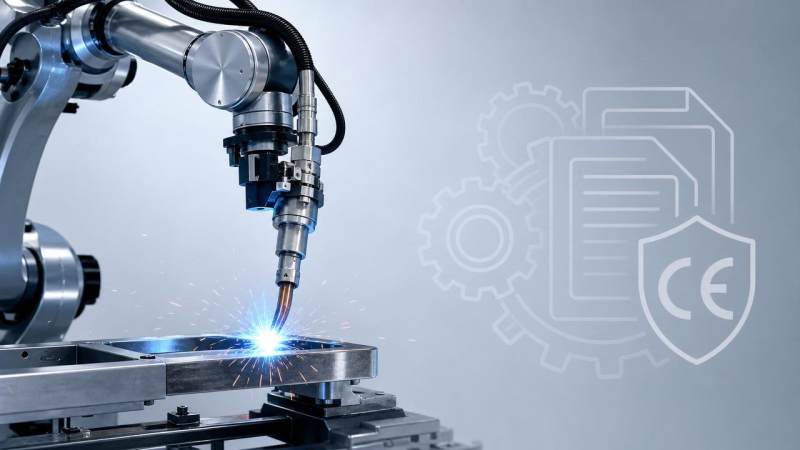
The European Union has introduced a new AI safety assessment requirement under the CE Machinery Directive, effective 7 May 2026. Industrial machinery incorporating AI decision-making functions — including intelligent welding robots and adaptive CNC machine tools — must now include specific AI-related documentation in their technical files. This development directly affects Chinese OEM manufacturers exporting to the EU, particularly those in automation, metalworking, and industrial robotics.
Event Overview
On 7 May 2026, the updated Annex B of EN ISO 12100:2026 — issued as supporting guidance to EU Regulation (EU) 2023/1230 on machinery — entered into force. It mandates that all industrial machines with AI-based decision capabilities must provide, within their technical documentation: (1) AI-specific risk identification; (2) verification of data bias; and (3) description of failure fallback mechanisms. Chinese original equipment manufacturers (OEMs) must complete the required technical file updates by the end of Q3 2026. Failure to do so may result in suspension or withdrawal of CE certificates, thereby disrupting customs clearance and downstream sales via EU distributors.
Which Subsectors Are Affected
Direct Exporting Manufacturers (Chinese OEMs)
These are the primary entities impacted, as they bear legal responsibility for CE conformity. The requirement applies specifically to machines where AI influences operational decisions — not merely for monitoring or data logging. Affected products include, but are not limited to, AI-guided robotic welders, self-optimizing machining centers, and vision-based quality inspection systems integrated into production lines.
Industrial Automation System Integrators
Integrators embedding AI modules (e.g., real-time path planning or predictive maintenance logic) into machinery supplied to EU clients must ensure traceability and documentation alignment. Their role in final assembly or software integration triggers shared accountability under the Machinery Regulation’s ‘economic operator’ provisions.
EU-Based Distributors and Importers
As ‘importers’ under EU law, these entities are legally obligated to verify that technical documentation complies with Annex B requirements before placing machinery on the EU market. Non-compliant documentation may block product registration in the EU’s EUDAMED-like machinery database and delay customs release.
Third-Party Notified Bodies
Conformity assessment bodies authorized under the Machinery Regulation must now incorporate AI-specific evaluation criteria into their technical file reviews. Their scope of assessment now explicitly includes validation of data provenance, bias testing protocols, and documented fallback behavior under AI system degradation or failure.
What Relevant Enterprises or Practitioners Should Focus On and How to Respond Now
Monitor official updates from EU national authorities and Notified Bodies
While EN ISO 12100:2026 Annex B is now in force, national interpretations and audit expectations may vary. Enterprises should track guidance publications from EU Member State market surveillance authorities and updates from accredited Notified Bodies regarding accepted methodologies for data bias verification and fallback mechanism validation.
Prioritize documentation upgrades for high-volume or high-risk AI-integrated models
Manufacturers should identify which product families fall under the AI decision-making definition — especially those where AI output directly controls motion, force, or process parameters. These models require immediate technical file review and revision ahead of the Q3 2026 deadline.
Distinguish between regulatory signal and enforceable obligation
This update is an enforceable requirement under harmonized standards referenced in EU Regulation 2023/1230. It is not advisory guidance. Compliance is mandatory for CE marking validity, and non-compliance carries direct legal consequences under national enforcement regimes.
Initiate internal cross-functional alignment between engineering, QA, and regulatory affairs teams
Preparing Annex B documentation requires coordinated input: AI developers must define decision logic and training data sources; QA teams must design bias test cases; and regulatory staff must map evidence to clause requirements. Starting this alignment now avoids bottlenecks during Q3 2026 submission cycles.
Editorial Perspective / Industry Observation
Observably, this amendment signals a structural shift in how the EU treats embedded AI — no longer as generic software, but as an integral, safety-relevant subsystem requiring explicit hazard analysis and mitigation documentation. Analysis shows it reflects growing regulatory attention to AI’s role in physical system control, distinct from IT or cloud-based AI applications. From an industry perspective, this is less a one-off compliance task and more the first formalized step toward AI-specific conformity frameworks across EU product legislation. It is currently an enforceable requirement — not merely a policy signal — but its practical implementation will depend on evolving audit practices and technical consensus among Notified Bodies.
Conclusion: This update marks a concrete escalation in regulatory expectations for AI-integrated industrial equipment entering the EU. It does not introduce new certification procedures per se, but raises the evidentiary bar for existing CE technical documentation. For Chinese manufacturers, it underscores that AI functionality — once treated as value-added software — is now a regulated safety component. Current understanding should treat this as an active compliance obligation, not a future contingency.
Information Sources: EN ISO 12100:2026 (Annex B), EU Regulation (EU) 2023/1230 on machinery, official publication date 7 May 2026. Note: Implementation practices by individual Notified Bodies and national market surveillance authorities remain subject to ongoing observation.
Send Your Inquiry
We welcome your cooperation and we will develop with you.
