


HPMC For Tile Adhesive: Which Properties Matter Most for Slip Resistance and Open Time?
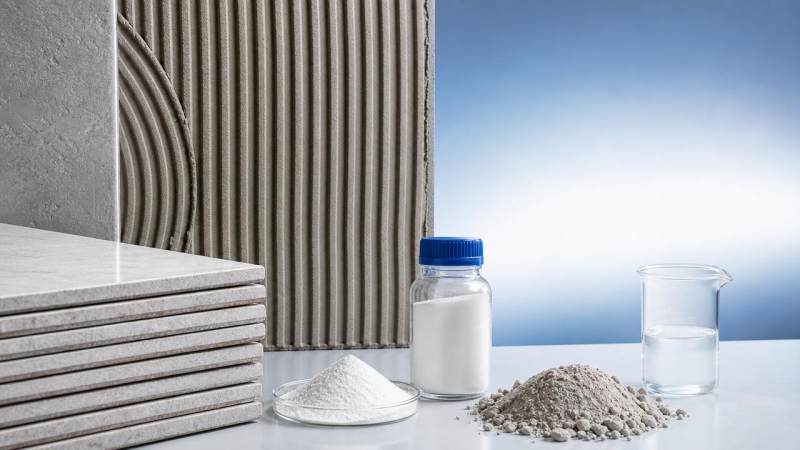
HPMC For Tile Adhesive: Which Properties Matter Most for Slip Resistance and Open Time?
In tile adhesive performance, selecting the right HPMC For Tile Adhesive can directly influence slip resistance, open time, and on-site application efficiency.
The choice is not only about viscosity numbers on a data sheet.
It also affects how the mortar hangs on vertical surfaces, how long workers can adjust tiles, and how stable the installation remains during real jobsite changes.
That is why understanding the key properties behind HPMC For Tile Adhesive matters far more than simply choosing a common construction grade.
Why slip resistance and open time deserve close attention
Slip resistance and open time often decide whether a tile adhesive performs smoothly or becomes a site management problem.
Poor slip resistance allows tiles to move downward after placement.
This can disturb alignment, widen joints, and increase labor for correction.
Short open time creates another issue.
Once the adhesive skin forms too quickly, bonding reliability drops, especially with large-format tiles or hot, dry conditions.
In practice, these two properties are linked.
A well-designed HPMC For Tile Adhesive supports water retention, sag control, and workable consistency at the same time.
This reduces rework and makes schedule control easier.
The first property: water retention
If one property deserves top priority, it is water retention.
HPMC holds water inside the cement-based adhesive and slows premature evaporation or absorption into the substrate.
This directly extends open time.
It also helps cement hydration continue more completely, improving final bond strength.
For porous walls, absorbent screeds, and warm weather projects, strong water retention becomes even more important.
Without it, adhesive may look workable in the bucket but lose tack too fast after spreading.
When comparing grades, water retention should be evaluated under actual formulation conditions, not in isolation.
- Check retention performance on cement-rich and standard mixes.
- Review behavior on porous and low-absorption substrates.
- Confirm open time after spreading, not only fresh mix appearance.
The second property: viscosity and sag control
Viscosity is often the first specification buyers ask about.
That makes sense, but the real question is how viscosity translates into anti-slip performance.
Higher viscosity HPMC generally increases cohesion and improves resistance to downward movement on vertical applications.
Still, very high viscosity alone is not a perfect answer.
If the formula becomes too heavy or sticky, spreading may slow down and wetting can suffer.
The better approach is to look for balanced rheology.
Good HPMC For Tile Adhesive should create enough body to resist slipping while keeping the troweling feel smooth and consistent.
This balance matters especially for wall tiles, stone cladding, and large-format ceramic units.
A practical review should include both laboratory sag results and installer feedback.
The third property: dissolution behavior
Dissolution behavior is less visible, yet it strongly affects daily production and application.
A suitable grade should disperse well and build viscosity in a controlled way.
If dissolution is uneven, the adhesive may show lumps, unstable consistency, or delayed workability.
That inconsistency creates site risk.
Crews may add extra water to fix the feel, which then changes slip resistance and open time.
For dry-mix manufacturers, stable dissolution also supports uniform batching and repeatable quality from one production lot to the next.
This is one reason many formulators evaluate Hydroxypropyl Methyl Cellulose not only by viscosity range, but by full application behavior.
How HPMC interacts with cement, RDP, and fillers
No HPMC grade works alone inside a real tile adhesive system.
Its effect depends on cement type, filler grading, redispersible polymer powder content, and even local sand characteristics.
For example, higher polymer content may improve flexibility and adhesion, while also changing the feel and slip profile.
Fine fillers can increase water demand and alter open time behavior.
This means selecting HPMC For Tile Adhesive should always be formulation-based.
Recent market changes make this more obvious.
Projects now demand larger tiles, thinner adhesive layers, and faster completion windows.
That raises the value of a stable cellulose ether supplier with broad application support.
Jinan Ludong Chemical Co., Ltd. focuses on cellulose ethers and integrated construction solutions, with annual capacity reaching 45,000 tons.
Its HPMC series covers construction and chemical grades with viscosities from 400 to 200,000 CPS, allowing more flexible formulation matching.
What to check during technical evaluation
A technical review should move beyond single-parameter comparison.
The most useful method is to test HPMC For Tile Adhesive against real site expectations and relevant adhesive standards.
- Measure slip resistance on vertical application.
- Check open time after realistic waiting intervals.
- Observe troweling, wetting, and tile adjustability.
- Review water retention under hot and absorbent conditions.
- Compare batch-to-batch consistency from the supplier.
This kind of evaluation gives a clearer decision basis than using viscosity as the only benchmark.
It also helps reduce the hidden cost of callbacks, slow installation, and bonding failures.
Common mistakes when choosing HPMC For Tile Adhesive
Several selection mistakes appear again and again in tile adhesive projects.
- Choosing only by price, then losing efficiency on site.
- Assuming higher viscosity automatically means better anti-slip performance.
- Ignoring substrate absorption and climate effects on open time.
- Testing in the lab without checking installer handling feedback.
- Overlooking dissolution stability and production consistency.
A more reliable strategy is to match performance targets first, then select the most suitable grade.
That approach usually delivers better total value.
Which properties matter most in the end?
For most formulations, the priority order is clear.
First comes water retention, because it strongly affects open time and hydration.
Next comes rheology control, including viscosity and cohesion, because these govern slip resistance and handling.
Then comes dissolution behavior, which protects consistency from mixing to application.
When these properties are balanced well, HPMC For Tile Adhesive supports smoother installation, lower waste, and more dependable bonding.
For teams reviewing supply options, it makes sense to compare not only test values but also formulation guidance, production stability, and service responsiveness.
A solution such as Hydroxypropyl Methyl Cellulose should be assessed in the full context of tile type, climate, substrate, and installation method.
That final step is usually what separates a workable formula from a dependable project result.
Send Your Inquiry
We welcome your cooperation and we will develop with you.
