


How MHEC Improves Tile Adhesive Workability
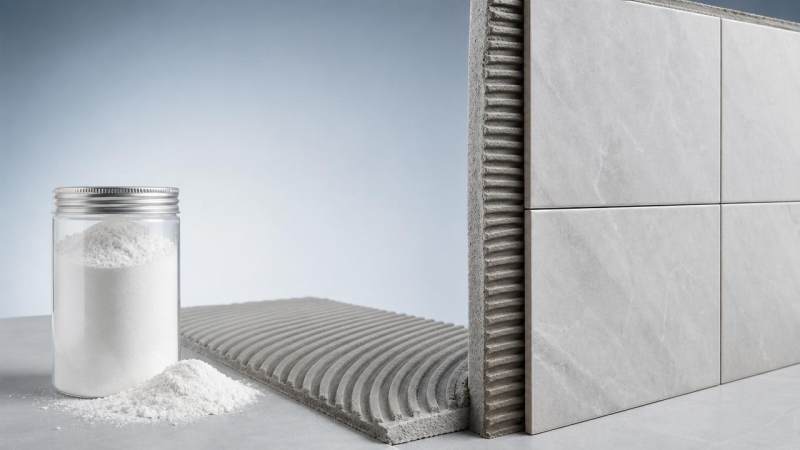
For tile installers and construction operators, smooth mixing, easy spreading, and reliable open time can make the difference between a fast job and costly rework. Methyl Hydroxyethyl Cellulose (MHEC) is a key cellulose ether additive that helps tile adhesive achieve better water retention, sag resistance, consistency, and on-site workability. By improving how the adhesive feels and performs during application, MHEC supports cleaner installation, stronger bonding, and more predictable results across different substrates and working conditions.
Why Methyl Hydroxyethyl Cellulose (MHEC) Matters on the Jobsite
Workability Is Not Just a Comfort Factor
In tile adhesive production, workability directly affects labor speed, bonding reliability, and surface quality. A mortar that dries too fast forces installers to rush.
A mortar that slides, lumps, or feels sticky can slow spreading and increase material waste. Methyl Hydroxyethyl Cellulose (MHEC) helps balance these practical demands.
For operators, the value is visible during mixing, troweling, tile adjustment, and final cleanup. Good cellulose ether performance reduces uncertainty during application.
- During mixing, Methyl Hydroxyethyl Cellulose (MHEC) supports uniform dispersion and helps reduce dry powder pockets when the formulation is properly designed.
- During spreading, it improves viscosity build-up, giving operators a smoother trowel feel and more controlled ridge formation.
- During tile placement, it helps maintain open time, allowing adjustment before the adhesive skins too quickly.
This is why many dry-mix mortar producers treat Methyl Hydroxyethyl Cellulose (MHEC) as a functional additive, not simply a thickener.
What MHEC Does Inside Tile Adhesive Formulations
Water Retention, Viscosity, and Application Stability
Tile adhesive depends on cement hydration, polymer modification, mineral fillers, and controlled water release. Methyl Hydroxyethyl Cellulose (MHEC) connects these factors during use.
Its water retention effect helps prevent rapid water loss into porous substrates. This supports better cement hydration and reduces premature surface drying.
Its thickening effect improves mortar body, helping adhesive stay where it is placed. This is critical for vertical wall tiling.
The table below summarizes how Methyl Hydroxyethyl Cellulose (MHEC) contributes to common application requirements in cement-based tile adhesive.
For operators, these effects are practical rather than theoretical. A stable adhesive reduces rework, improves tile positioning, and helps crews maintain installation rhythm.
Which Tile Adhesive Scenarios Benefit Most from MHEC?
Substrate, Climate, and Tile Size All Matter
Not every project stresses tile adhesive in the same way. Porous walls, warm weather, large tiles, and fast installation schedules create different risks.
Methyl Hydroxyethyl Cellulose (MHEC) is especially useful where water loss, sagging, or inconsistent spreading could affect final bonding performance.
- Wall tile installation needs controlled sag resistance so tiles do not slide before initial setting develops.
- Porous cement boards and masonry substrates need stronger water retention to reduce rapid suction.
- Large-format tiles need adhesive that holds ridge shape and allows proper adjustment during placement.
- Hot or dry climates require longer open time and stable application consistency under evaporation pressure.
In these scenarios, the correct grade and dosage of Methyl Hydroxyethyl Cellulose (MHEC) can make adhesive behavior more predictable for operators.
How to Select the Right MHEC Grade for Workability
Selection Should Start from Application Problems
Operators often describe problems in simple terms: too dry, too sticky, too loose, too fast, or too difficult to spread.
These descriptions are useful. They point formulators toward viscosity level, substitution balance, water retention needs, and compatibility with cement and polymers.
When choosing Methyl Hydroxyethyl Cellulose (MHEC), procurement teams should evaluate more than price per kilogram. Field performance determines real cost.
The following selection table helps connect common tile adhesive complaints with practical additive choices and formulation checks.
A good grade is not always the highest viscosity grade. The best choice is the grade that solves the actual installation problem.
MHEC Compared with Other Cellulose Ether Options
Comparison Helps Avoid Overpaying or Underperforming
Cellulose ethers are widely used in construction chemicals. Besides Methyl Hydroxyethyl Cellulose (MHEC), formulators may consider HPMC or related grades.
For some projects, Hydroxypropyl Methyl Cellulose may also be evaluated when balancing water retention, consistency, and formulation cost.
The decision should consider cement type, local climate, required open time, and whether the adhesive targets standard or improved performance classes.
Comparison is useful because tile adhesive performance comes from the whole formula. Methyl Hydroxyethyl Cellulose (MHEC) should be tested with actual cement, sand, RDP, and fillers.
Practical Mixing and Application Tips for Operators
Correct Use Protects the Designed Performance
Even a well-formulated adhesive can perform poorly if water dosage, mixing time, or resting time is ignored on site.
Methyl Hydroxyethyl Cellulose (MHEC) needs proper hydration and dispersion to deliver consistent viscosity and water retention during application.
- Add the dry-mix powder into clean water according to the supplier’s recommended water ratio, not by uncontrolled visual guessing.
- Mix until the mortar is uniform, then allow a short maturation period if recommended by the formulation instruction.
- Remix before use without adding excess water, because extra water can weaken bonding and increase sagging risk.
- Check trowel ridges regularly; collapsed ridges may indicate over-watering, expired pot life, or unsuitable viscosity.
Operators should report repeated problems with pot life, spreading, or slip. These observations help technical teams adjust Methyl Hydroxyethyl Cellulose (MHEC) grade or dosage.
Procurement Checklist: What Buyers Should Confirm Before Ordering
From Sample Testing to Delivery Planning
For factories and distributors, purchasing Methyl Hydroxyethyl Cellulose (MHEC) is a technical decision and a supply chain decision at the same time.
A low unit price can become expensive if batches vary, delivery is unstable, or the additive requires repeated formulation correction.
- Confirm viscosity range, moisture, ash, particle behavior, and recommended application in cement-based tile adhesive.
- Request samples for laboratory testing and jobsite simulation before switching from an existing supplier.
- Check compatibility with RDP, cement source, fillers, accelerators, retarders, and local water quality.
- Discuss packaging, storage conditions, shipment schedule, and batch documentation before large-volume orders.
Jinan Ludong Chemical Co., Ltd. supports cellulose ether production, trading, and integrated services for construction chemical applications.
With an annual production capacity reaching 45,000 tons, Ludong Chemical can help customers evaluate viscosity requirements and application targets.
Common Mistakes When Using Methyl Hydroxyethyl Cellulose (MHEC)
Avoid These Decisions Before They Become Rework
Many tile adhesive issues are not caused by one ingredient alone. They come from mismatched additive choice, poor testing, or uncontrolled field use.
- Choosing only by viscosity number may ignore open time, water retention, and compatibility with the full dry-mix system.
- Increasing dosage without testing may improve body but make spreading heavy or change final adhesive behavior.
- Replacing suppliers without side-by-side trials can create unexpected differences in pot life, sag resistance, or surface skinning.
- Ignoring climate and substrate conditions may lead to a formula that works in the lab but fails during installation.
The safer approach is controlled comparison. Test Methyl Hydroxyethyl Cellulose (MHEC) under realistic temperature, humidity, tile size, and substrate conditions.
FAQ: Real Questions from Tile Adhesive Users
How much Methyl Hydroxyethyl Cellulose (MHEC) is needed in tile adhesive?
Dosage depends on cement content, sand grading, polymer level, and target performance. Trial testing is necessary because higher dosage is not always better.
Can MHEC improve bonding strength directly?
Methyl Hydroxyethyl Cellulose (MHEC) mainly improves conditions for bonding, including hydration, open time, and contact quality. Bond strength still depends on the complete formulation.
Is MHEC suitable for large-format tile adhesive?
It can be suitable when selected correctly. Large-format tiles require stable ridges, slip resistance, adequate wetting, and compatibility with polymer modification.
What should operators check during application?
Operators should check mixing uniformity, pot life, ridge stability, tile transfer, and surface skinning. These signals show whether the adhesive remains workable.
Why Choose Ludong Chemical for Cellulose Ether Solutions?
Support for Formulation, Selection, and Supply Reliability
Jinan Ludong Chemical Co., Ltd., established in 2020, focuses on cellulose ethers for construction chemical solutions, including HPMC, RDP, and HPS.
The company operates comprehensive production lines and combines traditional processing experience with intelligent automated production to meet diverse customer requirements.
For tile adhesive manufacturers, Ludong Chemical can discuss Methyl Hydroxyethyl Cellulose (MHEC) selection alongside related cellulose ether options and formulation targets.
Customers can consult about viscosity confirmation, sample support, delivery cycle, packaging needs, application testing, and customized construction chemical solutions.
If your adhesive shows fast drying, poor sag resistance, inconsistent spreading, or unstable batch behavior, contact Ludong Chemical for a targeted technical discussion.
Send Your Inquiry
We welcome your cooperation and we will develop with you.
