


MHEC Dosage Mistakes That Affect Mortar Quality
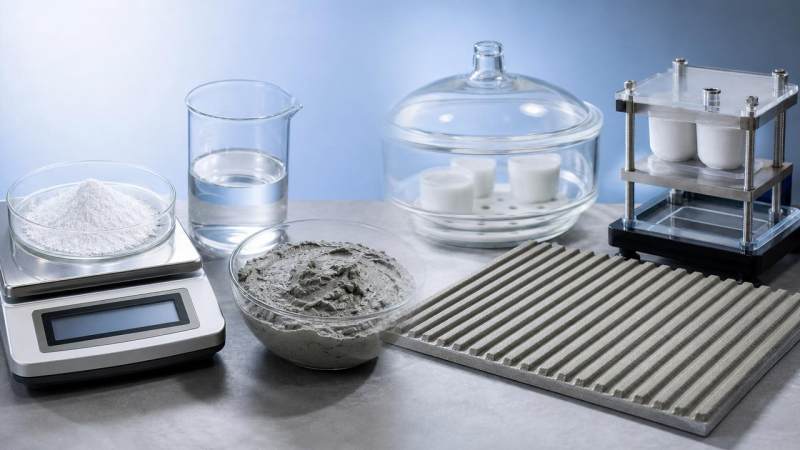
Incorrect Methyl Hydroxyethyl Cellulose (MHEC) dosage can quietly undermine mortar performance, from water retention and workability to adhesion, open time, and final strength.
For quality control and safety teams, these dosage errors are not only formulation issues. They can trigger batch instability, site complaints, rework, and compliance risks.
Understanding how Methyl Hydroxyethyl Cellulose (MHEC) behaves in different mortar systems helps identify mistakes early, optimize consistency, and support safer construction results.
Why Methyl Hydroxyethyl Cellulose (MHEC) Dosage Needs a Checklist
Mortar performance depends on a narrow balance between cement, aggregates, fillers, water, polymers, and cellulose ether additives.
Methyl Hydroxyethyl Cellulose (MHEC) controls water retention, thickening, sag resistance, and workability. Small dosage shifts may change the entire application behavior.
A checklist makes dosage control repeatable. It also helps separate raw material variation from weighing, mixing, and process mistakes.
In dry-mix mortar production, this structured judgment is especially valuable when multiple products share one production line.
Core Checklist for Avoiding MHEC Dosage Mistakes
- Verify the target Methyl Hydroxyethyl Cellulose (MHEC) dosage against the mortar type, required viscosity, cement content, and expected site temperature.
- Calibrate weighing equipment before production, especially when low-dose MHEC additions require high accuracy and stable feeding control.
- Confirm whether the formulation uses pure MHEC, blended cellulose ether, or modified grades with delayed solubility characteristics.
- Check moisture content in fillers and sand because hidden water changes the effective water-to-binder ratio and dosage response.
- Standardize mixing sequence so Methyl Hydroxyethyl Cellulose (MHEC) disperses evenly before water contact and avoids local gel formation.
- Record batch temperature, mixing time, and resting time because hydration speed affects viscosity development and open time.
- Compare laboratory dosage with plant-scale behavior, since shear intensity and raw material distribution can change mortar rheology.
- Test water retention, slip resistance, spread, adhesion, and setting behavior instead of judging dosage only by visual consistency.
- Review customer complaints by application condition, not just formula code, to locate climate-related MHEC dosage mismatch.
Mistake 1: Treating One Dosage as Universal
One common error is applying the same Methyl Hydroxyethyl Cellulose (MHEC) dosage across tile adhesive, skim coat, plaster, and masonry mortar.
Each system has different binder demand, aggregate grading, working thickness, and required open time. The same dosage may over-thicken one product and under-protect another.
For cement-based tile adhesive, insufficient MHEC dosage often reduces open time and wetting performance. Tiles may lose contact strength after short exposure.
For plaster mortar, excessive dosage can create sticky troweling, slow drying, and surface defects when applied in thicker layers.
Mistake 2: Ignoring Viscosity Grade and Substitution Behavior
Methyl Hydroxyethyl Cellulose (MHEC) dosage cannot be evaluated separately from viscosity grade. A lower amount of high-viscosity material may outperform a higher amount of another grade.
Substitution level also matters. It influences solubility, thermal gelation, water retention, thickening efficiency, and compatibility with cement chemistry.
When changing suppliers or grades, direct gram-to-gram substitution is risky. Performance tests should confirm equivalent workability and strength development.
Jinan Ludong Chemical Co., Ltd. manufactures cellulose ether products with controlled viscosity ranges for construction and chemical applications.
Its integrated production capacity supports formulation adjustment where cellulose ether consistency is critical to mortar stability.
Mistake 3: Overdosing to Cover Poor Raw Material Control
Increasing Methyl Hydroxyethyl Cellulose (MHEC) dosage may temporarily hide sand grading problems, high absorption fillers, or unstable cement quality.
However, overdose often raises viscosity too much. The mortar may feel heavy, sticky, slow to wet, and difficult to finish.
Overdosing may also delay cement hydration. This can reduce early strength, extend setting time, and increase sensitivity to low temperatures.
The better approach is to correct raw material variation first. MHEC dosage should optimize performance, not compensate for uncontrolled inputs.
Mistake 4: Underdosing to Reduce Formula Cost
Reducing Methyl Hydroxyethyl Cellulose (MHEC) dosage may lower direct formula cost, but it often increases total quality risk.
Low dosage weakens water retention. Cement hydration becomes less stable, especially on porous substrates or under hot and dry conditions.
The mortar may lose open time quickly. Applicators may add extra water on site, which reduces adhesion, density, and final durability.
A cost review should include rework, complaint handling, rejected batches, and reduced product reputation, not only raw material price.
Application Scenarios That Change MHEC Dosage Decisions
Tile Adhesive
Tile adhesive requires balanced Methyl Hydroxyethyl Cellulose (MHEC) dosage for open time, anti-slip behavior, and cement hydration.
If dosage is too low, the adhesive skins too quickly. If too high, troweling may become heavy and wetting may suffer.
Wall Putty and Skim Coat
Wall putty needs smooth spreading, stable water retention, and easy sanding. Excessive MHEC dosage can make the surface sticky or hard to polish.
Low dosage may cause fast water loss, powdering, poor leveling, and visible application marks on absorbent wall surfaces.
Cement Plaster and Render
Plaster mortar needs sag resistance and workable body. Methyl Hydroxyethyl Cellulose (MHEC) dosage should match layer thickness and aggregate structure.
High dosage may trap water longer than needed. This can delay finishing and increase shrinkage risk in unfavorable curing conditions.
Repair Mortar
Repair mortar often contains polymers, fibers, accelerators, or shrinkage-control additives. These components may interact with MHEC thickening behavior.
Dosage validation should include bond strength, early handling strength, vertical build, and compatibility with the repair environment.
Commonly Ignored Risks in MHEC Dosage Control
Seasonal temperature change: Hot weather accelerates water loss and skinning. Cold weather slows hydration and can amplify the delay caused by high MHEC dosage.
Substrate absorption: Porous blocks, cement boards, and old plaster draw water rapidly. Underdosed Methyl Hydroxyethyl Cellulose (MHEC) cannot protect hydration effectively.
Mixing water variation: Site users may adjust water by feel. A formula with weak dosage tolerance becomes unstable under ordinary field practice.
Incompatible additives: Air entrainers, retarders, accelerators, starch ether, and redispersible polymer powder may shift viscosity, setting, and application feel.
Storage conditions: Moisture exposure can cause agglomeration in dry materials. Uneven MHEC distribution may appear as batch inconsistency.
Practical Execution Steps for Reliable Dosage
- Define the key performance target before adjusting Methyl Hydroxyethyl Cellulose (MHEC), such as open time, water retention, or anti-sag behavior.
- Prepare a dosage ladder with small intervals, then test fresh mortar and hardened mortar under controlled conditions.
- Measure water retention, consistency, density, setting time, adhesion, and compressive strength instead of relying on operator feel alone.
- Repeat the chosen dosage with different cement and sand batches to confirm tolerance against normal raw material variation.
- Lock the mixing procedure, feeding sequence, and quality records so production can reproduce the laboratory result.
- Revalidate MHEC dosage whenever changing cellulose ether grade, cement source, filler type, pigment, polymer powder, or production equipment.
Where a formulation uses cellulose ether alternatives or combinations, benchmarking against Hydroxypropyl Methyl Cellulose can help evaluate rheology and water retention differences.
This comparison is useful when the mortar must meet specific construction standards, regional climate demands, or customer application preferences.
Quality Indicators That Signal Wrong Dosage
- Watch for rapid slump loss, early skinning, dry trowel drag, or reduced board time after standard mixing and resting.
- Investigate sticky tools, excessive stringing, slow finishing, or delayed hardening as possible signs of MHEC overdose.
- Check adhesion failures on porous substrates because low water retention often damages cement hydration near the interface.
- Review inconsistent spread values between batches, especially when weighing accuracy, filler moisture, or powder dispersion is uncertain.
- Link complaint samples to production records, raw material lots, storage time, and climate data before changing formulation dosage.
Summary and Next Action
Methyl Hydroxyethyl Cellulose (MHEC) dosage directly affects mortar workability, water retention, adhesion, open time, and strength development.
The most damaging mistakes include universal dosage assumptions, uncontrolled substitution, overdosing for compensation, and cost-driven underdosing.
A reliable control system should combine dosage ladders, laboratory testing, plant verification, raw material records, and application-condition review.
Start by auditing current formulas, checking actual MHEC weighing accuracy, and testing one high-risk mortar product under realistic field conditions.
When the dosage window is confirmed, document the process clearly. This improves production stability and reduces avoidable construction quality failures.
Send Your Inquiry
We welcome your cooperation and we will develop with you.
