


How REDISPERSIBLE Additives Change Bond Strength in Mortars
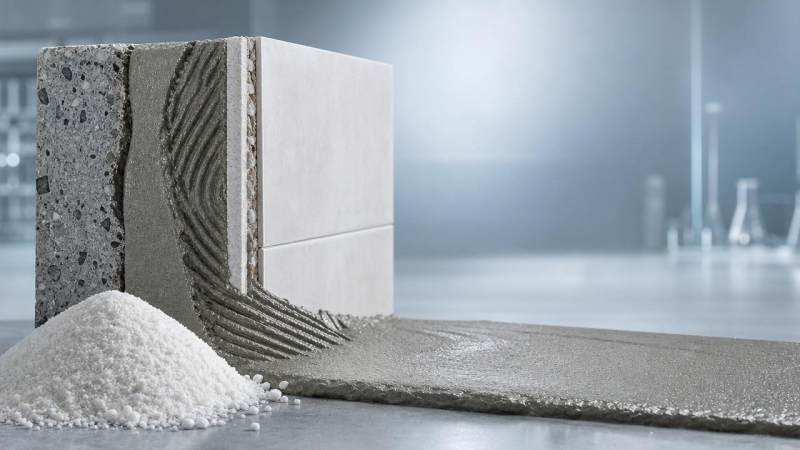
In modern mortar formulations, REDISPERSIBLE additives play a decisive role in improving bond strength, flexibility, and workability. For users and applicators, understanding how these polymer-based materials interact with cement systems is essential to achieving reliable adhesion and long-term performance. This article explores the practical impact of REDISPERSIBLE additives in mortars and why they matter in demanding construction applications.
Why Users Search for REDISPERSIBLE Additives in Mortars
Most users searching this topic want a practical answer: will REDISPERSIBLE additives help mortar stick better, last longer, and reduce jobsite failures? For applicators, bond strength is not an abstract lab value.
It directly affects whether tile adhesive holds, repair mortar stays attached, plaster resists cracking, and insulation systems remain secure over time. The core intent is performance understanding linked to field results.
Users also want to know when REDISPERSIBLE additives are truly necessary, how they work inside a cement-based mix, and what application mistakes can reduce their benefits. These are the questions that matter on site.
What REDISPERSIBLE Additives Actually Do Inside Mortar
REDISPERSIBLE polymer powders are dry polymer binders designed to redisperse in water during mortar mixing. Once dispersed, they form a polymer phase throughout the cement matrix and at the interface with substrates.
This polymer phase changes how mortar behaves both fresh and hardened. In the wet state, it improves workability, water retention balance, and wetting of surfaces. In the hardened state, it enhances adhesion and toughness.
When water evaporates and cement hydrates, the polymer particles gradually coalesce into a continuous film. That film bridges pores, improves internal cohesion, and creates stronger contact between mortar and the base material.
For users, the key point is simple: REDISPERSIBLE additives do not replace cement strength. They complement the cement system by improving the way mortar bonds, deforms, and survives real application conditions.
How Bond Strength Changes When REDISPERSIBLE Is Added
Bond strength improves because the mortar gains better contact with the substrate from the beginning. The dispersed polymer helps wet mineral surfaces more effectively, allowing the mix to spread and anchor into micro-irregularities.
As curing continues, the polymer film supports the cementitious structure at the interface. This is especially important where pure cement hydration alone may not provide enough adhesion, such as smooth concrete or dense tiles.
Another major effect is stress distribution. Mortars without enough polymer may be hard but brittle, so small movement or drying stress can weaken the bond zone. REDISPERSIBLE additives help absorb these stresses more evenly.
The result is often higher tensile adhesion strength, better pull-off performance, and improved retention after aging, water exposure, or thermal cycling. For applicators, that means fewer debonding problems and better long-term reliability.
Why Better Bond Strength Is Not Just About “More Adhesion”
On site, bond failure rarely comes from one single cause. It usually comes from a combination of poor wetting, fast water loss, shrinkage stress, substrate movement, or weak internal cohesion of the mortar layer.
REDISPERSIBLE additives help because they address several of these mechanisms together. They improve adhesion to the substrate, but they also increase flexibility and reduce the risk of a brittle fracture path forming.
In practical terms, a mortar with good bond strength is not only one that sticks initially. It is one that keeps sticking after drying, after minor movement, and after the surface faces moisture or temperature changes.
This is why experienced users look beyond a simple strength number. They want a balanced mortar that handles real application stress, not just a formula that performs well under ideal laboratory conditions.
Applications Where REDISPERSIBLE Additives Matter Most
These additives are especially valuable in tile adhesives, external wall insulation mortars, self-leveling compounds, repair mortars, skim coats, and waterproofing-associated systems. In such products, interface performance is critical.
For tile setting, REDISPERSIBLE additives improve adhesion to low-absorption tiles and help the adhesive resist shear stress from temperature changes and service loads. This is essential in modern large-format tile installation.
In repair mortars, stronger adhesion to old concrete or masonry can determine whether the repair lasts. The polymer-modified structure helps the material stay attached even when the substrate has different movement characteristics.
For rendering and plaster systems, the benefit is not only bond strength to the wall but also reduced cracking tendency. A tougher mortar layer is often more forgiving under variable environmental and application conditions.
What Applicators Care About Most on the Jobsite
Users and operators usually care about three things first: easy mixing, open time, and dependable adhesion during and after application. If a mortar is difficult to spread, bond performance often suffers immediately.
REDISPERSIBLE additives can support smoother troweling and better contact transfer, which matters when applying thin layers or working on challenging surfaces. Improved workability helps users create a more continuous bond line.
Applicators also care about whether a mortar stays usable long enough in warm, dry, or windy conditions. If the material skins over too quickly, proper adhesion becomes difficult even if the formula looks good on paper.
That is why polymer modification is often considered together with water-management additives. In many practical formulations, ingredients such as Methyl Hydroxyethyl Cellulose (HEMC) help maintain consistency and water retention.
How REDISPERSIBLE Additives Work with Other Mortar Ingredients
A well-performing mortar is never the result of one raw material alone. REDISPERSIBLE polymers interact with cement, fillers, cellulose ethers, starch ethers, and other functional additives to create final performance.
Cement provides compressive strength and basic matrix formation. Fillers influence packing density, consistency, and cost structure. REDISPERSIBLE additives improve adhesion and flexibility, while cellulose ethers support water retention and workability.
If the balance is wrong, bond strength may still disappoint. For example, a formula with polymer but poor water retention may dry too fast on absorbent substrates. The polymer can help, but the system still needs proper moisture control.
This is why users should understand that performance comes from formulation synergy. A reliable supplier can often help match REDISPERSIBLE content and auxiliary additives to the target application and climate conditions.
Factors That Influence the Real Effect on Bond Strength
The first factor is dosage. Too little REDISPERSIBLE additive may not create enough polymer film to significantly improve adhesion. Too much may increase cost unnecessarily or alter consistency in ways users do not want.
The second factor is polymer type. Different REDISPERSIBLE powders are designed for different balances of adhesion, flexibility, water resistance, and deformability. Product selection should match the actual mortar application.
The third factor is substrate condition. Dust, laitance, oil contamination, and excessive dryness can all reduce effective bond strength. Even a good polymer-modified mortar cannot fully compensate for poor surface preparation.
The fourth factor is curing environment. Very hot, windy, or absorbent conditions can pull water from mortar too quickly, disrupting both cement hydration and polymer film formation. Application practice still matters greatly.
Common Misunderstandings Users Should Avoid
One common misunderstanding is believing REDISPERSIBLE additives guarantee strong bonding regardless of substrate preparation. In reality, dirty or unstable surfaces can still cause failure even with a high-quality mortar system.
Another misunderstanding is assuming higher compressive strength always means better adhesion. Many high-strength mortars remain too rigid for demanding bonding applications. Good bond performance often requires controlled flexibility, not just hardness.
Some users also think all polymer powders are essentially interchangeable. They are not. Differences in glass transition behavior, chemistry, and performance profile can lead to major changes in adhesion and workability outcomes.
Finally, it is a mistake to judge the mortar only during mixing. A mix that feels smooth at first may still fail later if the additive package does not support open time, deformation capacity, or durable adhesion after curing.
How to Judge Whether a REDISPERSIBLE Mortar Is Right for Your Work
Start with the application scenario. Ask what the mortar must bond to, what movement or temperature changes it will face, and whether the substrate is absorbent, smooth, old, or moisture-sensitive.
Next, look at practical performance indicators: adhesion strength, slip resistance if relevant, open time, flexibility, and resistance after water exposure or aging. These properties are more useful than general claims alone.
Then evaluate workability in actual site conditions. A mortar should mix consistently, spread easily, and maintain enough wet contact time for proper placement. Applicator feedback is extremely important during product assessment.
Where possible, request technical guidance from suppliers with broad formulation knowledge. Companies active in cellulose ethers and polymer-modified mortar systems can often help optimize both performance and application efficiency.
Why Consistency in Manufacturing Matters to Applicators
Even a well-designed formula can create jobsite problems if raw material quality varies from batch to batch. Applicators notice this through changes in water demand, sag resistance, open time, or bonding behavior.
Consistent REDISPERSIBLE additive quality supports predictable dispersion, stable film formation, and repeatable mortar performance. This is especially important for manufacturers serving multiple regions and different climate conditions.
For users, supplier capability matters because consistent production helps reduce unexpected reformulation and field complaints. Large-scale manufacturing, controlled viscosity systems, and integrated service support all contribute to better reliability.
In practice, mortar systems often benefit from coordinated selection of polymers and rheology modifiers, including solutions based on Methyl Hydroxyethyl Cellulose (HEMC) where water retention and application feel are important.
Practical Takeaway for Users and Operators
If your mortar must adhere reliably under real service conditions, REDISPERSIBLE additives are often one of the most important tools available. They improve the bond zone, reduce brittleness, and support application performance.
However, their value is highest when they are matched correctly to the mortar type, substrate, and working environment. They should be considered part of a complete formulation strategy, not a single magic ingredient.
For operators, the most useful mindset is practical: evaluate how the mortar spreads, wets, holds, cures, and performs after aging. Strong initial stick is good, but durable bond retention is the real goal.
When selected and used properly, REDISPERSIBLE additives can significantly improve confidence on site, reduce failure risk, and help mortars meet the demands of modern construction materials and installation methods.
Conclusion
REDISPERSIBLE additives change bond strength in mortars by improving wetting, film formation, flexibility, and stress tolerance at the interface between mortar and substrate. Their effect is both immediate during application and long-term after curing.
For users and applicators, the real benefit is not just a stronger number in a test report. It is a mortar that is easier to use, more reliable in service, and better able to resist debonding in demanding conditions.
Understanding this helps readers make smarter material choices. When bond strength, workability, and durability all matter, REDISPERSIBLE technology is often a decisive factor in mortar performance and project success.
Send Your Inquiry
We welcome your cooperation and we will develop with you.
