


REDISPERSIBLE Powder Buying Guide for Dry Mix Plants
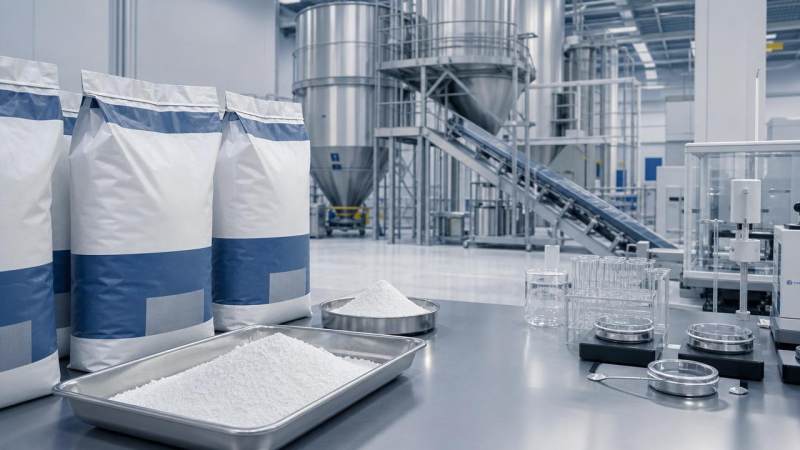
Choosing the right REDISPERSIBLE powder can directly affect the performance, consistency, and cost efficiency of your dry mix plant. For procurement professionals, understanding product quality, application fit, supply stability, and manufacturer capability is essential before making a purchase decision. This guide highlights the key factors to evaluate when sourcing REDISPERSIBLE powder, helping buyers reduce risk and secure reliable, long-term value.
What Procurement Teams Are Really Looking for When Buying REDISPERSIBLE Powder
When buyers search for a REDISPERSIBLE powder buying guide, they are rarely looking for chemistry theory alone. They usually need a practical way to compare suppliers, control risk, and avoid product mismatch.
For dry mix plants, the right grade influences adhesion, flexibility, water retention balance, workability, and final application reliability. A poor choice may create complaints, unstable formulations, or unnecessary production cost.
That is why procurement decisions should not focus only on price per ton. The better question is whether the REDISPERSIBLE powder fits your formula, your production process, and your downstream market expectations.
Start with Application Fit, Not Just Generic Product Specs
The first purchasing checkpoint is application fit. REDISPERSIBLE powder used in tile adhesive may require different performance priorities than products designed for skim coat, self-leveling mortar, repair mortar, or external insulation systems.
Procurement teams should ask suppliers which end-use systems the grade is optimized for. A broad product description is not enough if your plant produces multiple dry mix products with different technical demands.
For tile adhesives, key concerns often include open time, bond strength, slip resistance, and deformability. For repair mortars, crack resistance, impact behavior, and substrate compatibility may matter more during evaluation.
If your plant serves several regions, local climate also affects suitability. A REDISPERSIBLE grade that performs well in one market may need adjustment for hot, humid, or freeze-thaw environments elsewhere.
Which Performance Indicators Matter Most in Supplier Evaluation
Many data sheets look similar at first glance, so procurement professionals need to know which indicators have real purchasing value. The most useful approach is to connect technical data directly to finished product performance.
Important checks often include ash content, bulk density, particle size distribution, film-forming properties, minimum film-forming temperature, and protective colloid system. These influence redispersion, storage behavior, and final mortar consistency.
Bond strength results are especially important for dry mix plants. Ask whether the supplier can provide test data under relevant standards, including initial tensile adhesion, water immersion performance, heat aging, and freeze-thaw resistance.
Flexibility and crack resistance should also be reviewed when the formula requires movement accommodation. These factors can strongly affect customer satisfaction in tile systems, façade applications, and renovation materials.
Another practical factor is how consistently the powder disperses during mixing. Even if lab performance looks good, poor redispersion can lead to uneven batches and troubleshooting costs on the production floor.
Why Batch Consistency Matters More Than a Low Quoted Price
One of the biggest procurement risks is not obvious product failure, but batch-to-batch inconsistency. Variations in viscosity interaction, moisture behavior, or film formation can create unstable product performance over time.
In a dry mix plant, small fluctuations may force repeated formula correction, more quality control work, and greater operator intervention. That increases hidden cost, even when the initial purchase price appears attractive.
Ask suppliers how they control raw material sourcing, process parameters, and final batch release. A reliable manufacturer should be able to explain its quality control system in a clear and structured way.
It is also useful to request retention samples, lot traceability, and historical consistency records. Procurement teams that buy on contract need evidence that long-term repeatability can support stable commercial production.
How to Assess Manufacturer Capability Before Signing a Supply Contract
Supplier capability goes beyond product brochures. Buyers should examine whether the manufacturer has stable production capacity, export experience, technical service support, and the operational discipline required for long-term supply.
Jinan Ludong Chemical Co., Ltd. operates as a large-scale global manufacturing enterprise focused on cellulose ethers and integrated construction material solutions. Its portfolio includes HPMC, REDISPERSIBLE polymer powder, and HPS products.
For procurement teams, this type of background can matter because integrated production and broader formulation knowledge often improve technical communication, customization speed, and problem-solving during product qualification stages.
The company reports annual production capacity of 45,000 tons, with advanced production lines that combine traditional manufacturing expertise and intelligent automation. That kind of scale may support stronger delivery reliability for growing dry mix operations.
When reviewing any supplier, buyers should still verify key facts independently. Focus on capacity utilization, lead time stability, export documentation ability, and responsiveness when samples, trials, or corrective actions are required.
Questions Buyers Should Ask During Sampling and Trial Testing
Sampling is where many purchasing decisions become clearer. A supplier may offer a competitive specification sheet, but trial performance in your own formula is what determines practical suitability.
Ask for samples from standard production lots rather than specially optimized lab material. This helps procurement and technical teams judge whether normal commercial output can deliver the same performance seen during evaluation.
During testing, compare not only strength values but also mixing behavior, dosage efficiency, anti-sag properties, workability retention, and compatibility with cement, fillers, cellulose ether, and other formulation components.
For example, interaction with HPMC can significantly influence water retention and construction feel. In some systems, related additives such as Polyvinyl Alcohol may also be discussed when reviewing broader formulation compatibility.
Procurement should work closely with the technical team to define pass or fail criteria before trials begin. Without clear benchmarks, price pressure can overshadow real performance differences that affect customer complaints later.
Supply Stability, Lead Time, and Logistics Should Be Part of the Quality Decision
Many buyers separate logistics from product quality, but in reality they are connected. A technically suitable REDISPERSIBLE powder still becomes a purchasing problem if supply delays disrupt production schedules.
Check the supplier’s normal lead times, safety stock practices, packaging options, and ability to manage urgent orders. Global buyers should also review port access, shipping experience, and documentation accuracy.
Packaging quality matters more than it may seem. Moisture protection, pallet stability, bag strength, and labeling clarity all affect warehouse management and the risk of material loss during transportation and storage.
It is wise to ask how the supplier handles peak season demand. Some manufacturers perform well during qualification but struggle during market surges, which can create expensive gaps in raw material availability.
How to Compare Total Procurement Cost Instead of Unit Price Alone
Procurement professionals create more value when they compare total cost of ownership rather than only invoice price. A lower-priced REDISPERSIBLE powder may require higher dosage or trigger more formulation adjustment.
That means the true cost should include dosage efficiency, production stability, rejection risk, labor spent on troubleshooting, complaint exposure, and the market impact of inconsistent finished product performance.
For instance, a slightly higher-cost grade may still reduce overall cost if it improves bond strength at lower addition levels, shortens reformulation time, or reduces customer returns in demanding applications.
Ask suppliers to support cost comparison with application-based recommendations. Serious partners usually help buyers calculate performance-per-cost, not just quote a number and leave technical interpretation to the customer.
Documentation, Compliance, and Commercial Terms Buyers Should Verify
Before final approval, procurement teams should review technical data sheets, safety information, quality certificates, origin documentation, and any application-specific compliance requirements in the destination market.
It is also important to align on contract details such as minimum order quantity, payment terms, claim handling process, shelf life, and the agreed basis for resolving quality disputes if they arise.
For cross-border sourcing, confirm whether the supplier can provide stable English documentation and timely communication. Delays in certificates or shipping paperwork can be as disruptive as product issues themselves.
If the supplier offers technical follow-up after shipment, that adds value. In some cases, related materials such as Polyvinyl Alcohol or cellulose-based additives may also be part of broader sourcing discussions.
A Practical REDISPERSIBLE Buying Checklist for Dry Mix Plants
To simplify evaluation, buyers can use a checklist built around six questions. First, does the grade match the exact dry mix application and target market performance requirements?
Second, are the supplier’s performance claims supported by relevant and repeatable test data? Third, is batch consistency strong enough for long-term production without frequent formula correction?
Fourth, does the manufacturer have the production capacity, quality control discipline, and export capability required for your purchasing volume? Fifth, can the supplier support trials, troubleshooting, and technical communication efficiently?
Sixth, does the commercial offer make sense when judged by total cost, not just nominal price? Buyers who follow this framework usually make more stable and defensible procurement decisions.
Final Takeaway for Procurement Professionals
Buying REDISPERSIBLE powder for a dry mix plant is not only a sourcing task. It is a performance, risk, and supply continuity decision that directly affects product quality and plant efficiency.
The best purchasing outcomes usually come from balancing application fit, verified technical performance, consistency, manufacturer capability, and total cost. Price matters, but unsupported low pricing often creates larger operational costs later.
For procurement teams, a disciplined evaluation process reduces uncertainty and strengthens long-term supplier relationships. When the right REDISPERSIBLE grade is matched with a reliable manufacturing partner, dry mix production becomes more stable and more competitive.
Send Your Inquiry
We welcome your cooperation and we will develop with you.
