


How to Compare an HPMC Supplier for Consistent Batch Performance
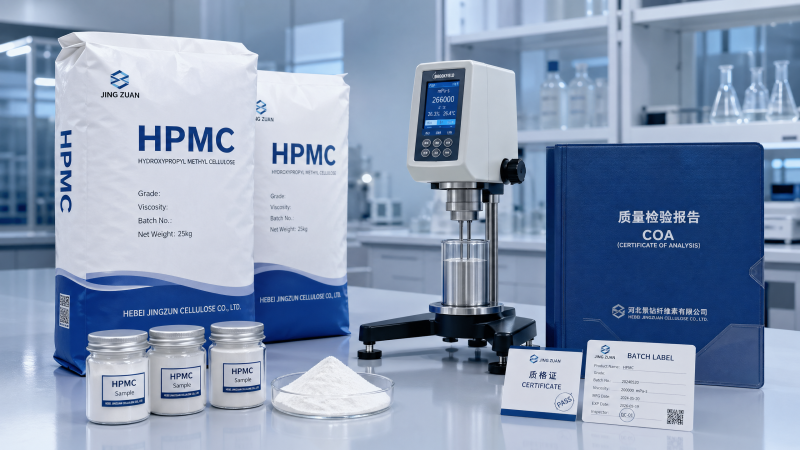
Choosing the right HYDROXYPROPYL METHYL CELLULOSE supplier is critical for quality control and safety teams focused on stable batch performance. Beyond price, buyers should assess production consistency, viscosity control, traceability, testing standards, and supply reliability. This guide explains how to compare suppliers effectively and reduce formulation risks across construction and industrial applications.
Why a checklist-based supplier comparison works better than price-only sourcing
For quality control and safety managers, batch consistency is rarely lost because of one dramatic failure. More often, it drifts through small variations in viscosity, moisture, substitution level, particle size, or storage condition. A checklist-based review helps teams compare a HYDROXYPROPYL METHYL CELLULOSE supplier across 8 to 12 practical control points instead of relying on quotation sheets alone.
This approach is especially important in construction chemicals, drymix mortar, tile adhesive, self-leveling compounds, gypsum systems, and industrial formulations where HPMC dosage may be only 0.1% to 0.8%, yet strongly affects water retention, workability, sag resistance, and open time. Even modest lot-to-lot variation can create visible downstream instability within 24 to 72 hours of production or application testing.
A structured comparison also supports internal documentation. Procurement may focus on landed cost, but QC and EHS teams usually need evidence of process stability, defined incoming inspection standards, and reasonable traceability depth. In practical supplier approval, it is common to review at least 3 consecutive lots, and in more sensitive systems, 5 to 10 lots give a stronger picture of repeatability.
First-pass screening: what to confirm before requesting samples
- Whether the supplier is a direct manufacturer, trader, or mixed service provider, and how that affects control over production batches.
- Whether the viscosity range offered matches your formulation window, such as 400 to 200,000 CPS rather than a narrow catalog line.
- Whether lot coding, retained sample practice, and complaint-response procedures are documented and easy to audit.
- Whether the supplier can support construction-grade, chemical-grade, or application-specific recommendations without overpromising.
A manufacturer with integrated production and technical service often gives QC teams a clearer route from raw-material control to finished-lot release. For example, when evaluating Hydroxypropyl Methyl Cellulose, buyers should not only ask for a data sheet, but also for the test items used to release each lot and the acceptable control window behind each item.
Core checklist: how to compare consistent batch performance
The most useful comparison method is to separate “declared specification” from “process repeatability.” Two suppliers may both offer the same nominal viscosity grade, yet one holds a narrower actual release band, cleaner particle distribution, and more stable moisture content. Those differences matter in production scale-up, especially when your monthly use exceeds 5 to 20 tons.
Before the table below, decide which 6 to 8 properties most directly affect your finished product. For many drymix systems, the priority set includes viscosity, water retention behavior, dissolution profile, ash level, pH, moisture, fineness, and bulk density. If your process uses automated dosing, flowability and packing consistency should also be checked.
Use the following comparison table during supplier qualification meetings, sample review, and factory audit preparation. It is designed for a QC-led discussion rather than a purchasing-only review.
This table helps teams move from generic statements to measurable questions. If a HYDROXYPROPYL METHYL CELLULOSE supplier cannot clearly explain test conditions, release logic, or retained-sample practice, the risk is not only technical. It also complicates complaint handling, CAPA documentation, and customer-facing investigations when a downstream product shows variation.
Checklist items that should be verified with actual lot data
- Ask for COAs from at least 3 recent production lots, preferably from different production dates within a 30- to 90-day window.
- Compare not only pass/fail results, but the spread of measured values around the target grade.
- Check whether test methods are consistent across lots, especially for viscosity solution preparation and temperature control.
- Review whether customer complaints trigger recheck, retained-sample review, and lot containment procedures.
Key warning sign
If a supplier only shares broad catalog ranges without historical lot evidence, QC teams should treat the approval as incomplete. A specification that looks acceptable on paper may still carry excessive variation in real production conditions. In practical qualification, a narrow and explainable trend is often more valuable than a wide but nominally compliant range.
Supplier capability checks beyond the COA
A certificate of analysis is necessary, but it is not enough. Stable HPMC supply depends on production discipline, equipment capability, packaging execution, and communication speed when deviations occur. For safety and quality teams, the real question is whether the supplier can repeatedly deliver the same functional behavior, not just the same product name.
This is where manufacturing scale and process integration matter. A producer with complete production lines, application support, and broad viscosity control can usually respond better when a customer needs grade adjustment, change assessment, or rapid replacement planning. If annual capacity is measured in tens of thousands of tons rather than small campaign output, continuity planning is often stronger, although it still must be verified lot by lot.
Jinan Ludong Chemical Co., Ltd., established in 2020, focuses on cellulose ethers and related integrated services. Its annual capacity reaches 45,000 tons, with HPMC series including type 75 and type 60 for construction and chemical grades, and viscosity controllable from 400 to 200,000 CPS. For buyers, this kind of production scope is relevant because it suggests the supplier may support multiple application windows instead of a single narrow grade family.
Operational checks for QC and safety teams
- Confirm packaging integrity, pallet condition, and labeling readability, especially for warehouses with high humidity exposure.
- Check whether SDS availability, handling guidance, and storage instructions are aligned with your internal EHS procedures.
- Ask how long complaint response takes, such as within 24 hours for acknowledgement and 3 to 5 working days for preliminary analysis.
- Verify whether the supplier can maintain shipment rhythm during peak demand cycles, port delays, or raw-material fluctuations.
Another practical check is change management. Ask whether the supplier notifies customers before changes in raw materials, process parameters, packaging, or production site arrangements. Even a small process shift can alter hydration speed or workability in sensitive mortar formulas. A robust supplier should define which changes are major, which are minor, and when customer revalidation is recommended.
Application-specific comparison: not every batch risk looks the same
The same HYDROXYPROPYL METHYL CELLULOSE supplier may perform well for one application but need additional review for another. Tile adhesive, skim coat, EIFS, gypsum plaster, and industrial liquid systems do not stress the polymer in the same way. That is why qualification should include a use-case checklist, not only a generic material review.
For example, tile adhesive users often prioritize water retention, slip resistance, and open time consistency. Gypsum-based systems may focus more on workability retention and compatibility with other additives. In self-leveling or pump-applied mixes, dispersion behavior and viscosity response during mixing can become more important than static laboratory values alone.
The table below can be used to align supplier evaluation with end-use risk. It is especially useful when your incoming inspection resources are limited and you need to decide which tests to prioritize first.
This application view prevents under-testing. If your approval process checks only viscosity but ignores dissolution behavior or compatibility, you may miss the factor that actually drives field complaints. The better method is to combine generic raw-material checks with 2 to 4 application-relevant performance tests based on your finished product.
How to run a practical comparison trial
- Test one benchmark lot against one candidate lot in the same formulation and on the same day.
- Repeat with at least 3 lots from the candidate supplier if the material will be used in a critical production line.
- Record both laboratory data and operator observations, including mixing feel, lumping tendency, and finish appearance.
- Define acceptance criteria before testing, such as allowable variation in open time, slump behavior, or water demand.
Commonly overlooked risks when comparing suppliers
Many teams compare price, viscosity grade, and delivery time, then stop too early. The problem is that several hidden variables can distort incoming performance without showing up in a basic quote. These overlooked items are often the reason why a new source works in sample evaluation but becomes unstable after 2 or 3 commercial shipments.
One frequent issue is incomplete alignment on test methods. A supplier may report viscosity at one solution concentration and temperature, while the buyer verifies under another condition. The numbers then appear inconsistent even if the material itself is within its intended control range. QC teams should document method alignment before making any pass/fail judgment.
Another issue is insufficient warehouse and transport review. HPMC is sensitive to moisture pickup during storage and handling. If bags are exposed to poor sealing, long transshipment times, or humid storage for several weeks, the product can cake or feed unevenly even when the manufacturing lot was originally acceptable.
Risk reminder checklist
- Do not compare viscosity values unless the method, concentration, and temperature are clearly matched.
- Do not approve based on a single “good” sample if commercial lots will come from ongoing mass production.
- Do not ignore packaging consistency if your site uses automated feeding or long warehouse residence times.
- Do not overlook communication quality; slow technical feedback can extend downtime during complaint investigation.
Useful approval threshold
As a practical rule, if a candidate supplier cannot provide stable lot documentation, aligned test conditions, and a clear response path for deviations, approval should remain conditional. Conditional approval may be acceptable for noncritical use, but critical formulations usually require stronger evidence across several lots and at least one production-scale validation run.
Execution plan: what to prepare before contacting a supplier
The most efficient supplier discussions happen when the buyer shares a focused technical brief. Instead of asking for “your best HPMC,” provide your application, target viscosity range, dosage window, critical performance indicators, packaging preference, monthly volume, and expected lead time. That allows the supplier to recommend a more suitable grade and avoids repeated trial cycles.
If you are comparing multiple sources, prepare one internal scorecard and use it consistently. A simple 100-point model works well: 35 points for batch stability, 20 for application fit, 15 for traceability and documentation, 15 for supply reliability, and 15 for service response. This gives procurement and QC a shared basis for decision-making.
When discussing Hydroxypropyl Methyl Cellulose, it is also helpful to define whether you need standard grades, construction-focused solutions, or support for broader cellulose ether packages such as HPMC with RDP or HPS in one sourcing relationship. Integrated supply can simplify compatibility review and shorten qualification time in some projects.
What to send in your first inquiry
- Application type, such as tile adhesive, skim coat, gypsum plaster, or industrial formulation.
- Target viscosity grade or current benchmark material, if available.
- Key acceptance criteria, such as water retention, open time, workability, or mixing behavior.
- Expected monthly or quarterly demand, packaging format, and preferred delivery cycle.
- Documentation needs, including COA format, SDS, traceability expectations, and sample quantity.
Why choose us
For buyers evaluating a HYDROXYPROPYL METHYL CELLULOSE supplier, we support discussions that go beyond catalog data. Jinan Ludong Chemical focuses on cellulose ethers, production, trading, and integrated service support for global customers. Our product scope covers HPMC, RDP, and HPS, which helps customers review both single-material performance and broader formulation compatibility.
If your team is comparing suppliers for stable batch performance, you can contact us to discuss parameter confirmation, viscosity range selection, sample planning, delivery cycles, packaging options, and application-oriented recommendations. We can also help you organize a practical comparison path around your target formulation rather than a generic product description.
To move faster, share your current grade, use scenario, monthly demand, and the 3 to 5 quality indicators that matter most to your process. Our team can then support product selection, sample supply, lead-time discussion, documentation review, and quotation communication with a clearer technical starting point.
Send Your Inquiry
We welcome your cooperation and we will develop with you.
