


Non-toxic lubricants can reduce risk in sensitive settings
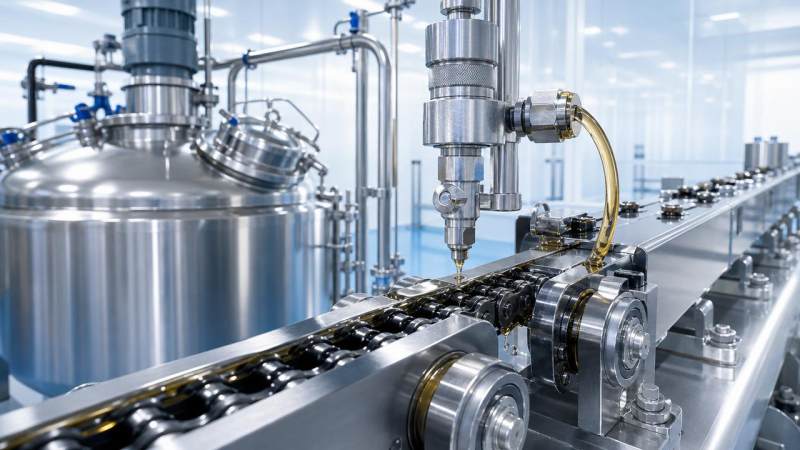
In sensitive environments where safety, compliance, and contamination control matter most, non-toxic lubricants offer a practical way to reduce operational risk without compromising performance. For quality control and safety management in chemical production and handling, selecting suitable non-toxic lubricants supports cleaner operations, lowers exposure concerns, and aligns better with tighter regulatory expectations.
Why non-toxic lubricants matter in chemical settings
In the chemical industry, lubrication is rarely just a maintenance detail. It affects contamination risk, worker contact, equipment life, shutdown frequency, and audit readiness.
Non-toxic lubricants are especially valuable where incidental contact, airborne transfer, washdown exposure, or residue migration may occur. These conditions are common in packaging, mixing, dosing, conveying, and sealed processing systems.
Using non-toxic lubricants can reduce risk by limiting harmful ingredients, simplifying handling procedures, and supporting safer maintenance routines. They also help control secondary contamination that may affect downstream product quality.
This is particularly relevant for enterprises managing cellulose ethers, additives, powders, and specialty chemical formulations, where fine particles, repeated cleaning, and strict consistency standards can magnify small lubrication failures.
Checklist for selecting non-toxic lubricants
Use the following checklist to evaluate non-toxic lubricants before approval, changeover, or site-wide standardization.
- Verify ingredient safety data and confirm the lubricant avoids toxic heavy metals, aggressive solvents, and additives that may create residue, odor, or hazardous decomposition under normal operating temperatures.
- Match viscosity to the application, because overly thin non-toxic lubricants may fail under load, while overly thick products can trap dust, increase drag, and complicate precision movement.
- Check compatibility with seals, elastomers, hoses, plastics, and coated metals to prevent swelling, embrittlement, softening, or chemical attack during long operating cycles.
- Review temperature stability across startup, steady-state, and cleaning conditions so the non-toxic lubricants do not separate, carbonize, evaporate, or lose film strength unexpectedly.
- Confirm resistance to water, steam, and cleaning agents when equipment faces frequent washdown, condensation, or humidity that could dilute or remove the lubricant film.
- Assess contamination pathways near mixers, transfer lines, valves, bearings, and filling points, then prioritize non-toxic lubricants where incidental migration could affect sensitive chemical products.
- Require traceable documentation, including technical data sheets, batch consistency records, and regulatory declarations, to support internal validation and external compliance review.
- Test real service life under production conditions instead of relying only on catalog claims, because dust load, vibration, pressure, and cycle frequency often change lubricant performance.
- Standardize application quantity and frequency, since even high-quality non-toxic lubricants can create buildup, leakage, and slip hazards when overapplied by maintenance teams.
- Compare total operating cost, including downtime, relubrication intervals, cleaning effort, and disposal requirements, rather than focusing only on unit purchase price.
Key application scenarios for non-toxic lubricants
Powder handling and conveying systems
In powder processing, dust can settle on chains, guides, bearings, and drive components. If a lubricant is chemically harsh or unstable, it may capture particles and form abrasive deposits.
Non-toxic lubricants help reduce the consequences of incidental residue transfer in systems handling fine chemical powders. They are useful where cleanliness and low odor are important for controlled production areas.
Mixing, dosing, and additive preparation
Agitators, metering units, and valve assemblies often operate near product contact zones. In these points, lubricant leakage can trigger quality deviations, rework, or disposal.
When producing performance additives or cellulose ether systems, process consistency matters. Materials such as Hydroxypropyl Methyl Cellulose are used in demanding formulations where contamination control and stable equipment performance support better final product uniformity.
Packaging and filling areas
Packaging lines depend on repeated motion, tight synchronization, and predictable machine response. Lubricant mist, dripping, or staining can affect labels, closures, and outer package cleanliness.
Selecting non-toxic lubricants for guide rails, pneumatic accessories, and drive points can lower the risk of visible contamination and support cleaner finished goods presentation.
Maintenance in multi-purpose production zones
Sites producing more than one chemical grade often need faster cleaning validation and lower cross-contamination potential. Lubricants with safer compositions can simplify maintenance planning in shared spaces.
This approach aligns with integrated production models that combine traditional processing and automated control, where uptime and cleanliness must be balanced carefully.
Common oversights when evaluating non-toxic lubricants
Assuming non-toxic means universally suitable. Non-toxic lubricants still vary in load resistance, oxidation stability, and washout behavior. Safety profile alone does not guarantee mechanical performance.
Ignoring interaction with cleaning chemicals. Alkaline detergents, sanitizers, and solvents may break down lubricant films or carry residues into unwanted areas if compatibility is not checked first.
Missing hidden contamination routes. Drips from overhead drives, open bearings near transfer points, and grease purge from overfilled housings are frequent causes of avoidable process risk.
Overlooking storage conditions. Heat, moisture, and poor container control can degrade non-toxic lubricants before use, affecting performance and documentation reliability.
Changing products without controlled trials. A replacement lubricant should be validated in one line or asset class first, with clear tracking of noise, wear, leakage, temperature, and cleaning results.
Practical execution steps
- Map equipment by contamination sensitivity, starting with product-adjacent components, powder handling assets, and frequently washed machines.
- Group lubrication points by motion type, load, speed, and temperature to narrow the right non-toxic lubricants for each duty.
- Run side-by-side trials with defined acceptance criteria, including wear indicators, relubrication interval, cleanliness, and operator feedback.
- Update SOPs, labels, and storage controls to prevent accidental mixing between legacy lubricants and approved non-toxic lubricants.
- Audit results quarterly and revise the approved list when process changes, new materials, or stricter compliance demands appear.
A broader process perspective
Lubrication decisions should support the entire production system, not just isolated machine parts. In chemical manufacturing, material flow, equipment reliability, and contamination control are tightly connected.
For operations involved in cellulose ether production and application support, process discipline matters from raw material handling to final packaging. Products such as Hydroxypropyl Methyl Cellulose are commonly associated with applications that demand stable quality, controlled viscosity behavior, and dependable production environments.
That is why non-toxic lubricants should be evaluated as part of a wider risk-reduction strategy, alongside equipment design, automation, cleaning verification, and supplier documentation.
Conclusion and next action
Non-toxic lubricants can reduce risk in sensitive settings by lowering contamination concerns, supporting safer handling, and improving operational control. Their value is highest when selection follows a structured checklist rather than a simple product swap.
Start with the most sensitive lubrication points, validate performance under actual chemical processing conditions, and document a site-specific approval standard. A disciplined non-toxic lubricants program can strengthen both equipment reliability and quality assurance over time.
Send Your Inquiry
We welcome your cooperation and we will develop with you.
