


Why tile adhesive fails without the right polymer powder
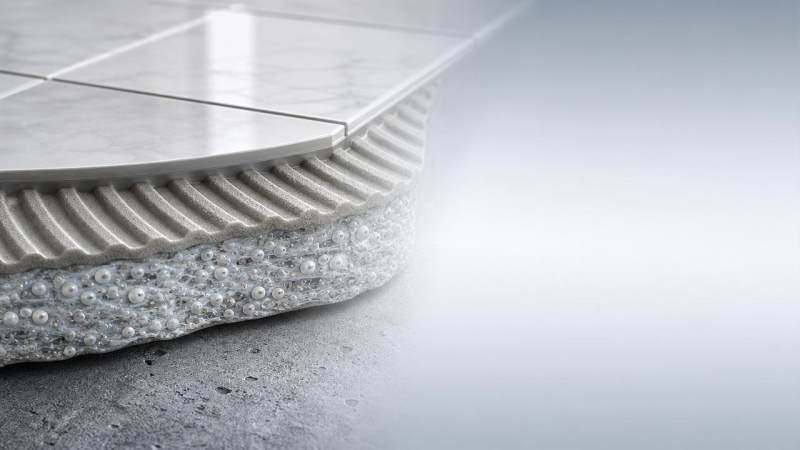
Tile adhesive failure often begins with a hidden formulation weakness rather than poor workmanship alone. In many cases, the missing link is the polymer system. Redispersible Polymer Powder for tile adhesive directly affects bonding, flexibility, water resistance, open time, and crack control.
When the wrong powder is selected, the adhesive may pass basic mixing checks yet fail under service stress. Tiles can slip, hollow, crack, or detach. Understanding Redispersible Polymer Powder for tile adhesive helps explain why some systems remain stable while others become risky over time.
What does Redispersible Polymer Powder for tile adhesive actually do?
Redispersible Polymer Powder for tile adhesive forms a polymer film after hydration and drying. That film works with cement hydration products. Together, they create stronger adhesion between tile, substrate, and mortar matrix.
Cement alone provides hardness and compressive strength. It does not provide enough deformation capacity or durable interfacial bonding for demanding tile systems. Polymer modification fills that gap.
A suitable polymer powder can improve:
- Initial and final bond strength
- Flexibility against thermal and structural movement
- Water retention balance and workability stability
- Resistance to impact, vibration, and freeze-thaw cycles
- Adhesion on dense tiles and low-absorption surfaces
This is why Redispersible Polymer Powder for tile adhesive is not a minor additive. It is a structural performance component in modern cement-based tile bonding systems.
Why does tile adhesive fail when the polymer powder is wrong?
Failure usually appears as debonding, edge lifting, hollow sound, powdering, or cracking. These symptoms often trace back to an unsuitable polymer grade, insufficient dosage, or a mismatch between powder chemistry and application conditions.
Low bond development
If the polymer cannot develop a continuous film, bond strength remains weak. Heavy porcelain tiles are especially unforgiving because they absorb little water and leave less margin for mechanical anchoring.
Poor flexibility
Substrates expand and contract. Tiles also respond to temperature. Without enough flexibility, stress concentrates at the adhesive layer. Cracks start small, then spread until bond failure becomes visible.
Weak water resistance
Bathrooms, kitchens, facades, and wet zones require durable resistance to moisture exposure. An unsuitable polymer may soften, lose adhesion, or allow performance drop after repeated wet-dry cycles.
Unstable workability
Open time and sag resistance must remain balanced. If Redispersible Polymer Powder for tile adhesive is poorly selected, the mix may skin too fast or lose body, causing uneven coverage and reduced transfer.
Which application conditions make polymer selection more critical?
Some installations are much less forgiving than standard indoor wall tiling. In these cases, Redispersible Polymer Powder for tile adhesive becomes a key decision point rather than a general formulation option.
- Large-format porcelain tiles
- Tile-on-tile renovation systems
- Floor heating substrates
- External wall applications
- Wet rooms and splash zones
- Lightweight or deformable boards
These conditions demand stronger adhesion and movement tolerance. A basic formulation may appear economical, but service failure is usually far more expensive than the initial material difference.
The full system also matters. Cellulose ether supports water retention, consistency, and application behavior. In balanced formulations, components such as Hydroxypropyl Methyl Cellulose work alongside polymer powder to stabilize installation performance.
How can you judge whether a polymer powder is suitable?
A good evaluation should go beyond price and basic appearance. Redispersible Polymer Powder for tile adhesive should be judged by performance fit, not by the assumption that all white powders behave similarly.
Check the performance targets
Start with required adhesion class, substrate type, tile absorption, and expected environment. A dry indoor ceramic wall differs greatly from an exterior porcelain installation.
Review powder characteristics
Key indicators include minimum film-forming behavior, redispersion quality, anti-slip contribution, compatibility with cement, and influence on tensile adhesion after aging or water immersion.
Test the whole formula
Polymer performance changes with fillers, cement grade, cellulose ether, and dosage. A strong powder can underperform in an unbalanced system. Laboratory validation remains essential.
What are the most common misconceptions about Redispersible Polymer Powder for tile adhesive?
Several recurring assumptions lead to unstable formulations and avoidable failures. These misconceptions can distort both product selection and troubleshooting.
“More cement always means stronger adhesive”
Higher cement content may increase hardness, but not necessarily useful adhesion or flexibility. Excess rigidity can raise shrinkage stress and worsen crack sensitivity.
“Any polymer powder can replace another”
Different chemistries serve different targets. Some grades prioritize flexibility, others water resistance, workability, or economic balance. Substitution without testing is risky.
“If the mix feels workable, performance is fine”
Smooth troweling does not guarantee durable adhesion. Real performance depends on cured film formation, interface strength, and retention after aging cycles.
“Polymer dosage can be cut without consequences”
Small dosage reductions can cause major drops in final performance, especially with porcelain, wet areas, or thermal movement. Cost savings on paper may create field losses later.
How do formulation partners support long-term tile adhesive reliability?
Reliable performance comes from coordinated chemistry. Redispersible Polymer Powder for tile adhesive works best when matched with proper rheology control, water retention, and production consistency.
Jinan Ludong Chemical Co., Ltd. focuses on cellulose ethers and integrated construction material support. Its production system covers HPMC, RDP, and HPS, helping formulations remain stable across different building needs.
In practical tile adhesive design, Hydroxypropyl Methyl Cellulose contributes water retention, anti-sag behavior, and application consistency. Together with the right polymer powder, it supports stronger and more dependable installation results.
Tile adhesive failure is rarely random. It often reflects a mismatch between service demands and formulation chemistry. Redispersible Polymer Powder for tile adhesive is central to bond reliability, crack resistance, and moisture durability.
The next step is simple: evaluate the adhesive as a complete system, define the installation risks, and verify polymer compatibility through testing. That approach reduces failure, improves consistency, and supports durable tile construction.
Send Your Inquiry
We welcome your cooperation and we will develop with you.
