


What makes non-toxic lubricants safer in daily use?
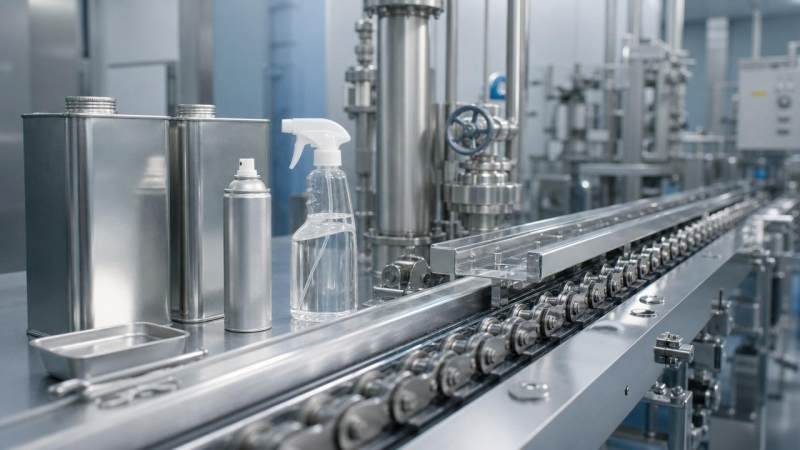
In everyday operations, non-toxic Lubricants are valued for reducing exposure risks while maintaining reliable performance on tools, equipment, and contact surfaces. For users and operators, choosing safer lubrication solutions means better workplace hygiene, lower health concerns, and improved confidence in routine handling. Understanding what makes these products safer helps businesses balance efficiency, compliance, and practical daily use.
In the chemical industry, daily-use lubricants are not judged by friction control alone. Operators also look at skin contact risk, odor intensity, residue behavior, cleaning difficulty, storage stability, and compatibility with nearby materials.
For purchasing teams and frontline users, the safest option is usually the product that performs consistently across 3 key areas: lower hazard exposure, controlled formulation quality, and predictable use on equipment surfaces over repeated cycles.
Why non-toxic lubricants are considered safer in daily use
The phrase non-toxic Lubricants generally refers to formulations designed to reduce harmful exposure during normal handling. In practice, safety is influenced by ingredient selection, impurity control, volatility level, and how the lubricant behaves during application, wiping, or maintenance.
For operators working 6 to 8 hours per shift, even low-level repeated contact matters. A lubricant that minimizes harsh solvents, reduces irritating fumes, and leaves controlled residue can lower daily discomfort and simplify safe routine use.
Lower exposure risk starts with formulation design
A safer lubricant is usually built around base oils and additives chosen for reduced acute toxicity under expected working conditions. This does not mean risk disappears, but it often means better tolerance during incidental skin contact or limited splash exposure.
In many workshops, operators prefer products with milder odor and lower evaporation because these properties support cleaner air conditions in enclosed zones of 20 to 100 square meters, especially where ventilation is moderate rather than high-volume.
Key safety indicators users notice first
- Reduced strong solvent smell during application and wipe-down
- Lower chance of skin irritation after repeated contact
- Cleaner residue on tools, valves, chains, guides, and contact points
- More stable performance across temperature ranges such as 5°C to 40°C
- Easier housekeeping and less slippery overspray around work areas
Another factor is impurity management. In chemical manufacturing and processing environments, uncontrolled trace components can affect odor, color stability, corrosion tendency, or deposit formation after 30 to 90 days of use and storage.
The table below shows how operators often distinguish safer daily-use products from conventional alternatives during practical evaluation rather than purely marketing-based selection.
The main conclusion is simple: safer performance is not defined by one claim. It comes from a combination of controlled formulation, cleaner use behavior, and lower operator burden across repeated tasks.
Why residue control matters in chemical workplaces
In packaging lines, mixers, guide rails, transfer points, and adjustment mechanisms, residue can become a safety issue as much as a maintenance issue. Excessive tack, staining, or film build-up may trap powders, fibers, or dust within 7 to 14 days.
That is why many users prefer non-toxic Lubricants that deliver a balanced film: thick enough to reduce wear, but not so heavy that they create contamination or repeated wipe-down labor after every shift.
How users and operators can evaluate safer lubricant choices
Choosing the right product requires more than reading a label. A useful evaluation usually includes 4 dimensions: application environment, contact frequency, equipment material compatibility, and maintenance routine. Each one affects whether the lubricant is truly safer in daily use.
Check the application environment first
A lubricant used on open chains in a dusty workshop faces different challenges from one used on enclosed bearings or contact surfaces near handled materials. Temperature, humidity, washdown frequency, and splash risk all influence product choice.
For example, if surfaces are cleaned every 24 hours, operators usually need a product that can maintain lubricity while still being removable without aggressive solvents. If maintenance is weekly, longer film stability becomes more important.
A practical 5-step evaluation process
- Identify the contact surface: metal, coated part, polymer, or mixed assembly.
- Measure the use cycle: once per shift, every 4 hours, or continuous operation.
- Review exposure points: hand contact, splash risk, mist formation, or food-adjacent packaging zones.
- Run a small trial for 7 to 15 days under normal load.
- Compare lubrication effect, residue, cleaning time, and user feedback.
This structured method prevents a common mistake: buying a product based only on viscosity or unit price while ignoring labor cost, cleaning time, and operator acceptance over repeated use.
Do not ignore material compatibility
Some lubricants perform well on steel but may soften certain plastics, affect elastomers, or leave unwanted marks on coated surfaces. In chemical plants and processing workshops, this matters because one line may contain 3 to 6 material types in a single machine section.
Compatibility tests should include observation of swelling, discoloration, seal response, and wipe-off behavior. Even a 48-hour spot trial can reveal whether the product fits the real operating environment.
The comparison table below helps operators and purchasing teams align safety expectations with actual use conditions before full-scale procurement.
A good procurement decision connects lubricant safety with process reality. The best-performing product on paper may not be the safest or most efficient once operator handling and line cleaning are included.
What safer lubricant use looks like in real daily operations
In daily operations, safer use is visible in routine details. Operators spend less time managing overspray, less time removing thick deposits, and less time dealing with strong odor complaints. These small gains add up over 5 or 6 working days each week.
Cleaner handling supports better workplace hygiene
When a lubricant spreads predictably and stays where it is applied, operators can use smaller doses with better control. That reduces accidental transfer to gloves, handles, benches, packaging surfaces, and nearby adjustment tools.
In many industrial settings, the difference between excessive and controlled application is only a few milliliters per point. Yet across 20 to 50 lubrication points, this can significantly affect housekeeping and slip prevention.
Common daily-use mistakes to avoid
- Using more product to compensate for poor surface preparation
- Applying one lubricant to all machine zones without compatibility review
- Ignoring residue build-up until movement becomes uneven
- Skipping operator feedback after the first 3 to 5 days of trial use
- Storing open containers in hot areas above normal room temperature
Safe use also depends on product stability in storage and transfer. Containers should remain sealed, labeled, and protected from contamination. Even a well-designed lubricant can underperform if mixed with debris, water, or incompatible leftovers from previous products.
Support materials in chemical processing also influence system performance
Lubrication is only one part of process reliability. In broader chemical and construction-material applications, rheology modifiers, binders, and functional additives also affect workability, flow, and controlled surface behavior in equipment and formulation systems.
As a manufacturer focused on cellulose ethers and integrated material solutions, Jinan Ludong Chemical Co., Ltd. serves global industrial users that value consistency, process adaptability, and scalable supply. Its production capacity reaches 45,000 tons annually, with HPMC viscosity control from 400 to 200,000 CPS for varied industrial requirements.
In related formulation environments where thickening, water retention, or application stability matter, materials such as Hydroxypropyl Starch Ether may be considered as part of broader chemical system optimization, depending on the end-use process and handling objectives.
How to buy non-toxic lubricants with fewer risks and better results
For B2B buyers, the right question is not only whether a product is called non-toxic Lubricants, but whether it reduces practical risk while meeting lubrication demands over 1 month, 1 quarter, and normal maintenance cycles.
Ask suppliers for usable technical information
Request clear data on application method, recommended temperature range, residue characteristics, storage period, and compatibility notes. A useful supplier should explain not just benefits, but also where the product may be less suitable.
This is especially important for plants operating multiple lines or exporting products to markets with different compliance expectations. A 2-page technical sheet with real handling guidance is often more useful than broad sales language.
A practical supplier checklist
- Can the supplier explain the intended use environment in detail?
- Is there guidance for dosage, reapplication, and cleaning intervals?
- Are storage and transport conditions clearly stated?
- Is trial support available for line-side evaluation over 7 to 15 days?
- Can the supplier respond quickly if compatibility issues appear?
Users and operators benefit when procurement includes their input early. Their observations on smell, grip, wipe-off, splashing, and maintenance effort often reveal more about daily safety than lab terminology alone.
Balance safety, performance, and process efficiency
The safest practical choice is usually the lubricant that achieves stable performance with fewer side effects. That means less over-application, fewer complaints, fewer cleaning interruptions, and more predictable equipment behavior across repeated daily tasks.
For companies evaluating broader chemical material solutions, working with an experienced manufacturer matters. Jinan Ludong Chemical combines traditional production strengths with intelligent automated systems, helping customers handle varied demand levels and application-specific material requirements more flexibly.
Non-toxic Lubricants are safer in daily use when they reduce unnecessary exposure, remain manageable during routine handling, and fit the real operating conditions of tools, machinery, and contact surfaces. If you want to improve workplace hygiene, lower handling concerns, or compare chemical material options for your process, contact us now to discuss product details, request a tailored solution, or learn more about practical industrial applications.
Send Your Inquiry
We welcome your cooperation and we will develop with you.
