


Polyvinyl Alcohol Quality Checks That Prevent Batch Issues
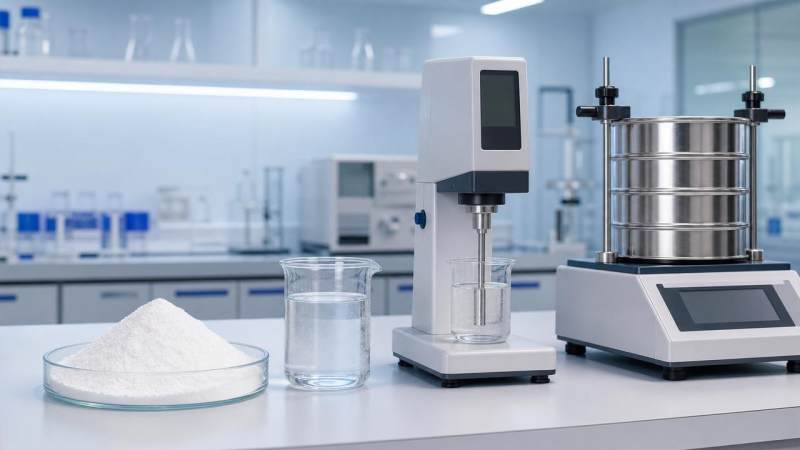
Polyvinyl Alcohol quality checks are becoming a frontline stability issue
In chemical production, small shifts in Polyvinyl Alcohol performance rarely stay small for long.
They can spread into viscosity drift, uneven dissolution, foaming, filter blockage, and unstable end-product behavior.
As formulations become tighter and compliance expectations rise, Polyvinyl Alcohol quality checks now influence cost, consistency, and process safety.
Reliable inspection of moisture, ash, volatile content, particle size, and solution properties helps prevent batch issues before production losses appear.
The growing lesson across the chemicals sector is clear.
Preventive testing is more effective than corrective troubleshooting after a batch has already moved downstream.
Current signals show tighter tolerance demands across chemical applications
Polyvinyl Alcohol is used where film formation, adhesion, suspension stability, and water solubility must stay predictable.
That makes batch-to-batch consistency more important than simple certificate acceptance.
Recent production trends show lower tolerance for raw material fluctuation in coatings, construction additives, emulsions, and specialty blends.
A lot release that once seemed usable may now create unacceptable variation in mixing time or finished viscosity.
This shift is also linked to automation.
Automated systems expose inconsistency faster because fixed dosing and controlled timing leave less room for manual compensation.
Companies with integrated quality systems are therefore moving from basic incoming checks to trend-based monitoring.
That includes comparing retained samples, dissolution curves, and process deviations over time.
The main drivers behind stricter Polyvinyl Alcohol inspection standards
Several forces are pushing more detailed Polyvinyl Alcohol quality control across chemical manufacturing.
These drivers change how quality teams judge acceptable variation.
Passing a basic specification is no longer enough if process behavior still drifts during production.
The most important Polyvinyl Alcohol checks that prevent batch issues
Viscosity remains the first early-warning indicator
Viscosity is often the quickest sign that Polyvinyl Alcohol may behave differently in the tank.
Even modest deviation can affect pumping, hydration speed, coating uniformity, and binder performance.
Trend viscosity by lot, not only by pass or fail status.
A lot near the limit may still be risky when combined with seasonal humidity or process temperature shifts.
Moisture content influences storage and dosing behavior
Moisture affects actual active content, free-flow behavior, and agglomeration risk.
Higher moisture can also shorten stable storage time under poor warehouse conditions.
Check incoming moisture against internal process limits, not only supplier declarations.
Degree of hydrolysis shapes solubility and end-use response
The degree of hydrolysis strongly affects water solubility, film characteristics, and compatibility with additives.
If the hydrolysis level drifts, dissolution temperature windows may shift unexpectedly.
That can create gel particles, incomplete dissolution, or weak product performance.
Ash and purity checks help expose contamination risk
Ash content can indicate residual inorganic material or process contamination.
Purity testing supports stable reaction behavior and reduces the chance of color, residue, or filter problems.
When unexplained defects appear, retained ash and purity data often speed root-cause review.
Particle size affects mixing efficiency
Particle size distribution influences wetting, dust generation, and dissolution consistency.
Oversized particles may dissolve slowly, while excessive fines can form lumps.
A stable screen analysis supports predictable mixing cycles and lower operator intervention.
Why dissolution behavior is receiving more attention than before
A batch can pass core specifications and still fail in actual use because dissolution behavior is overlooked.
This is becoming a major trend in Polyvinyl Alcohol quality management.
Teams are adding practical tests such as dissolution time, clarity, foam level, and undissolved residue checks.
These tests better reflect plant conditions than a certificate alone.
The same logic applies across other water-soluble chemical additives.
For example, consistency in Methyl Hydroxyethyl Cellulose (HEMC) also depends on controlled solution behavior and reliable lot verification.
The impact of weak Polyvinyl Alcohol checks spreads across multiple business stages
Insufficient Polyvinyl Alcohol testing does not only affect the lab.
It influences storage, dosing, production rhythm, complaint handling, and quality documentation.
- Incoming control may approve a risky lot that later causes unstable mixing.
- Production may face longer dissolution time and energy consumption.
- Finished goods may show film defects, strength variation, or appearance inconsistency.
- Customer feedback may arrive too late for simple containment actions.
- Traceability efforts may become difficult without lot-based trend records.
This is why strong raw material inspection is increasingly treated as a production stability tool, not just a quality checkpoint.
The next focus should be trend-based control, not isolated test results
A single passing report does not show whether Polyvinyl Alcohol variability is gradually increasing.
Trend-based control reveals slow shifts before they become visible defects.
What deserves immediate attention in chemical operations
- Define internal warning limits tighter than basic supplier specifications.
- Validate Polyvinyl Alcohol dissolution behavior under actual plant water quality.
- Review storage conditions where moisture pickup may distort test accuracy.
- Compare incoming lots against historical high-performance reference samples.
- Align lab methods so viscosity and moisture data stay reproducible.
- Investigate gradual process deviations before they become customer-visible failures.
Chemical producers with integrated manufacturing systems are especially well positioned to support this approach.
Jinan Ludong Chemical Co., Ltd. combines large-scale production, trading, and integrated cellulose ether services with modern automated lines.
Its broad quality control experience across HPMC, RDP, HPS, and related specialties supports practical understanding of stable raw material performance.
A practical next step is to connect test data with prevention decisions
The best Polyvinyl Alcohol quality check is the one that changes action before losses occur.
Build a short review loop between incoming inspection, trial mixing, and batch release decisions.
If one lot shows slower dissolution or unusual viscosity movement, flag it early and isolate its process risk.
Also compare it with adjacent additive systems, including Methyl Hydroxyethyl Cellulose (HEMC), when formulation interactions may amplify variation.
In today’s chemical environment, stable output depends less on reacting to defects and more on seeing trend signals early.
That is how Polyvinyl Alcohol checks move from routine paperwork to real batch issue prevention.
Send Your Inquiry
We welcome your cooperation and we will develop with you.
