


The 5 Key Advantages of Adding RDP Powder
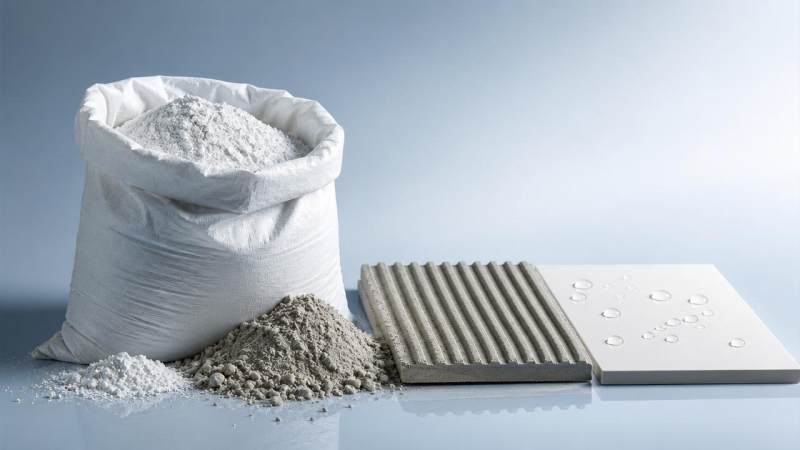
The 5 Key Advantages of Adding Redispersible Polymer Powder
In modern construction materials, performance, consistency, and workability are critical to achieving durable results.
Redispersible Polymer Powder has become an essential additive in dry-mix mortars, tile adhesives, wall putty, and repair compounds.
It improves bonding strength, flexibility, water resistance, and overall application quality across demanding construction environments.
Understanding the key advantages of adding RDP powder helps optimize formulations, reduce failure risks, and support stable project outcomes.
Why a Checklist Matters Before Using Redispersible Polymer Powder
Redispersible Polymer Powder looks simple, yet its performance depends on polymer type, dosage, mineral binder, fillers, and jobsite conditions.
A checklist-based approach prevents random adjustment and keeps dry-mix mortar performance measurable during production and application.
It also helps compare adhesion, open time, sag resistance, water retention, and final durability using practical indicators.
For cellulose ether systems, RDP should be evaluated together with HPMC, starch ether, cement, gypsum, and mineral additives.
Jinan Ludong Chemical provides integrated construction additive solutions, including HPMC, Redispersible Polymer Powder, and formulation support for global dry-mix applications.
Core Checklist: 5 Advantages of Adding RDP Powder
- Improve bond strength by forming a polymer film that connects cement hydrates, fillers, and substrates after water evaporation.
- Increase flexibility by reducing brittleness, helping mortars absorb thermal movement, vibration, and minor substrate deformation.
- Enhance water resistance by closing capillary pathways and improving cohesion in cured mortar matrices.
- Upgrade workability by improving spreadability, trowel feel, wet adhesion, and surface smoothness during application.
- Stabilize finished quality by supporting consistent strength development, reduced cracking, and better long-term durability.
1. Stronger Adhesion to Difficult Substrates
The most recognized benefit of Redispersible Polymer Powder is improved adhesion in cement-based and gypsum-based dry mortars.
After mixing with water, RDP particles redisperse and distribute evenly through the fresh mortar system.
As curing proceeds, the polymer forms a continuous film that strengthens the bond between mortar and substrate.
This is especially valuable for tile adhesives, skim coats, external wall insulation mortars, and repair mortars.
Without enough Redispersible Polymer Powder, mortar may show low tensile adhesion, hollowing, edge lifting, or early delamination.
- Test tensile adhesion under standard curing and water immersion conditions before confirming the final dosage.
- Check compatibility with cement alkalinity, filler fineness, and cellulose ether viscosity to avoid unstable performance.
- Adjust RDP dosage when substrates are dense, low-absorption, polished, or exposed to temperature variation.
2. Better Flexibility and Crack Resistance
Cementitious materials are strong in compression, but they can be brittle under bending, shrinkage, or substrate movement.
Redispersible Polymer Powder improves deformability by introducing elastic polymer networks inside the hardened mortar.
This reduces stress concentration and helps the cured layer resist cracking during drying or service.
The improvement is important for exterior insulation systems, flexible tile adhesive, waterproof mortar, and renovation products.
For improved anti-sag behavior and smoother application, formulators may also combine RDP with Hydroxypropyl Starch Ether in selected dry-mix systems.
- Measure flexibility with transverse deformation, bending strength, or crack-bridging tests based on target application standards.
- Balance flexibility with compressive strength, because excessive polymer content may reduce early hardness.
- Use higher RDP levels in thin layers, exterior surfaces, and systems exposed to movement or vibration.
3. Improved Water Resistance and Durability
Water exposure is a major cause of performance loss in mortars, especially in façades, bathrooms, basements, and balconies.
Redispersible Polymer Powder reduces water penetration by improving cohesion and limiting connected pores in the hardened structure.
The polymer film helps maintain adhesion after wetting, drying cycles, and environmental stress.
This advantage supports longer service life in tile adhesive, self-leveling underlayment, waterproof mortar, and repair mortar.
A suitable Redispersible Polymer Powder grade can also improve freeze-thaw resistance when paired with proper cement chemistry.
- Compare adhesion after water immersion, heat aging, and freeze-thaw cycles before approving a formulation.
- Avoid judging water resistance only by initial strength, because long-term exposure often reveals hidden weaknesses.
- Control mixing water, curing temperature, and drying time to allow proper polymer film formation.
4. Smoother Workability and Easier Application
Good mortar should not only reach laboratory strength; it must also feel stable and controllable on site.
Redispersible Polymer Powder improves wet mortar cohesion, making spreading, leveling, and troweling more predictable.
In tile adhesive, RDP supports wet tack and helps tiles remain properly embedded before curing.
In wall putty, it helps produce a smoother surface and reduces powdering after drying.
However, workability depends on the complete additive system, including cellulose ether viscosity and mineral grading.
- Evaluate slip resistance, open time, and correction time under realistic temperature and humidity conditions.
- Use lab mixing and jobsite mixing comparisons to identify water demand changes caused by raw materials.
- Coordinate RDP with HPMC water retention to prevent premature drying and weak surface bonding.
5. More Consistent Quality in Dry-Mix Production
Dry-mix mortar production requires stable powder flow, reliable dispersion, and repeatable performance between batches.
High-quality Redispersible Polymer Powder redisperses quickly and distributes uniformly when mixed with water.
This helps maintain stable adhesion, flexibility, and workability across different production lots.
Consistent RDP performance is important when serving projects with strict quality control or regional climate differences.
Ludong Chemical’s automated production systems and cellulose ether expertise support integrated additive selection for construction formulations.
- Check powder appearance, moisture content, bulk density, and redispersion behavior during incoming material inspection.
- Maintain fixed mixing sequence and mixing time to reduce batch variation in dry-mix mortar production.
- Record test data by batch, including adhesion, open time, sag resistance, and surface condition.
Application Notes for Common Construction Scenarios
Tile Adhesive
Tile adhesive needs bonding strength, slip resistance, open time, and water resistance.
Redispersible Polymer Powder is used to improve adhesion to ceramic tiles, porcelain tiles, stone, and cement-based substrates.
For large-format tiles, RDP dosage and cellulose ether selection become more critical due to higher stress and lower absorption.
Wall Putty and Skim Coat
Wall putty requires smooth finishing, sanding balance, bonding strength, and resistance to powdering.
Redispersible Polymer Powder improves cohesion and helps the finished surface resist chalking and peeling.
It should be balanced carefully to avoid excessive film formation that may affect sanding or surface feel.
External Insulation Mortar
External insulation systems face thermal cycling, wind load, moisture exposure, and substrate movement.
Redispersible Polymer Powder improves flexible bonding between insulation boards, base coat mortar, mesh, and finishing layers.
Formulations should be tested for tensile adhesion, impact resistance, crack resistance, and weathering durability.
Repair Mortar and Self-Leveling Compounds
Repair mortar needs strong adhesion to old concrete, low shrinkage, and resistance to mechanical stress.
Redispersible Polymer Powder improves bonding and toughness, especially where thin-layer repair is required.
In self-leveling systems, it can improve surface cohesion, but flow behavior must be checked carefully.
Commonly Overlooked Risks When Adding RDP
Using Dosage as the Only Decision Factor
More Redispersible Polymer Powder does not always mean better performance.
Excessive dosage may change setting, reduce hardness, increase cost, or affect surface finishing.
The correct level should match performance targets, raw material quality, climate, and application thickness.
Ignoring Film Formation Temperature
RDP needs suitable conditions to form a strong polymer film during curing.
Low temperature, fast drying, or poor curing can reduce adhesion and water resistance.
Cold-climate formulations should consider minimum film formation temperature and early strength requirements.
Testing Only Fresh Mortar Behavior
Fresh mortar feel is important, but final performance determines project durability.
A formulation that spreads well may still fail after immersion, heat aging, or freeze-thaw exposure.
Always connect workability tests with hardened strength and durability verification.
Overlooking Additive Compatibility
Redispersible Polymer Powder interacts with HPMC, starch ether, defoamers, retarders, accelerators, and mineral fillers.
Changing one additive may influence water demand, open time, air content, and final strength.
Compatibility checks are essential before scaling a formula from laboratory batches to industrial production.
Practical Execution Guide for Formulation Work
- Define the target application first, including substrate, layer thickness, water exposure, strength requirement, and construction method.
- Select the RDP grade based on adhesion, flexibility, water resistance, and compatibility with cement or gypsum systems.
- Run small-batch tests with controlled water addition, fixed mixing time, and consistent curing conditions.
- Compare fresh mortar properties with hardened performance, not only appearance or spreading feel.
- Adjust cellulose ether and starch ether together with RDP when improving sag resistance, open time, or surface smoothness.
- Validate the final formula under local temperature, humidity, substrate absorption, and practical application conditions.
For reliable formulation development, raw material consistency is as important as the chosen dosage.
Ludong Chemical offers scalable production capacity and technical support for cellulose ether and Redispersible Polymer Powder systems.
Summary and Next Step
Redispersible Polymer Powder delivers five major advantages: stronger adhesion, better flexibility, improved water resistance, smoother workability, and more consistent quality.
These benefits make it a core additive in tile adhesives, wall putty, insulation mortar, repair mortar, and other dry-mix products.
The best results come from structured testing, compatible additives, stable production control, and realistic application verification.
To optimize construction formulations, evaluate Redispersible Polymer Powder together with HPMC, fillers, cement chemistry, curing conditions, and performance standards.
A clear checklist reduces trial errors and helps build dry-mix materials that perform reliably from production to final use.
Send Your Inquiry
We welcome your cooperation and we will develop with you.
