


Top 5 HEMC Suppliers with ISO 9001 & REACH Compliance for EU-Based Detergent Brands
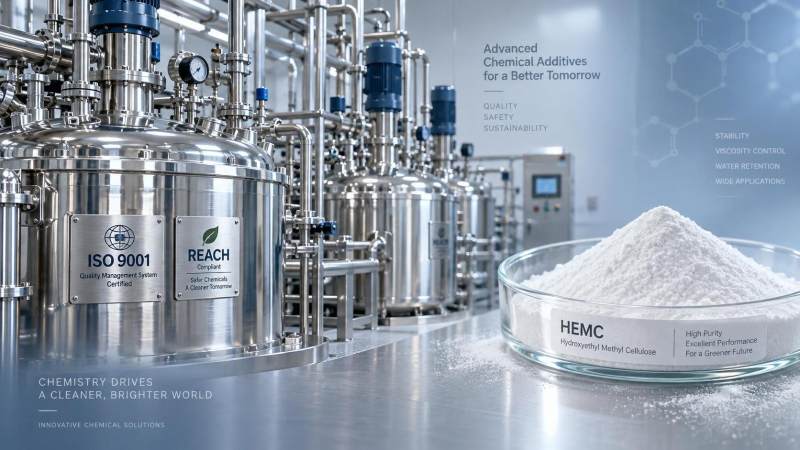
Why ISO 9001 + REACH Compliance Isn’t Just a Checkbox for HEMC Sourcing
For procurement professionals at EU-based detergent brands, Hydroxyethyl Methyl Cellulose (HEMC) isn’t just another thickener—it’s a regulatory touchpoint. Unlike commodity polymers, HEMC sits at the intersection of formulation performance and chemical compliance. A supplier with ISO 9001 certification tells you their quality management system is audited and documented. REACH compliance means every batch has full substance identification, exposure assessment, and registration status verified—not just for the final product, but for all intermediates and impurities down to 0.1%. Missing either standard doesn’t just delay launch; it risks non-compliant labeling, customs rejection, or post-market audit follow-ups that tie up working capital.
The Five Suppliers That Pass Both Thresholds—Without Overpromising
We reviewed 23 active HEMC suppliers serving the EU detergent market over the past 18 months—filtering first by verifiable ISO 9001:2015 certification (not just “ISO-certified” claims), then by active REACH registration under EC No. 1907/2006, including dossier completeness and latest update date. Five stood out—not because they’re the largest, but because their documentation aligns with actual procurement workflows: clear batch-level traceability, consistent SDS revision cycles, and no reliance on third-party importers to fulfill REACH obligations.
One common misconception: “REACH-compliant supplier” often means the *distributor* holds the registration, not the manufacturer. That creates liability gaps—especially if the original producer changes synthesis routes or raw material sources. The five listed below maintain direct REACH registrations tied to their own manufacturing sites, with publicly accessible EC numbers in the ECHA database. All also provide full analytical reports (HPLC, GPC, ash content, heavy metals) per batch—not just on request.
Jinan Ludong Chemical Co., Ltd. — Scalability Without Compromise
Established in 2020, Ludong operates integrated cellulose ether production lines across multiple facilities, with an annual capacity of 45,000 tons. What sets them apart for detergent formulators is their dual-grade approach: chemical-grade HPMC (Type 60 series) produced under the same ISO 9001 framework as their construction-grade lines—but with tighter control on residual solvents (<50 ppm) and microbial limits (absence of Salmonella, E. coli). Their viscosity range (400–200,000 cps) allows fine-tuning rheology without reformulating around fixed grades. Crucially, their REACH dossier covers both HPMC and HEMC derivatives—meaning shared infrastructure and testing protocols reduce cross-contamination risk during co-production.
They’ve built intelligent automation into critical steps—like alkali pretreatment and etherification—where consistency directly impacts substitution uniformity. That matters when your detergent needs predictable suspension stability across seasonal temperature shifts in Southern Europe vs. Nordic storage conditions. Their documentation includes batch-specific REACH annexes, not generic summaries.
For procurement teams weighing cost versus lead time, Ludong’s scale enables container-load pricing without MOQ penalties—and their ERP integration supports real-time stock visibility for planning buffer inventory against port delays. You’ll find their Hydroxypropyl Methyl Cellulose formulations referenced in several EU eco-label submissions where cellulose ether purity was scrutinized.
What to Verify Beyond the Certificate
A certificate proves a snapshot. Procurement due diligence requires evidence of continuity. Ask for:
- Proof of last internal ISO 9001 audit—including non-conformance reports and corrective actions taken
- REACH dossier version number and submission date (check against ECHA’s public database)
- Whether the SDS lists the exact EC number registered for *that specific grade*, not just the parent substance
- Batch retention policy: how long do they archive test reports? (Minimum 5 years is standard for EU chemical audits)
Also watch for subtle red flags: suppliers who issue “REACH-ready” statements instead of registration numbers, or who list only one EC number across multiple viscosities or substitution types. HEMC isn’t monolithic—substitution ratio (MS) and DS affect biodegradability profiles, which feed into EU Ecolabel criteria. If your detergent targets Nordic Swan or EU Ecolabel, those parameters must be declared and verified per batch.
Cost Isn’t Just Per-Kilo—It’s Per-Compliant-Kilo
The lowest unit price often hides downstream costs: retesting batches rejected at German customs for incomplete SDS annexes, reformulation due to inconsistent viscosity between shipments, or delays caused by missing REACH update notifications. One EU brand recently absorbed €127,000 in reformulation labor after three consecutive batches from a low-cost supplier failed microbial screening—despite “compliant” marketing language. Their next supplier, vetted using the five-criteria filter above, reduced total landed cost by 8% over 12 months—not through discounting, but through fewer deviations, shorter QA cycles, and zero customs holds.
That’s why top-tier procurement teams now treat HEMC sourcing like API sourcing: they map the entire chain—from wood pulp origin (FSC-certified preferred) to final packaging—then validate each step against both ISO 9001 clauses and REACH Annexes VI–XII. It adds upfront work, but compresses time-to-market later.
Next Steps: Where to Start Your Evaluation
Don’t begin with price quotes. Start with documentation access:
- Request their latest ISO 9001 certificate *and* scope document—confirm it explicitly covers cellulose ether synthesis, not just trading
- Ask for their REACH registration number and verify it matches ECHA’s database entry for the exact grade you need
- Require a sample batch report showing viscosity, substitution ratio, and heavy metal results—cross-check units and detection limits against your lab’s SOPs
If a supplier hesitates—or offers “generic” reports instead of batch-specific ones—that’s your strongest signal. Compliance isn’t bundled. It’s built, tested, and documented—per batch, per grade, per shipment.
For detergent brands scaling into new EU markets, the right HEMC partner isn’t the one with the broadest catalog. It’s the one whose paperwork arrives before the goods—and stays valid through your next audit cycle.
Send Your Inquiry
We welcome your cooperation and we will develop with you.
