


What to Check Before Buying HPMC in Bulk
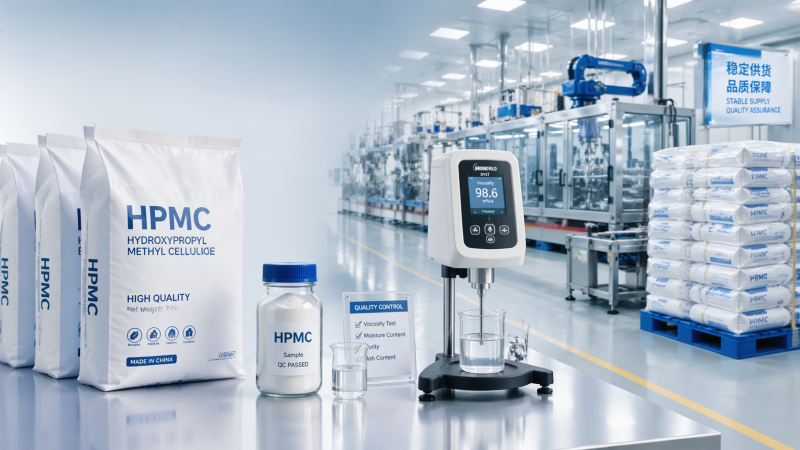
Before placing a bulk order, buyers should evaluate more than price when choosing a HYDROXYPROPYL METHYL CELLULOSE supplier. From HYDROXYPROPYL METHYL CELLULOSE high viscosity performance and HYDROXYPROPYL METHYL CELLULOSE water-soluble stability to production capacity, quality control, and supply consistency, every detail affects project results. This guide helps technical evaluators, procurement teams, and decision-makers identify the key checkpoints for safer, smarter HPMC sourcing.
In large-volume construction chemicals purchasing, one mismatch in viscosity, substitution level, moisture, or batch consistency can lead to rework, unstable mortar performance, poor tile adhesion, or delayed site application. That is why bulk HPMC sourcing should combine technical verification, supplier assessment, and delivery planning rather than relying on quotation sheets alone.
For buyers serving drymix mortar, skim coat, tile adhesive, EIFS, gypsum systems, detergents, or related formulations, the right review process usually includes 4 core dimensions: product fit, manufacturing reliability, quality assurance, and commercial risk control. The sections below break these checkpoints into practical evaluation steps.
Define the Right HPMC Grade Before You Compare Suppliers
The first mistake in bulk HPMC procurement is comparing prices before defining the required grade. HPMC is not a one-specification material. Performance can vary significantly across viscosity ranges such as 400 CPS, 2,000 CPS, 40,000 CPS, 75,000 CPS, or 200,000 CPS, and each range may suit a different formulation target.
Technical evaluators should start from the application scenario. In tile adhesive, water retention, open time, anti-slip behavior, and workability often matter more than a single viscosity number. In skim coat or cement render, sag resistance, smoothness, and pumpability may be the deciding factors. A specification sheet should therefore include not only viscosity, but also gel temperature, fineness, ash level, moisture, and dissolution behavior.
Key parameters that should appear in your internal buying brief
A practical procurement brief usually covers 6 to 8 items: target application, viscosity range, required water retention, acceptable moisture level, packaging format, trial batch size, monthly demand volume, and compliance documents. If these points are missing, RFQs can attract unsuitable offers that look competitive but fail in production or on-site use.
- Application field: tile adhesive, skim coat, self-leveling, gypsum plaster, detergent, or chemical grade use.
- Target viscosity window: for example 40,000-75,000 CPS for one formula family instead of a single nominal figure.
- Dissolution expectation: fast dispersion, delayed dissolution, or standard water-soluble behavior depending on mixing sequence.
- Batch acceptance limits: define acceptable deviation in viscosity, moisture, and sieve residue before testing samples.
Jinan Ludong Chemical Co., Ltd. operates with annual production capacity reaching 45,000 tons, including HPMC type 75 and type 60 for construction and chemical grades, with viscosities controllable from 400 to 200,000 CPS. For buyers, this range matters because broad manufacturing capability can reduce the need to split orders among multiple suppliers when product lines expand.
In some formulations, buyers also compare HPMC with related cellulose ethers to optimize feel, water retention, or cost structure. For certain mortar or putty systems, it can be useful to review alternatives such as Methyl Hydroxyethyl Cellulose (MHEC) during laboratory screening, especially when climate, cement reactivity, or application habits vary across export markets.
Typical fit-for-use checkpoints
The table below helps teams align application needs with the most important product checks before moving to supplier comparison.
The key conclusion is simple: define use conditions first, then compare offers. Two HPMC grades with similar quoted viscosity can still behave differently in water retention, thickening profile, and field application. That difference becomes expensive when your annual purchase volume is measured in tons rather than bags.
Check Manufacturing Capacity, Process Control, and Supply Continuity
A technically acceptable sample is only the first step. Bulk procurement requires confidence that the supplier can reproduce the same quality across 10 tons, 100 tons, or recurring monthly orders. Capacity, process discipline, and scheduling reliability directly affect your own production planning and customer delivery commitments.
For global buyers, production scale is not just a branding point. It usually determines lead time flexibility, inventory buffering, and the ability to serve multiple viscosity grades without interrupting existing contracts. If your demand fluctuates between seasonal peaks and normal months, you need a manufacturer that can manage both standard output and urgent replenishment.
Questions procurement teams should ask during supplier assessment
Ask how many production lines are dedicated to cellulose ethers, what the normal order cycle is, how peak-season allocation is handled, and whether there is traceability from raw material input to finished lot release. Also request information about packaging options such as 25 kg bags, jumbo bags, or private-label arrangements if your channel requires customized delivery.
Ludong Chemical describes its production system as a fusion of traditional process know-how and intelligent automated production, designed to meet diverse customer requirements. For buyers, automation can support tighter process repeatability, while integrated production and trading services can simplify communication across technical review, commercial negotiation, and shipment coordination.
Capacity and continuity review table
Use the following matrix to score supply reliability before approving a manufacturer for large-volume HPMC contracts.
A supplier with strong capacity but weak communication can still become a risk. Decision-makers should therefore review not only output volume, but also response time, contract clarity, shipping coordination, and the ability to provide advance notice if a 2-week delay or formulation adjustment is expected.
- Request a rolling delivery plan for the next 3 to 6 months if your consumption is stable.
- Define minimum stock or safety inventory expectations for critical grades.
- Agree on a deviation reporting rule, such as immediate notification if lead time changes by more than 20%.
Verify Quality Control With Sample Testing and Batch Standards
Quality control is where many bulk purchases succeed or fail. A sample that performs well once is not enough. QC teams should build a repeatable approval path covering incoming specification review, lab evaluation, pilot mixing, and first-batch verification. This is especially important when the HPMC will be used in cementitious systems, where temperature, filler type, and cement chemistry can amplify small raw-material differences.
At minimum, ask for a certificate of analysis for each lot and compare it against your internal acceptance limits. Typical checks include viscosity, moisture, ash, pH, fineness, and appearance. Depending on the formula, you may also monitor water retention, slip resistance, thickening speed, and compatibility with RDP or starch ether systems.
A 4-step validation approach for bulk orders
- Desk review: confirm technical data, packaging, shelf-life, and storage conditions.
- Laboratory test: check viscosity behavior, dissolution, and performance in a small benchmark formula.
- Pilot trial: run at least 1 to 3 production-scale mixes to observe consistency and operator feedback.
- First lot release: inspect delivered goods against approved sample results before full warehouse acceptance.
Where formulations require different rheology profiles, buyers may also compare cellulose ethers beyond HPMC. In selected applications, Methyl Hydroxyethyl Cellulose (MHEC) can be part of a broader screening plan, but the same rule applies: approval should be based on actual formulation performance, not only on generic product descriptions.
Suggested incoming QC checkpoints
The table below can be adapted into a supplier qualification checklist or incoming inspection SOP.
One useful practice is to retain a reference sample from every approved lot for at least 6 to 12 months. This gives QC and safety managers a practical comparison standard if field complaints or application changes appear later in the supply cycle.
Do not overlook storage and handling. Even a well-made HPMC may underperform if bags are exposed to moisture, stacked poorly, or used beyond recommended storage periods. Procurement and warehouse teams should align on packaging integrity checks and FIFO discipline from day one.
Review Commercial Terms, Logistics Risk, and Total Procurement Cost
Bulk HPMC purchasing decisions should be based on total procurement cost, not unit price alone. A lower per-ton quote can become more expensive if it leads to unstable formulation performance, higher dosage, emergency replacement orders, customs delays, or inconsistent packaging. For decision-makers, the goal is a lower risk-adjusted cost over the full contract period.
Commercial review should include MOQ, price validity period, payment terms, packaging cost, labeling requirements, shipping method, document support, and complaint handling process. If the order will be exported or transferred through multiple warehouses, clarify palletization, container loading efficiency, and document turnaround time in advance.
Common risks that should be written into the contract
- Specification deviation handling: define whether replacement, discount, or return applies.
- Lead-time exception clause: clarify notification timing for delays over 7 days or another agreed threshold.
- Packaging damage responsibility: state the inspection basis at shipment and receipt.
- Batch consistency commitment: confirm that production lots will match the approved sample within agreed limits.
For many B2B buyers, a practical supplier scorecard uses 5 weighted factors: product performance, quality stability, lead time, communication efficiency, and landed cost. This model helps avoid overvaluing a quotation that looks attractive but creates hidden operational friction after the first two or three shipments.
Example decision matrix for final supplier selection
The following comparison method can support procurement committees when reviewing 2 to 3 shortlisted HPMC suppliers.
If you are sourcing for multiple factories or export markets, consider splitting qualification into phase 1 sample approval, phase 2 trial shipment, and phase 3 annual framework contract. This 3-stage structure reduces exposure and gives procurement, QC, and management teams clear approval gates.
Build a Smarter Bulk HPMC Sourcing Process
The strongest HPMC procurement outcomes come from coordination among technical evaluation, purchasing, quality control, and management. Each team sees a different risk: the lab focuses on formulation behavior, procurement focuses on cost and lead time, QC focuses on lot stability, and leadership focuses on business continuity. A structured sourcing process turns these priorities into one decision framework.
A reliable process can be surprisingly simple. Start with a technical specification, shortlist 2 to 4 suppliers, request samples and documents, run comparative trials, verify capacity and supply planning, and only then negotiate annual volume or long-term pricing. This sequence is usually faster and less costly than switching suppliers after a failed commercial rollout.
Recommended internal checklist before signing a bulk order
- Confirm the exact application and target performance indicators.
- Approve sample performance through lab and pilot testing.
- Review production capacity, lead time, and continuity planning.
- Set written incoming QC standards and complaint procedures.
- Validate commercial terms, logistics documents, and packaging details.
For companies sourcing cellulose ethers at scale, suppliers with broad production capability, integrated service support, and adjustable viscosity ranges can offer a practical advantage when formulas evolve or market demand changes. That is especially relevant when one business must serve different construction systems, climates, and customer expectations across regions.
FAQ for technical and procurement teams
How many samples should be tested before bulk approval? In most B2B scenarios, testing at least 2 to 3 candidate samples is a reasonable starting point, followed by 1 pilot trial and 1 first-shipment verification. More complex formulas may require additional comparison rounds.
What is the biggest buying mistake? Treating HPMC as a commodity defined only by price and one viscosity number. In practice, dissolution behavior, water retention, and batch consistency often have greater commercial impact than a small price gap per ton.
When should a buyer switch suppliers? Usually when repeated batch deviation, poor communication, unstable lead time, or unresolved complaint handling starts affecting production planning or customer quality. A qualified second source is often a smart risk-control measure for strategic raw materials.
Choosing HPMC in bulk is ultimately about reducing technical uncertainty and supply risk while protecting downstream performance. If you are evaluating cellulose ether supply for construction or chemical applications, now is the right time to review your specification, compare qualified options, and speak with an experienced manufacturer. Contact us to discuss product details, request samples, or get a tailored sourcing solution for your HPMC requirements.
Send Your Inquiry
We welcome your cooperation and we will develop with you.
